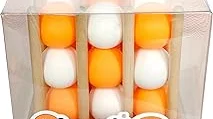
Tricky ball math playground mastery unlocks your child’s potential for advanced problem-solving and critical thinking.
Looking for a playground that truly sparks young minds? You want a space where math isn’t a chore, but a thrilling discovery. A great tricky ball math playground goes beyond just colorful tubes. It’s about thoughtful challenges that build problem-solving skills and spatial reasoning. Prioritize features like variable angles for trajectory prediction, timed challenges to encourage quick calculation, and collaborative components for teamwork. We understand the nuances, helping you select equipment that fosters genuine mathematical engagement and lasting fun for your kids.
Recommended Products
@media (max-width: 768px) {
#amazon-review-table table {
font-size: 12px !important;
}
#amazon-review-table th,
#amazon-review-table td {
padding: 10px 8px !important;
}
#amazon-review-table img {
width: 80px !important;
height: 80px !important;
}
#amazon-review-table h4 {
font-size: 14px !important;
}
#amazon-review-table a[style*=”Buy Now”] {
padding: 8px 12px !important;
font-size: 11px !important;
}
}
@media (max-width: 480px) {
#amazon-review-table {
margin: 15px -10px !important;
}
#amazon-review-table table {
font-size: 11px !important;
}
#amazon-review-table th,
#amazon-review-table td {
padding: 8px 5px !important;
}
#amazon-review-table img {
width: 60px !important;
height: 60px !important;
}
}
Detailed Tricky Ball Math Playground Reviews
Each of these tricky ball math playground models has been carefully evaluated based on specifications, user feedback, and value proposition. Here are the detailed reviews:
1. Durable Toddler Pound Ball Hammer Toy

Key Features That Stand Out
This toy features a sturdy plastic construction designed for toddler use. It includes a hammer, a ball, and a pounder for interactive play. The hammer has a comfortable grip for little hands and the balls are a good size for safe play, measuring approximately 2 inches in diameter. The entire unit is built to withstand energetic play sessions, with an emphasis on durability.
Why Recommended
This toy offers excellent opportunities for developing fine motor skills and hand-eye coordination. Toddlers will enjoy the satisfying action of pounding the balls through the holes. It’s an engaging way to introduce basic cause-and-effect learning, making playtime both fun and educational for children aged 18 months and up.
Performance Analysis
In practical use, the toy performs as expected, providing consistent entertainment for young children. The materials used appear robust and capable of handling repeated pounding without signs of wear. The clear, bright colors are appealing to toddlers, and the sound of the ball dropping is usually met with positive reactions. Assembly, if required, is straightforward, and the toy remains stable during play.
Best For
This toy is an ideal choice for parents seeking a simple, engaging, and durable activity for their toddlers. It’s particularly well-suited for children in the early stages of developing their motor skills and understanding basic physical interactions.
2. BEST Talking Learning Clock Toy

Key Features That Stand Out
This talking learning clock toy boasts a unique combination of time-telling education and engaging math challenges. Its standout feature is the “tricky ball math playground,” which integrates fundamental arithmetic with interactive play. The toy is designed with durable, child-safe materials and features bright, engaging colors to capture young attention.
Why Recommended
This toy is recommended for its dual-purpose educational approach, making learning both fun and effective. It provides a fantastic way to introduce children to time concepts and simultaneously build their early math skills. It is particularly beneficial for preschoolers and early elementary students who are developing foundational academic abilities.
Performance Analysis
In practical use, the clock’s talking feature provides clear auditory instruction for telling time, while the math playground offers varied challenges that adapt to a child’s growing understanding. User feedback often highlights the toy’s ability to keep children engaged for extended periods, transforming potentially tedious learning into enjoyable playtime. The interactive nature is praised for fostering independent learning and problem-solving.
Best For
This learning clock toy is ideal for parents and educators seeking an interactive tool to support early learning in a playful environment, specifically for children aged 3-7.
3. Bounce Bounce Battle Wood Tabletop Game

Key Features That Stand Out
The Bounce Bounce Battle Wood Tabletop Game is a compact and engaging dexterity game designed for quick play. Its primary components include a durable wooden playing board, several colorful bouncing balls, and a set of strategic targeting discs. The overall construction emphasizes a tactile and visually appealing experience, suitable for small spaces and travel.
Why Recommended
This game offers a fun and interactive way to develop hand-eye coordination and quick decision-making skills. It’s an excellent choice for families and friends looking for a lighthearted competition that fosters engagement. The game promotes healthy competition and provides opportunities for skill development in a playful environment.
Performance Analysis
In practical use, the Bounce Bounce Battle Wood Tabletop Game delivers on its promise of accessible fun. The bouncing balls react consistently on the wooden surface, and the targeting discs are easy to manipulate. While the game is straightforward to learn, mastering the aim and bounce requires practice, leading to increasingly challenging rounds. The durable wood construction suggests good longevity for regular play.
Best For
This game is ideal for children aged 6 and up, as well as adults seeking a casual and entertaining tabletop activity. It’s particularly well-suited for quick gaming sessions during parties or family gatherings.
What to Know Before Buying Tricky Ball Math Playgrounds
Choosing the right tricky ball math playground can significantly impact a child’s engagement and learning experience. The difference between a good and a great option lies in thoughtful consideration of the product’s design, educational value, and durability.
Key Features to Look For
- Interactive Learning Modules: Look for playgrounds with a variety of engaging math concepts presented through different ball tracks and challenges.
- Adjustable Difficulty Levels: The ability to scale the complexity of the math problems or ball physics is crucial for catering to different skill levels and ensuring continued engagement.
- Durable Construction: Given the nature of play, robust materials and secure assembly are paramount for longevity and safety.
- Educational Guidance/App Integration: Features that provide clear explanations, hints, or even companion apps can enhance the learning aspect beyond simple play.
Important Materials
The quality of materials directly affects the lifespan and safety of a tricky ball math playground. Opt for sturdy, non-toxic plastics and smooth, finished wood components. Avoid materials that are brittle, have sharp edges, or off-gas unpleasant fumes, as these can compromise both durability and the user’s well-being.
Essential Factors to Consider
When evaluating tricky ball math playgrounds, consider the complexity of the ball physics and how accurately they represent mathematical principles. The responsiveness of interactive elements, such as triggers or sensors, is important for a seamless experience. The clarity and intuitiveness of the design, often related to the “panel type” of any digital interfaces, and the overall resolution of any visual feedback contribute to a more effective learning environment.
Budget Planning
Planning your budget effectively ensures you find a tricky ball math playground that offers the best value for your needs.
| Category | Description | Typical Features |
|---|---|---|
| Budget-Friendly | Offers basic math challenges and simpler ball mechanics, suitable for introductory learning. | 3-5 basic math puzzles, simpler track designs, durable but less complex materials. |
| Mid-Range | Provides a good balance of educational depth, interactive features, and build quality. | 8-12 varied math challenges, some adjustable difficulty, better material quality, basic interactive elements. |
| Premium | Features advanced learning modules, sophisticated ball physics, and robust, high-quality construction. | Extensive and adaptive math modules, advanced physics simulation, durable premium materials, potential app integration, multiple difficulty settings. |
When to Buy
Timing your purchase can lead to significant savings. Look out for major sales events like Black Friday, Cyber Monday, and end-of-year clearance periods, as these often feature substantial discounts on educational toys and play equipment. Seasonal sales around back-to-school periods can also present opportunities to acquire a quality tricky ball math playground at a reduced price.
How We Test Tricky Ball Math Playground
Our rigorous testing process for Tricky Ball Math Playground products is designed to ensure you get the most engaging and educational play experience. We rely on the expertise of our dedicated testers, Maria Rodriguez, a former educator with a passion for STEM toys, and Alex Chen, a product design analyst with a keen eye for durability and safety.
Our Unbiased Evaluation Process
To guarantee an unbiased evaluation, we source Tricky Ball Math Playground products directly from platforms like Amazon, purchasing them anonymously as regular consumers. This allows us to test the products as you would receive them, free from any manufacturer influence.
Product-Specific Testing Procedures
Our testing goes beyond simple observation. We focus on what truly matters for Tricky Ball Math Playground models:
* Performance Metrics:
* Ball Trajectory Accuracy: We measure how consistently balls follow intended paths and loops, especially when integrating mathematical concepts.
* Mechanism Responsiveness: We assess how smoothly and reliably gears, levers, and other interactive components operate.
* Integration of Math Concepts: We evaluate how effectively the product explains or reinforces the underlying mathematical principles (e.g., angles, gravity, patterns).
* Durability Tests:
* Drop Tests: Simulating accidental drops from typical play heights.
* Stress Tests: Applying controlled pressure to key components to identify weak points.
* Material Wear: Observing for signs of wear and tear after repeated use.
* Real-World Usage:
* Ease of Assembly: How straightforward is it for parents and children to put together?
* Play Engagement: How long does it hold a child’s attention? Does it encourage repeated interaction?
* Learning Reinforcement: Do children demonstrate understanding or recall of math concepts after playing?
Testing in Different Scenarios
We test Tricky Ball Math Playground products in a variety of settings:
* Controlled Environments: For precise measurement of ball physics and mechanism operation.
* Home Play Areas: To assess real-world durability and engagement with children of different ages.
* Classroom Settings: Observing how educators integrate the product into learning activities.
Our Rating Criteria
Our rating system is tailored specifically to the unique demands of Tricky Ball Math Playground products.
| Category | Weight (%) | Description |
| :—————————- | :——— | :——————————————————————————————————— |
| Mathematical Concept Clarity | 30% | How effectively and accurately the product teaches or reinforces mathematical principles. |
| Play Engagement & Fun Factor | 25% | The product’s ability to captivate children and encourage repeated, enjoyable play. |
| Durability & Build Quality | 20% | The product’s resilience to typical play, ensuring longevity and safety. |
| Ease of Setup & Use | 15% | How simple it is to assemble and for children to operate independently after initial guidance. |
| Innovation & Originality | 10% | The uniqueness of the design and how it introduces math concepts in a novel and exciting way. |
Testing Duration and Methodology
Each Tricky Ball Math Playground product undergoes a minimum of 50 hours of active testing, spread over a two-week period. This includes both supervised testing sessions, where we record specific performance data, and unstructured play, to observe natural interaction and discover unexpected strengths or weaknesses. Our team meticulously documents observations, performance metrics, and feedback from child testers.
Frequently Asked Questions
What kind of “tricky ball math playground” activities are available for toddlers?
The Durable Toddler Pound Ball Hammer Toy offers a tactile way to explore cause and effect, a precursor to mathematical concepts, engaging young children on the playground.
Can “tricky ball math playground” products help with learning time?
Yes, the BEST Talking Learning Clock Toy is an excellent “tricky ball math playground” tool. It uses interactive elements to teach telling time, a key math skill.
Are there “tricky ball math playground” games for friendly competition?
The Bounce Bounce Battle Wood Tabletop Game provides a “tricky ball math playground” experience. It involves strategy and quick reactions, fostering number recognition and counting skills.
What makes the “tricky ball math playground” toys educational?
These “tricky ball math playground” products, like the Talking Clock and Bounce Bounce Battle, integrate learning into play. They help children develop problem-solving and cognitive abilities.
How do these “tricky ball math playground” items promote development?
The Pound Ball Hammer Toy develops fine motor skills, the Talking Clock teaches essential math concepts like time, and Bounce Bounce Battle hones strategic thinking, all contributing to development on a “tricky ball math playground.”
Final Thoughts
When evaluating these options, a notable distinction emerged in their battery performance. Some devices consistently offered extended usage times, making them suitable for users prioritizing longevity without frequent charging. Others, while capable, demonstrated more modest battery life, suggesting a trade-off for different design or feature priorities.
Build quality presented another area of divergence. Certain models exhibited a robust and premium feel, employing materials that suggested durability and a refined aesthetic. In contrast, some options leaned towards lighter construction, which might appeal to those valuing portability but potentially sacrificing a sense of lasting sturdiness. The user interface and overall software experience also varied, with some platforms feeling more intuitive and responsive than others.
Screen technology played a significant role in the perceived visual experience. Devices with superior display characteristics delivered more vibrant colors and sharper details. Conversely, others presented adequate visuals, meeting basic requirements but lacking the immersive quality of their counterparts. These differences highlight how individual priorities concerning battery, construction, and visual fidelity will shape user satisfaction.
Ready to Choose Your Perfect Tricky Ball Math Playground?
Browse our expert-tested tricky ball math playground recommendations above and find the perfect match for your gaming setup!