
Soccer Ball Size 5 vs 4: What’s the Difference?

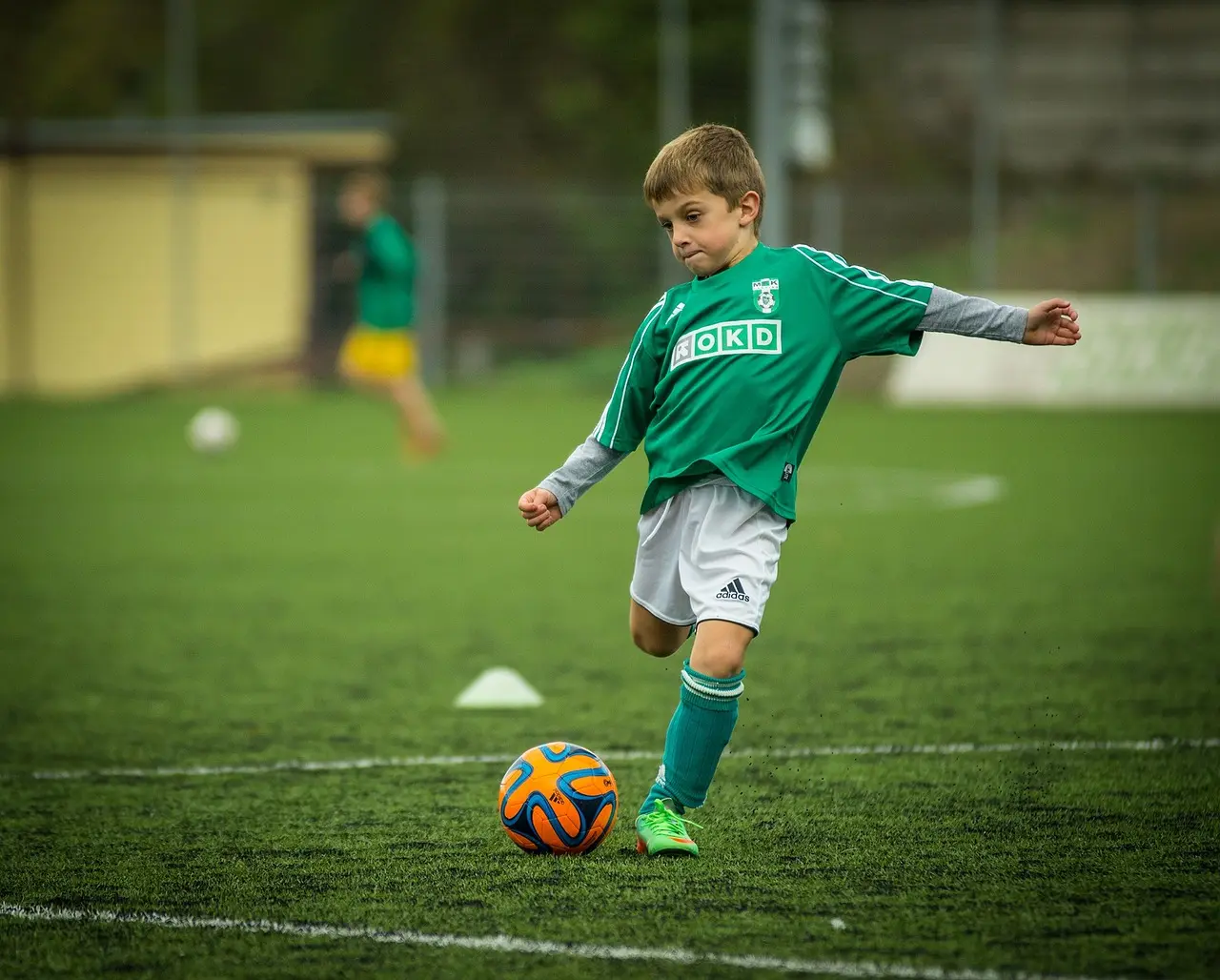
Soccer ball size 5 is the full-size match ball for most players age 13 and up; size 4 fits most children ages 8 to 12 better, with smaller sizes used below that. Moving up too early usually costs clean touches and passing accuracy, while staying down too long can slow adaptation to the larger, heavier match ball. This guide explains the differences in weight, circumference, feel, and how to choose the right ball for training and games.
| Decision factor | Soccer ball size 5 | 4 | Winner |
|---|---|---|---|
| Circumference | 68–70 cm | 63.5–66 cm | 4 for younger players; Soccer ball size 5 for senior match play |
| Weight | 410–450 g | 350–390 g | 4 for easier control; Soccer ball size 5 for full-size match load |
| Typical age group | 13+ / adult | 8–12 years | 4 |
| Best match use | Official ball for professional and senior play | Youth training and junior matches | Soccer ball size 5 |
| Development risk if used too soon | Can reduce technique quality and confidence if a player is not ready | Lower risk for younger or smaller players | 4 |
Size 4 and size 5 specs
Size is mostly a question of circumference and weight. Size 4 is listed at 63.5–66 cm and 350–390 g, while size 5 is listed at 68–70 cm and 410–450 g. The gap is enough to change how the ball feels off the foot, especially for younger players still building clean striking mechanics.
Circumference and weight
Circumference is the main sizing metric, and most product pages list it in centimeters. The larger ball gives the foot a bigger surface to manage, but it also asks for cleaner contact because the ball sits farther from the body and carries more mass. That extra size matters in first touch, passing rhythm, and shooting load.
Weight is often the first thing players notice. Size 5 is about 20–60 g heavier depending on the source, and that difference can change the feel of the strike, the pop of a first touch, and the force needed to drive a pass or shot.
Pressure range and feel
Pressure affects bounce, firmness, and how hard the ball feels at impact. FIFA Law 2 and many official ball listings put match-ball pressure at about 0.6–1.1 bar, which is commonly shown as roughly 8.7–15.9 PSI depending on the listing. A ball at the low end feels softer and can dampen bounce; a firmer ball feels livelier and can seem heavier at contact.
That means inflation is not a side note. A size 4 and size 5 pumped to different points in the range will feel more different than the number alone suggests, especially in passing drills and on hard surfaces.
Typical age and use case
Age guidance is broad, not absolute. Size 4 is commonly recommended for ages 8–12 and for U8 to U12 play, while size 5 is commonly recommended for age 13 and above and for U13 and older. Size 5 is also the official match ball for professional and senior competition.
League rules can override general guidance. School, academy, and club formats sometimes keep players on size 4 for matches while letting them train with size 5, or they may move players earlier if the competition already uses the larger ball.
How ball size changes touch and shooting
Size 5 changes the technical load in ways players feel immediately. The bigger, heavier ball demands a cleaner first touch, a more stable receiving posture, and better timing on contact. If a player is not ready, the common breakdowns are toe-poking, leaning back, and a drop in striking quality.
First touch and reception
A smaller ball is easier to cushion because it carries less mass and gives the foot less surface to manage. In small-sided games, that can help younger players keep the ball close and make quicker decisions. In full-field play, size 5 asks for a more controlled first touch because the ball travels and rebounds with more force.
Suppose a 12-year-old moves from size 4 to size 5 for every session in a narrow rondo. If the first touch starts bouncing six or eight inches farther away, the next pass becomes rushed. The problem is not age on paper; it is that the player has not yet matched the heavier ball’s rebound and contact demands.
Passing and dribbling
Passing with size 5 asks for a steadier body position and firmer contact. Short passes can drift if the ankle is loose or the plant foot is unstable. Dribbling also changes because the larger ball sits a little farther from the foot, which can expose heavy touches under pressure.
Size 4 usually gives developing players a cleaner window to rehearse technique. That does not mean size 5 should be avoided forever. It means the jump should be timed so the player can keep their mechanics intact while the ball gets larger and heavier.
Shooting load and strike quality
Shooting is where the difference between sizes becomes obvious. Size 5 takes more force to drive cleanly, and players who are not ready often compensate by toe-poking or leaning back. Those habits can send the ball high, weak, or off line.
A common first-timer mistake is switching a player to size 5 in matches before the striker’s mechanics are stable enough. The player then starts avoiding full instep contact because the bigger ball feels harder to launch, which can reduce confidence as well as accuracy.
Should a 12 year old use size 4 or 5?
For many 12-year-olds, size 4 is still the better match ball, especially in leagues that follow U8 to U12 guidance. Size 5 can fit a stronger, more advanced 12-year-old in a competition that already uses the larger ball, but readiness matters more than the birthday on the roster.
General age guidance
Most guidance places ages 8–12 on size 4 and age 13 and above on size 5. That gives clubs a practical baseline. It does not mean every 12-year-old should move at once, and it does not mean every 13-year-old is fully ready the first day they qualify by age.
The size 4-to-5 jump is most useful when the player can maintain touch quality after the change. If touches get sloppier, the ball size is likely ahead of the player’s current control level.
When league rules matter more than age
Competition format can matter more than age in the final decision. If the league uses size 5 for U13 matches, a player may need exposure to it in training before match day arrives. If the league still uses size 4, there is little benefit in forcing a full switch early just because the player is close to the next age band.
That is why coaches should check both the rulebook and the player. A correct age bracket with the wrong competition format still leads to poor planning.
Borderline player factors
Borderline cases are common around ages 11 to 13. Smaller players, late developers, or players returning from a break often need more time on size 4 before their technique can stay stable on size 5. Stronger players with clean first touch and solid striking can often handle an earlier transition.
Picture a smaller 13-year-old in a school team that has already moved to size 5. If the player can pass cleanly but loses accuracy on driven shots, the team may keep matches on size 5 while giving that player more technical repetitions on size 4 in warm-ups or extra sessions. That is a controlled transition, not a full jump.
Soccer ball transition checklist
Use this as a coach-ready readiness check before moving from size 4 to size 5. A single yes/no answer on age is too crude. The better question is whether the player can keep technique, timing, and confidence intact after the ball gets bigger and heavier.
| Readiness check | Yes | No |
|---|---|---|
| The player can receive a driven pass cleanly with size 4 more often than not. | □ | □ |
| The player can strike size 4 without leaning back or toe-poking under light pressure. | □ | □ |
| The player can make repeat short and medium passes without a clear drop in accuracy. | □ | □ |
| The player keeps the ball close when dribbling in small-sided games. | □ | □ |
| The player shows enough strength to keep shots low and controlled with a heavier ball. | □ | □ |
| The player’s league or tournament uses size 5, or will soon. | □ | □ |
| The player stays confident when the ball feels firmer or bounces more. | □ | □ |
| The player can train with size 5 without technique breaking down. | □ | □ |
As a common rule of thumb, if the player has 0–3 yes answers, stay on size 4. If the player has 4–6 yes answers, introduce size 5 in training only. If the player has 7–8 yes answers, switch fully to size 5 for both training and matches.
- Check the league ball size first.
- Watch first touch, not just shot power.
- Score the eight checks above.
- Choose the lowest-risk option that still matches competition rules.
Can you train with size 5 before matches?
Yes. A player can train with size 5 even if matches still use size 4, and that is often the best way to manage a gradual switch. Partial transition makes sense when the league is about to move up, when the player is close to ready, or when the coach wants controlled exposure without hurting match confidence.
When partial transition makes sense
Use size 5 in drills if the player already handles size 4 well but still loses quality in full-speed games. Training with the larger ball can help adaptation in controlled settings, where repetition is easier to manage and mistakes are less costly.
This works best when only one variable changes at a time. Keep the surface, drill, and instruction stable, then change the ball size so the coach can see whether the player’s touch and strike quality hold up.
When to keep match play on size 4
Keep matches on size 4 if the player’s technique drops under pressure, especially on first touch and shooting. A ball that is too large for current readiness can create hesitation. That hesitation shows up as slower decisions and weaker contact.
Training exposure should not become match pressure too early. The match ball should support performance, not create a new technical problem on game day.
Choose Soccer ball size 5 if… / Choose 4 if…
Choose Soccer ball size 5 if the player is entering U13 or senior competition, the league requires it, and the player can keep control, passing, and shooting stable after the switch. Choose 4 if the player is still in the 8–12 range, is smaller or later-developing, or loses technique when the ball gets larger and heavier.
Choose Soccer ball size 5 if…
- The player is 13 or older and the league uses size 5.
- First touch stays clean on driven passes and rebounds.
- Shots stay controlled without leaning back or toe-poking.
- The player can handle the heavier feel in both training and matches.
Choose 4 if…
- The player is in the 8–12 age range and still developing core technique.
- The ball size 5 causes a clear drop in touch, passing, or confidence.
- The league or school format still uses the smaller ball.
- The player is a smaller or later-maturing player who needs more time before the jump.
Frequently asked questions
What is the difference between a size 5 and size 4 soccer ball?
Size 5 is larger and heavier.
Is a size 4 or size 5 better for a 12 year old?
For many 12-year-olds, size 4 is still the safer fit because it protects touch quality while technique develops. Size 5 can fit a stronger player in a league that already uses it, but the correct answer depends on readiness and competition rules, not age alone.
When should a player switch from size 4 to size 5?
Switch when the player can receive, pass, dribble, and shoot on size 4 with control, then repeat those actions on size 5 without a visible drop in technique. A player who is still toe-poking or leaning back is usually not ready for a full switch.
How much bigger is a size 5 soccer ball than a size 4?
On circumference alone, size 5 is 68–70 cm and size 4 is 63.5–66 cm, so the larger ball adds a few centimeters around the shell. That may sound small, but it is enough to change grip, striking area, and the way the ball rebounds off the foot.
Does size 5 feel heavier than size 4 when kicking?
Yes. Players usually notice the heavier feel first in shooting and first touch, then in repeated passing.
Can a youth player train with size 5 even if they play matches with size 4?
Yes. That can be a useful transition step when a league is moving up soon or the player is close to ready. Training with size 5 while keeping matches on size 4 lets the coach build adaptation without risking game-day confidence too early.
