How Are Cricket Balls Made and What Materials Are Used?

A cricket ball uses a cork-and-rubber core, tight string winding, a leather cover, and a stitched seam. Red balls are usually used in longer-format cricket, while white balls are used in limited-overs matches. Build it badly and you lose swing, bounce, durability, and player safety quickly. This guide explains how cricket balls are made, what each material does, and how to choose the right ball for training or match play. (Wikipedia)
Core, winding, and leather cover
A cricket ball is built around a compressed cork core, then wrapped with tight winding, then covered in leather with a raised stitched seam. Each layer changes how the ball bounces, swings, and wears. If one layer is soft, off-centre, or poorly finished, the ball can lose shape and behave unevenly.
Cork core and shock absorption
The cork core sits at the centre and does the first job: absorb impact while helping the ball spring back into shape after hits from bat or ground. That compression matters because a softer or uneven core can deaden bounce, while a well-formed one keeps the ball round and lively longer.
Cork alone is not enough. It works because it is packed and compressed before the winding layer goes on, so the inner mass stays firm under repeated strikes. If the core shifts or compresses unevenly, the ball can go lopsided and feel dead in the hand.
Yarn winding and roundness
Manufacturers wind the core tightly with twine or yarn, usually wool or cotton. This layer adds hardness, helps the ball keep its round shape, and fills out the body under the cover. Poor winding is a failure point because loose or uneven layers can create soft spots and uneven bounce.
The winding layer also affects feel. A ball with tighter winding tends to feel firmer and hold its shape better under pressure, while a weaker build can flatten sooner during heavy practice use. That is one reason training balls often feel different from match balls even before the cover wears.
Leather cover and stitched seam
The outer cover is typically premium cowhide leather, dyed red, white, or pink depending on format. The seam is a raised stitched ridge, made with linen thread in many constructions, and it usually has six rows of stitching. Together, the cover and seam influence grip, swing, seam movement, and durability.
The leather also controls water uptake. A well-finished cover resists moisture better than a rough one, but once the surface soaks up water or scuffs badly, the ball can get heavier and lose its clean movement. That is why finish and seam quality matter as much as the core.
How are cricket balls made?
Cricket balls are made by compressing the core, winding it tightly with twine or yarn, fitting leather pieces around that body, stitching the seam, and then finishing the surface with wax or polish. Small errors at any step can show up later as poor swing, early wear, or a ball that goes soft too quickly.
Compressing the core and winding layers
The process begins with the central core, which is compressed before winding starts. Then wool or cotton string is layered tightly around it until the ball reaches the required size and firmness. This stage sets the ball’s roundness, so a lopsided wind can lead to uneven bounce and odd flight.
That is the first big failure point. If the winding is too loose, the ball can lose hardness early. If it is uneven, one side may take wear faster than the other, which changes seam height and can make the ball swing or bounce unpredictably.
Fitting and stitching the cover
After winding, leather pieces are fitted around the ball and stitched together along the seam line. Many balls use two-piece construction, while some use four-piece construction. The stitching has to stay raised and neat, because seam height affects how air moves over the ball and how the ball grips the pitch.
Different constructions feel different in play. Two-piece balls are common and often feel simpler in build, while four-piece balls can hold shape in a different way and are often chosen for particular club or practice needs. The exact result depends on the maker’s pattern, stitching, and finish.
Polishing, waxing, and final inspection
After stitching, the ball gets wax and polish as finishing layers. Those layers help the surface retain shine, improve water resistance, and slow early scuffing. A final inspection checks roundness, seam height, and finish. If the seam is weak or the polish is patchy, the ball may wear badly during the first session.
Say your club buys white balls for night cricket but stores them in a damp bag after nets. The next session may start with a duller surface and less reliable seam grip, because moisture and dirt attack the finish first. A better finish delays that problem, but it does not remove it.
Why does the seam matter?
The seam gives the bowler a raised ridge to work with. It can help the ball swing in the air and move off the pitch when the surface is dry and firm. As the seam wears down, that movement fades, so the ball becomes harder to control and less predictable for bowlers.
How seam height affects swing and seam movement
A fresh seam stands proud of the leather and creates a clearer ridge in the airflow. That ridge can help one side of the ball move differently from the other, which is the basis of swing. Off the pitch, the seam can bite into the surface and create seam movement.
If the seam is flattened, the ball often behaves more like a smooth sphere. Swing can reduce, and bounce can become straighter. That is why bowlers watch seam wear closely; once the stitching loses height, performance changes even if the core is still firm.
How stitching wears down over time
The seam wears from repeated overs, rough pitches, and direct contact with bat, gloves, or the ground. Six rows of stitching can help the seam stay intact, but it will still fray. When the thread loosens, the seam can become less useful for swing and more likely to split.
Water and dirt speed that wear. Mud fills the seam, softens the leather, and can make the ball heavier. Once that happens, bowlers may lose control, and fielders may find the ball slicker and harder to grip.
What happens when water and dirt get
Water uptake is one of the clearest failure modes in cricket-ball construction. A damp ball can swell slightly, lose shine, and feel heavier in the hand. Dirt and moisture also reduce the clean seam edge that helps swing, so the ball may stop moving through the air as intended.
A common first-timer mistake is using a leather practice ball on a wet outfield and then leaving it uncleaned. The surface can dull fast, and the seam can clog. That shortens useful life and makes the ball less safe and less consistent for the next session.
Cricket ball construction checklist
The checklist is intended to help compare construction types by use, performance, and likely failure mode. Match balls need the best control of seam, finish, and roundness. Training balls trade some match feel for lower cost and easier replacement. Youth-safe synthetic balls reduce injury risk and are better for beginners and hard surfaces.
| Core | Winding | Cover | Seam | Finish | Typical use | Performance effect | Common failure mode |
|---|---|---|---|---|---|---|---|
| Compressed cork | Tightly wound wool or cotton | Premium cowhide leather | Raised stitched ridge, linen thread, six rows | Wax and polish | Match ball | Best balance of swing, bounce, and seam control | Seam wear, scuffing, water uptake, lopsided winding |
| Compressed cork | Firm winding, often less refined than match grade | Leather or mixed outer cover | Raised seam, sometimes less consistent | Light polish or basic finish | Training ball | Good practice feel; durability matters more than perfect movement | Early softening, uneven wear, dull finish |
| PVC or similar synthetic core | Synthetic body structure | Synthetic cover | Moulded or stitched-look seam | Basic surface finish | Youth-safe synthetic ball | Lower injury risk, cheaper, easier for beginners | Less realistic swing, less seam feel, surface splitting over time |
Match balls: the seam and finish matter most. A ball that keeps its shine and shape will hold swing longer and wear more evenly.
Training balls: durability and predictable bounce matter most. You want a ball that survives repeated use without going soft too soon.
Youth-safe synthetic balls: softness and grip matter most. Choose these when reducing impact risk is more important than match-like pace or swing.
What changes between red, white, and pink balls?
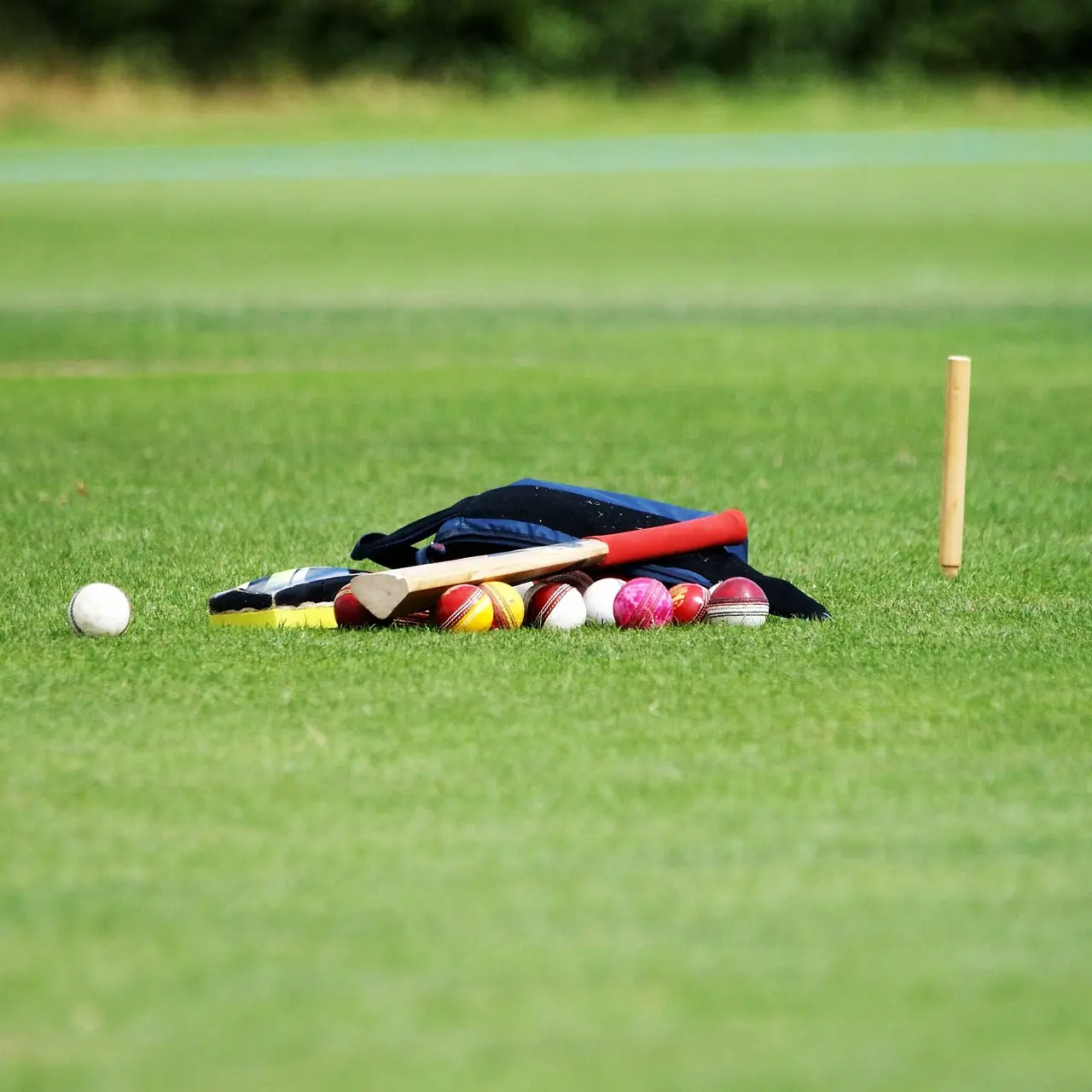
Red, white, and pink cricket balls use the same basic build, but the finish and visibility needs differ by format. Red balls are common in longer-format cricket, white balls in limited-overs matches, and pink balls are used where day-night visibility matters. Shine retention and scuffing behave differently across those colours.
Format use and visibility
Red balls are usually chosen for longer matches because they stand up to extended use and suit traditional conditions. White balls are used in limited-overs cricket because they are easier to see under lights. Pink balls sit between the two in visibility and are used for certain day-night matches.
The colour also affects how you notice wear. A white ball shows dirt and scuff marks quickly, which can make shine loss obvious. A red ball may keep a more traditional look, while a pink ball is chosen to stay visible in fading light without disappearing as quickly to the eye.
Shine retention and surface wear
Shine retention matters because a polished ball swings differently from a dull one. White balls often need careful surface maintenance to keep their useful finish. Pink balls may show wear differently, but they still depend on polish and seam quality. If the surface goes dull, movement through the air changes.
The leather finish also interacts with the colour. A good polish helps the ball resist water and retain a smoother side. Once the finish breaks down, all three colours can lose performance, but white balls often make that change easiest to spot.
How many pieces is a cricket ball made from?
Cricket balls are commonly made in two-piece or four-piece constructions. The number of pieces affects feel, stitching pattern, durability, and how the seam sits over time. Some brands and grades aim for a firmer, longer-lasting feel, while others focus on match-level movement and more consistent shape retention.
Two-piece and four-piece builds
Two-piece balls are straightforward to make and are common in many match and practice settings. Four-piece balls can offer a different balance of seam shape, cover tension, and wear pattern. Neither build is automatically better; the right choice depends on the level of cricket and the kind of behaviour you want from the ball.
Construction can also affect how quickly a ball goes soft. If the cover pieces are stitched or formed poorly, the seam may wear at different rates from the rest of the ball. That can leave one side harder than the other and disturb swing and bounce.
Dukes, Kookaburra, and SG-style differences
Different makers are known for different feel and wear patterns. Dukes-style balls are often discussed for a more pronounced seam and a firmer feel. Kookaburra-style balls are often associated with a durable, more rounded feel over time. SG-style balls are commonly linked with conditions where the seam and leather behaviour matter under heavier use.
Those are broad patterns, not rules. The actual result still depends on stitching, leather quality, finish, and pitch conditions. A ball that looks similar at purchase can wear very differently once it has spent time on abrasive surfaces or in damp conditions.
What weight and size should a cricket ball have?
Match balls must stay within official weight and circumference ranges, and those ranges differ for men’s and women’s cricket. For men’s cricket, the listed weight is 155.9–163 grams and the circumference is 22.4–22.9 cm. For women’s cricket, the listed weight is 140–151 grams and the circumference is 21.0–22.5 cm.
Men’s and women’s standard ranges
The numbers matter because a ball outside range can change how it travels and how it feels in the hand. A heavier ball can feel harder to control and may carry differently through the air. A lighter ball may not behave as expected under match conditions or may fail inspection.
These ranges also help explain why junior and synthetic balls feel different. They are built for different users, different safety levels, and different stages of skill development. A child learning to field should not start with a hard leather match ball if a softer option will do the job better.
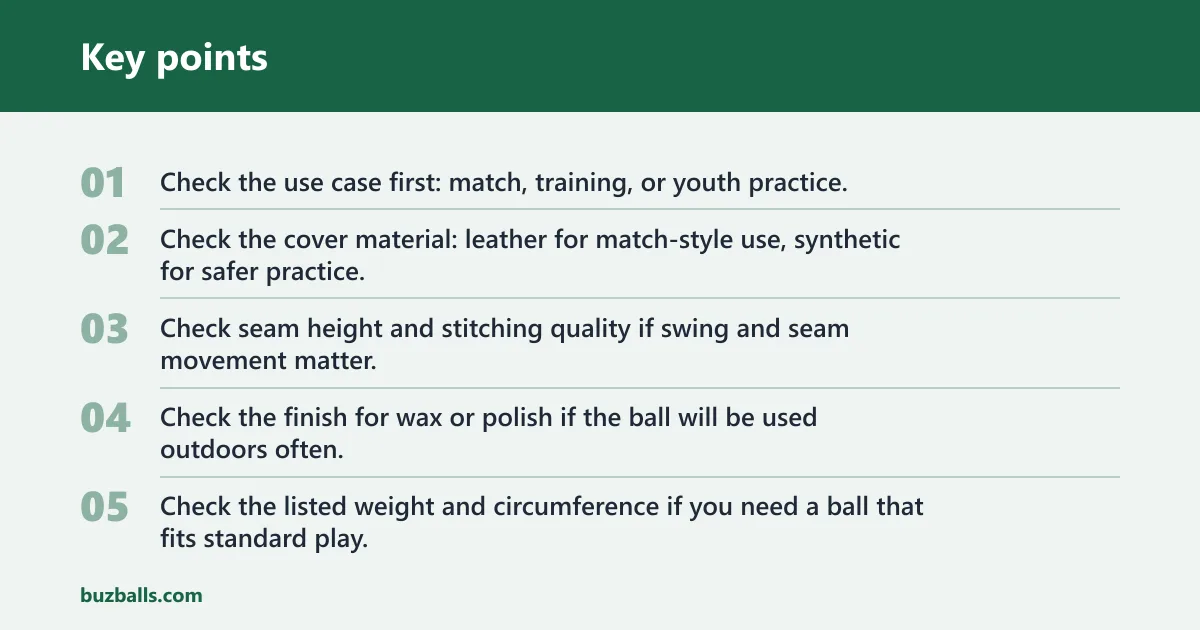
What to check before buying
- Check the use case first: match, training, or youth practice.
- Check the cover material: leather for match-style use, synthetic for safer practice.
- Check seam height and stitching quality if swing and seam movement matter.
- Check the finish for wax or polish if the ball will be used outdoors often.
- Check the listed weight and circumference if you need a ball that fits standard play.
Suppose a parent buys a hard leather ball for a beginner on concrete. The ball may bounce more sharply, sting more on contact, and wear faster if the seam scrapes the surface. A synthetic ball with a softer body is usually a better first choice for that setting.
Frequently asked questions
What is a cricket ball made of?
A cricket ball is made of a compressed cork core, tightly wound string or yarn, a leather outer cover, and a raised stitched seam. Those layers control bounce, swing, grip, and durability. If any layer is poorly made, the ball can go soft, wear unevenly, or lose its shape.
How are cricket balls manufactured?
Manufacturing starts with compressing the core, then winding it with wool or cotton string, then fitting and stitching leather pieces around it. The seam is finished, and the ball is waxed or polished. Final inspection checks shape, seam height, and surface quality before the ball is used.
What materials are used in a cricket ball?
The main materials are cork, wool or cotton winding, premium cowhide leather, and linen thread for the seam. Some practice balls use PVC or other synthetic materials instead of leather. The mix of materials changes how the ball feels, how long it lasts, and how safely it can be used.
Why does a cricket ball have a seam?
The seam gives the ball a raised ridge that bowlers can use to create swing and seam movement. A strong seam also helps grip the pitch and gives players a better feel when they hold the ball. As the seam wears down, those effects fade.
What is the cork inside a cricket ball for?
The cork core provides the main body of the ball. It absorbs shock, helps the ball keep its shape under impact, and contributes to bounce. A compressed cork centre gives the ball firmness. If the core is uneven, the ball can feel dead or go lopsided.
Are cricket balls made of leather or synthetic material?
Professional cricket balls are usually made with a leather cover over a cork-and-winding core. Synthetic balls are also common, especially for practice, children, and safer training sessions. Leather gives more realistic grip and seam movement, while synthetic materials are cheaper and less hard on beginners.
What is the difference between red, white, and pink cricket balls?
The main difference is visibility and format use. Red balls are common in longer-format cricket, white balls in limited-overs matches, and pink balls in certain day-night games. Their finishes and shine retention differ too, which changes how quickly they show wear and how they look under lights.
Why do practice cricket balls use different materials?
Practice balls use different materials to lower cost, reduce injury risk, and suit younger or less experienced players. PVC and similar synthetics are common because they are softer and easier to replace. They do not behave exactly like leather match balls, but they are often better for training surfaces and beginners.