Best Soccer Ball for Shooting Practice: What to Look for

A common choice for shooting practice is a size 5 or 4 ball with a butyl bladder, machine-stitched or thermally bonded panels, and the weight that provides the feedback you want. For most players, a durable training ball is the safest default, while adult players usually start with size 5 and younger players often do better with size 3 or 4. Pick wrong, and shots feel inconsistent, seams fail early, or touch changes from session to session. This guide breaks down what to look for by shooting goal: feedback, stability, durability, and match-like feel.
What makes a shooting ball different
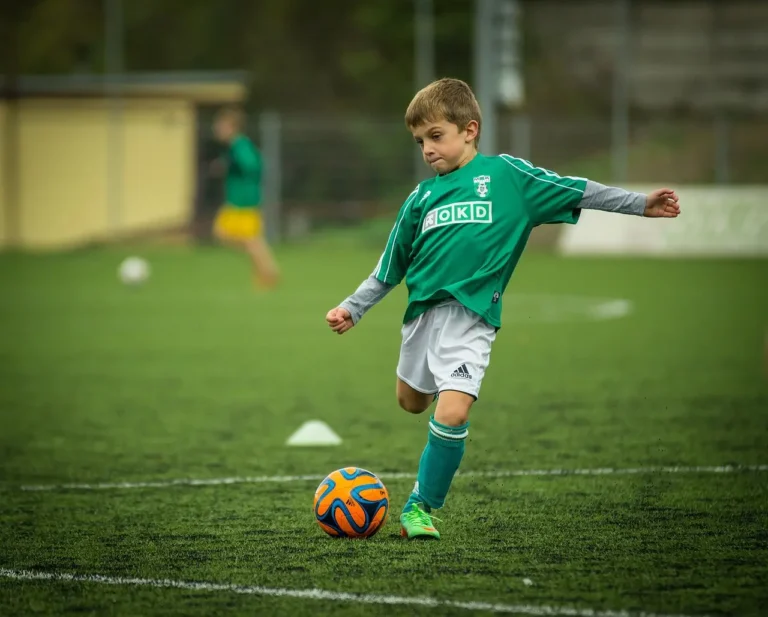
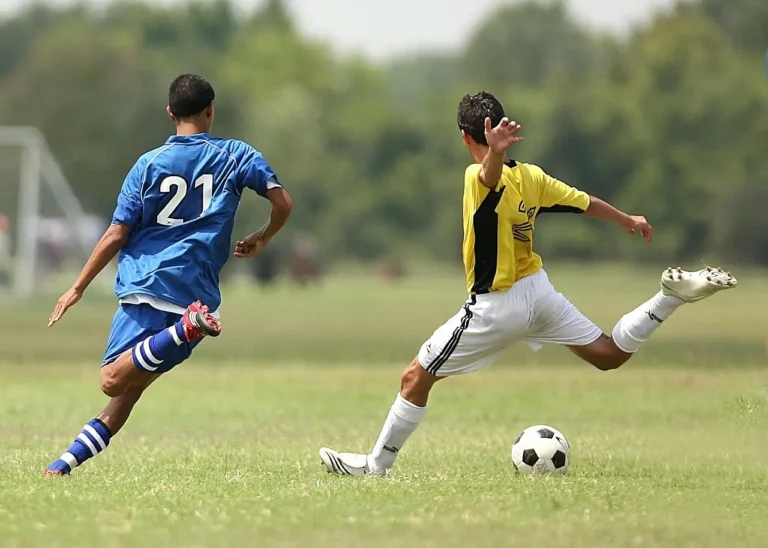
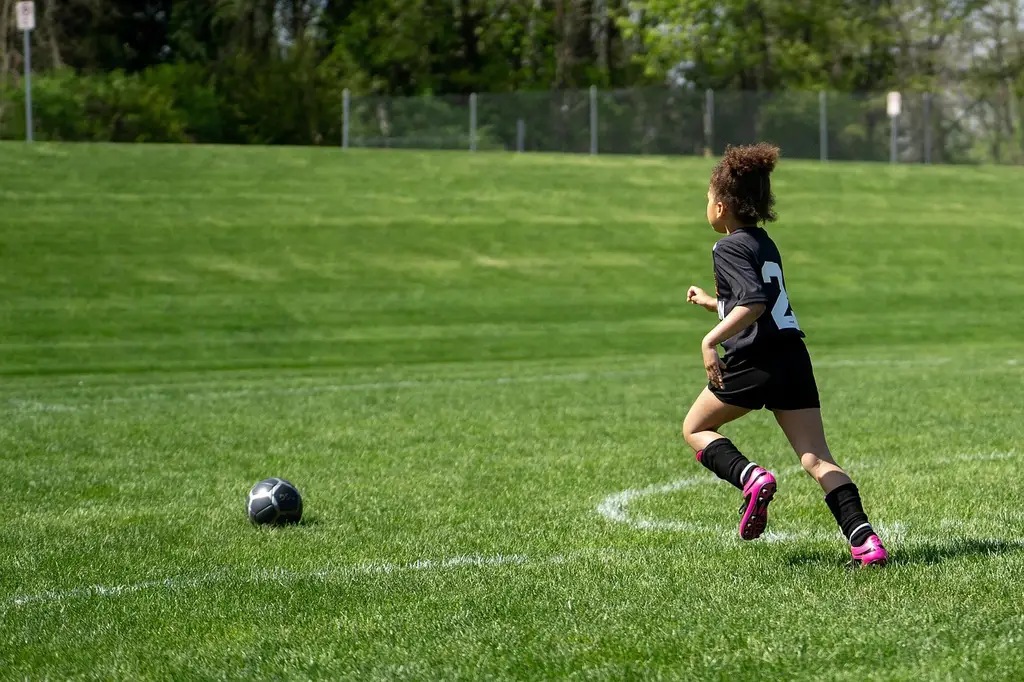
Shooting with power and accuracy matters for every soccer player. The ball you use changes how clearly you hear and feel contact, how straight it travels, and how repeatable your reps stay when you hit the same target over and over.
Why shooting practice needs stable flight
A good shot includes reading the situation on the field, but practice also needs a ball that behaves predictably. Stable flight comes from consistent panel shape, even seams, and a bladder that holds air well enough to keep the ball from going soft halfway through a session.
That matters more for shooting than many general drills. A ball with uneven seams or a soft spot can drift on driven shots, mute feedback on laces strikes, and make curve work hard to judge.
How shot feedback changes from ball to ball
Shot feedback changes with cover material, firmness, and panel construction. A firmer ball gives sharper rebound off the foot and cleaner information about contact point. A softer ball can be easier on the foot, but it may dull the sense of where the strike landed.
Say your player is practicing 20-yard driven shots with the same setup each day. A ball that slowly loses air can turn the same strike into a lower, heavier-feeling contact by the end of the week, which changes the feedback even if the technique does not change.
When a training ball beats a match ball
A match ball is useful when you want the closest possible feel to game play. A training ball is often the better default for repeated shooting because it usually holds up better against scuffing, hard strikes, turf abrasion, and wet-surface use.
That is especially true for players doing lots of reps. If the session includes power work, target shooting, and both-feet finishing, durability often matters more than premium touch.
What size soccer ball should you use?
For many adults, size 5 is the standard choice for shooting practice. Younger players usually need smaller sizes so the ball fits their foot size, leg strength, and control level. The right size helps contact feel natural and keeps shooting rhythm from turning awkward.
Size 5 for adult players
Size 5 is the standard adult ball. Most manufacturers list it at about 68 to 70 centimeters in circumference and 410 to 450 grams in weight. That size gives the most useful shooting feedback for adult players, especially for driven shots and match-speed finishing.
Smaller sizes for youth
Younger players often do better with size 3 or size 4, depending on age and level. A smaller ball is easier to strike cleanly, helps the plant foot stay in a workable position, and reduces the chance that the player compensates with poor body shape just to move the ball.
For kids, keep the non-kicking foot close beside the ball and teach kicks with the laces, not the toe. That guidance matters more when the ball is smaller, because the contact point is easier to miss if the approach is rushed.
How size affects contact and shooting rhythm
Ball size changes how quickly the foot meets the ball and how much surface area is available for contact. Bigger balls demand more leg swing and cleaner body position. Smaller balls can speed up learning, but an adult who trains only with a youth ball may overestimate how easy full-size finishing will feel.
Ball construction that affects shot quality
Panel count, seam quality, bladder type, and cover material all affect shooting. These features change how the ball flies, how it wears, and how the strike feels off the foot. They also explain why two balls with the same size can behave very differently.
Panel count, shape, and seam quality
Fewer panels and more precise panel shapes usually mean less seam disruption in flight. Traditional stitched balls and modern thermal-bonded balls can both work well, but the seam quality must stay even if you want repeatable driven shots and better curve behavior.
Panel shape also changes touch consistency. A ball with poorly joined panels can feel uneven on the instep, and that tends to show up first on placed shots where you want a clean, repeatable strike.
Bladder choice and air retention
Butyl bladders are known for better air retention, while latex bladders can feel livelier but may need more frequent inflation. For shooting practice, the main question is how steady the ball stays from one session to the next, not just how soft it feels on the first touch.
Shape retention matters too. If the bladder loses pressure quickly, the ball can sit flatter, respond slower, and send mixed signals about shot quality. That hurts consistency during repeated reps.
Cover material, grip, and abrasion resistance
PU covers often feel softer and more match-like. TPU and synthetic leather usually hold up better against abrasion, especially on turf and in repeated training. Wet-weather grip also matters, because a slick cover can make striking feel late or rushed.
For shooting practice, the best cover is the one that matches the surface and the drill. Softer covers help with touch and first-time finishing. Harder covers usually survive more hits and scuffs.
Does weight and firmness change shooting practice?
Yes. Weight and firmness change how the ball comes off the foot, how much feedback you get on contact, and how much stress the session places on technique. The right choice depends on whether the goal is power work, accuracy, or cleaner mechanics.
Official weight range versus training variants
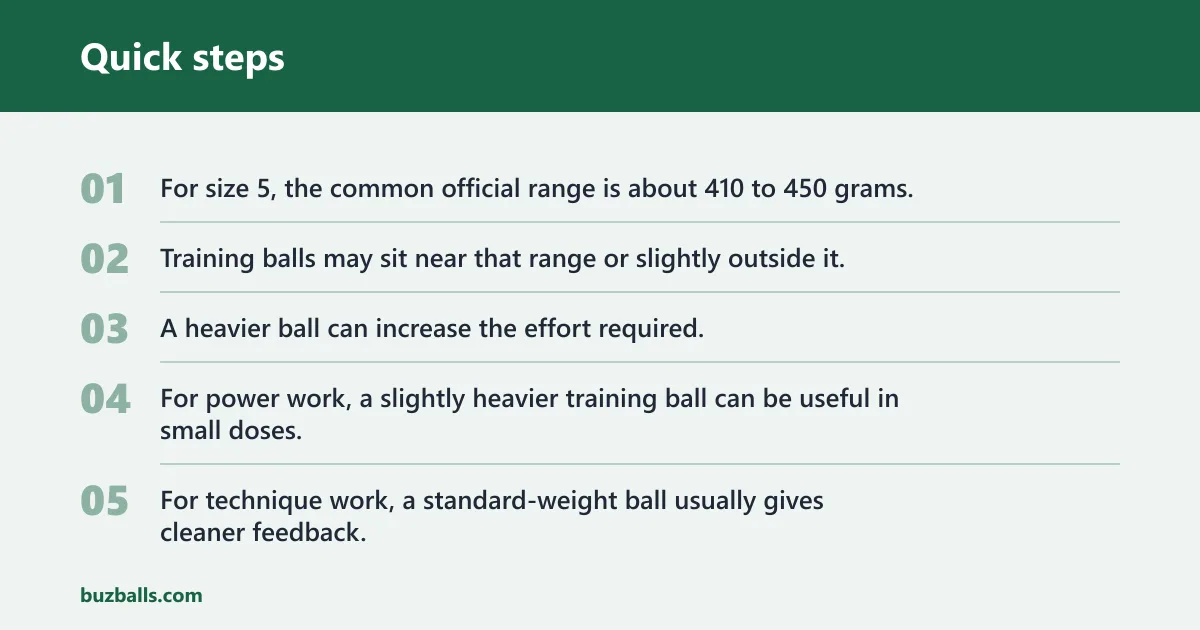
For size 5, the common official range is about 410 to 450 grams. Training balls may sit near that range or slightly outside it, and some specialty balls are heavier or lighter. A heavier ball can increase the effort required, but it should be used carefully because it can also hide technique problems by forcing the player to muscle the strike.
That is why heavier is not always better. For power work, a slightly heavier training ball can be useful in small doses. For technique work, a standard-weight ball usually gives cleaner feedback.
How inflation pressure changes feel
Many match and training balls list a pressure range of about 8.5 to 15.6 psi. Lower pressure softens touch and can mute rebound. Higher pressure firms the ball up, which often makes the strike feel crisper but can also make bad contact more obvious.
Too little air can flatten the ball and reduce consistency on curve shots. Too much can make first-time finishing feel harsh and less controlled. Check pressure often, especially if the ball sits in heat, cold, or a garage between sessions.
Heavier or lighter balls for power work and technique
Heavier balls are best used sparingly and with a clear purpose. They can increase the physical demand of the strike, but they should not replace a standard ball for all shooting. Lighter balls can help younger players learn clean contact, though they may not build the same match feel.
Suppose a teenage player is working on long-range shots with a size 5 training ball. A slightly firmer, standard-weight ball will usually give better feedback on body position than an overly heavy specialty ball, which can mask poor balance and overwork the swing.
Which ball fits your surface and shooting goal?
Surface and shooting goal should guide the choice. Grass, turf, and indoor floors all punish the ball differently, and power shots, curve work, and first-time finishes do not want the same construction.
Grass versus turf versus indoor use
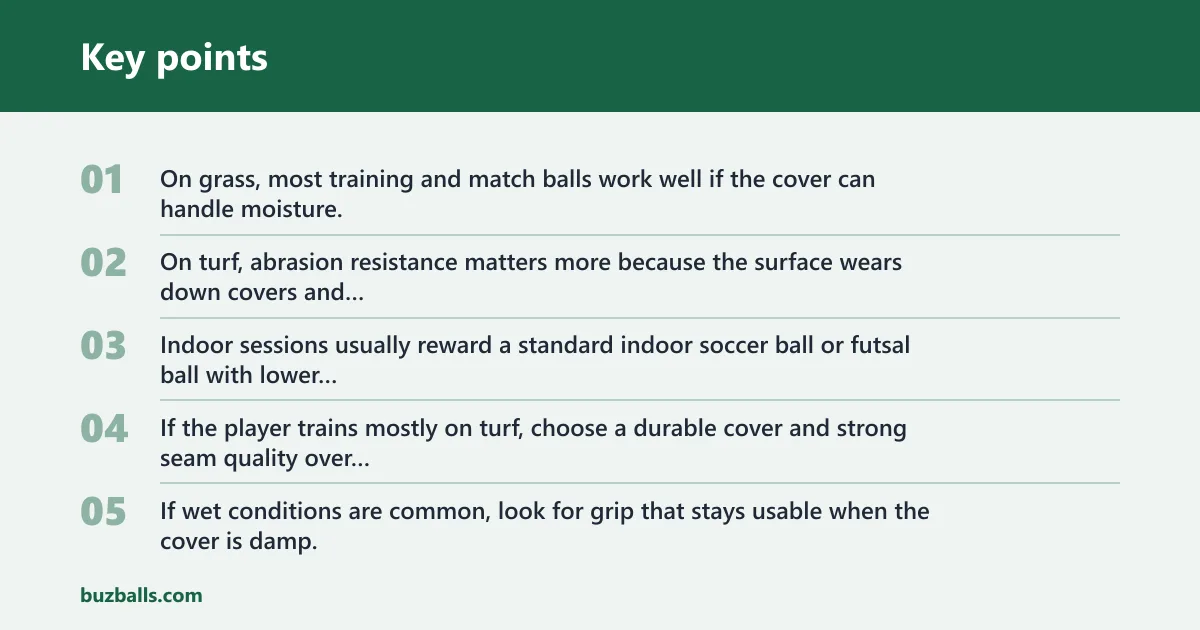
On grass, most training and match balls work well if the cover can handle moisture. On turf, abrasion resistance matters more because the surface wears down covers and seams faster. Indoor sessions usually reward a standard indoor soccer ball or futsal ball with lower bounce than a regular outdoor ball, so it behaves more predictably on hard indoor surfaces.
If the player trains mostly on turf, choose a durable cover and strong seam quality over a delicate match feel. If wet conditions are common, look for grip that stays usable when the cover is damp, not just dry.
Balls for driven shots and long range
Driven shots and long-range attempts benefit from a stable, standard-weight ball with firm inflation and clean seams. That combination gives clearer feedback through the instep and makes it easier to judge whether the strike came through the center of the ball.
Good long-range work also depends on body shape. The non-kicking foot should be placed beside the ball. The kicking leg should be brought back as far as possible for more power, and the ankle should be locked while shooting.
Balls for placed shots and curved shots
Placed shots and curved shots usually benefit from more consistent panel construction and a cover that offers dependable grip off the foot. For curve work, small seam irregularities can change how the ball leaves the boot, which makes consistent practice harder.
For these drills, body alignment and foot and hip direction matter as much as the ball. That is why clear feedback matters: the strike should tell you whether the contact and body shape were right.
Ball shooting scorecard
This scorecard helps you compare a ball by shooting goal instead of by brand label alone. Use the 1–5 scale for each column, then match the result to the session you want to train. For example, a durable size 5 training ball with a butyl bladder and strong seams might rate 4 or 5 for repeated turf shooting, while a softer match ball may rate higher for game-like feel but lower for durability.
| Size | Cover | Panel design | Firmness | Surface use | Shot-feel | Durability | Best-use case |
|---|---|---|---|---|---|---|---|
| 5 = adult; 4 = older youth; 3 = younger youth | 1 = thin and slick; 5 = abrasion-resistant with steady grip | 1 = uneven seams or shape; 5 = consistent seams and stable flight | 1 = soft and low pressure; 5 = firm and crisp within spec | 1 = limited surface fit; 5 = grass, turf, and indoor versatility | 1 = vague contact; 5 = clear contact and repeatable response | 1 = wears fast; 5 = holds up through repeated reps | 1 = general play only; 5 = target shooting, power work, or finishing practice |
Simple rubric:
- 1 = poor fit for shooting practice
- 2 = usable, but limited
- 3 = workable for casual reps
- 4 = strong fit for most sessions
- 5 = best fit for the stated goal
How to set up better shooting reps
Technique still matters, and the ball choice should support it. Good shooting needs accurate contact and force, and repetition works best when the setup makes clean mechanics easy to repeat.
Plant foot, locked ankle, and body position
Look at the ball before striking. Keep the non-kicking foot beside the ball, not behind it. Stay straight and do not lean too far back or forward. These cues help the shot stay on line and keep the ball from lifting unintentionally.
The follow-through matters too. It affects shot power and direction, and it should match the shot type. Short, quick steps rather than long steps when approaching the ball help keep the approach controlled.
- Set the ball on a flat surface.
- Pick a target or cone, then step back the same distance each rep.
- Plant the non-kicking foot beside the ball.
- Lock the ankle before contact.
- Strike with the laces for driven shots.
- Finish the swing and reset quickly for the next rep.
Portable goals, cones, and target work
A portable goal helps with game-like finishing, while cones or target zones help with precision. Use different distances so the player learns how the same ball behaves on a short finish, a medium-driven shot, and a longer strike.
For pressure work, keep the reps short and intense.
Repetition with both feet and game-speed reps
Repeated reps should include both feet. A ball that gives stable feedback helps the weaker side learn faster, because the player can tell whether the miss came from contact, angle, or body shape.
One common first-timer mistake is using a soft, worn ball for every drill, then wondering why the shot changes from rep to rep. Another is practicing only from one distance, which hides how the ball reacts when power or placement changes.
Frequently asked questions
What should I look for in a soccer ball for shooting practice?
Look for stable panel construction, a butyl bladder for better air retention, and a cover that matches your surface. For most players, size 5 is the adult standard. If you want better shot feedback, choose a firm training ball with dependable seams and enough durability for repeated strikes.
Is a heavier soccer ball better for shooting practice?
Not always. A heavier ball can help with power work in limited sessions, but it can also hide technique flaws and tire the shooter early. For most shooting drills, a standard-weight ball gives better feedback, better control of contact, and a more useful transfer to match play.
What size soccer ball is best for shooting practice?
Size 5 is best for adult players and older teens who train with a full-size match ball. Younger players usually need size 3 or 4 so the ball matches their foot size and strength. The right size helps with clean contact, balance, and repeatable shooting rhythm.
Should I use a match ball or training ball for shooting drills?
Use a match ball when you want game-like touch and the closest possible feel to competition. Use a training ball when you want durability, better value for repeated reps, and less worry about scuffing on turf or wet ground. For most shooting practice, a good training ball is the safer default.
Does the ball’s feel affect shooting power and accuracy?
Yes. Feel comes from firmness, cover material, bladder type, and panel shape. A firmer ball can sharpen contact feedback, while a softer one can blur it. If the ball loses air or wears unevenly, power and accuracy can both drift because the strike no longer behaves the same way.
How important is ankle lock when practicing shots?
Very important. A locked ankle helps transfer force cleanly through the laces and keeps the foot from collapsing at contact. That improves both power and direction. Without it, the ball can come off the foot weakly, slide off line, or rise unpredictably.