
Soccer Ball Size by Age: How to Pick for Your Child

Many children use a size 3 ball at ages 8 and under, size 4 from about 8 to 12, and size 5 at around 13 and up. League rules and the child’s comfort should decide the final pick. A ball that is too large or heavy can cut control, tire small legs fast, and make practice feel frustrating. This article breaks down age bands, league standards, and simple fit checks so you can choose by readiness, not age alone.
Soccer ball size guide for kids
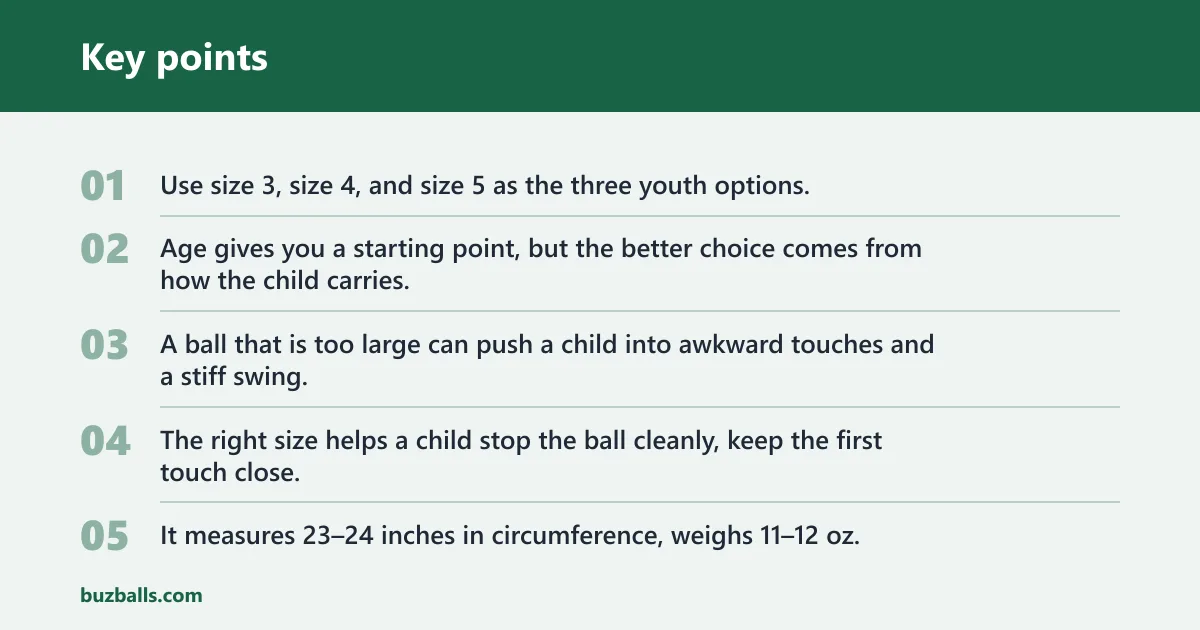
Use size 3, size 4, and size 5 as the three youth options. Age gives you a starting point, but the better choice comes from how the child carries, traps, and strikes the ball, plus what the league allows.
Why size matters for control and confidence
A ball that is too large can push a child into awkward touches and a stiff swing. The right size helps a child stop the ball cleanly, keep the first touch close, and kick with a more natural motion.
The three youth sizes at a glance
Size 3 is the young-player ball. It measures 23–24 inches in circumference, weighs 11–12 oz, and is commonly used for U5–U8 players, which is roughly ages 5–8. Size 4 is commonly used as the middle youth size for older youth. Size 5 is the full adult and match ball for U13 and up.
How age, league, and readiness fit together
Most youth rec leagues move from size 3 to size 4 at U9/U10. That rule matters, but it is not the whole decision. A taller or stronger child may be ready early. A younger child with small feet, low leg strength, or low confidence may do better staying with the smaller ball a bit longer.
What size soccer ball should my child use?
Start with the age band your league uses, then check whether the ball looks and feels manageable. Size 3 is the usual choice for younger players, size 4 is the middle step for older youth, and size 5 is the standard full-size ball used at U13 and up.
Age-by-age starting point
For roughly ages 5–8, size 3 is the best first pick for most children. For roughly ages 9–12, size 4 usually fits well and matches the age band used by many leagues. At 13 and older, size 5 is the normal match ball.
When a child may need to size up early
Some children outgrow the usual band before the calendar says they should. If a player controls a larger ball without changing posture, and the league allows it, moving up early can make practice more useful. The key is clean control, not age alone.
When to stay with the smaller size a little longer
Stay with the smaller ball if the child cannot trap it without chasing it, swings wildly at ground passes, or avoids using the weaker foot because the ball feels heavy. That is common in children who are still building coordination.
Age-to-size decision table
| Age range | Typical league band | Recommended ball size | When to size up early | Simple fit check |
|---|---|---|---|---|
| 5–8 | U5–U8 | Size 3 | The child controls a larger ball with ease and the league permits it. | Can carry it, stop it, and kick it without leaning back or swinging wildly. |
| 8–9 | Late U8 to early U9 | Size 3 or size 4 | The child is physically ready for more weight and has steady first touch. | Can trap the ball under one foot and pass it cleanly on the ground. |
| 9–12 | U9–U12 | Size 4 | The child has strong control and the team starts training with size 5 skills in mind. | Can dribble, pass, and shoot without the ball feeling bulky or slow. |
| 13 and up | U13 and older | Size 5 | Only if a coach or league uses a different training ball for a specific drill. | Can handle a full-size match ball with normal form and tempo. |
Suppose a 7-year-old is tall, strong, and already stops a size 4 cleanly during team practice. That child may be ready for the larger ball in controlled settings if the league allows it. If the same child’s first touch gets sloppy, stay with size 3 for now.
Soccer ball sizes 3, 4, and 5
The differences are direct. Size 3 is smaller and lighter for young players. Size 4 is the bridge size for older youth. Size 5 is the full adult and match ball. The jump between them affects control, shooting form, and how hard the ball feels on contact.
Size 3
Size 3 measures 23–24 inches in circumference and weighs 11–12 oz. It is used for U5–U8 players and is the most practical choice for younger children who are still building basic touch, balance, and confidence.
Size 4
Size 4 measures 25–26 inches in circumference and weighs 12–13 oz. It is used for older youth and is the normal transition size for older youth. For many children, it feels like a meaningful step up without being too large to manage.
Size 5
Size 5 is the full adult and match ball. It measures 27–28 inches in circumference and weighs 14–16 oz. Older youth and teen players use it because it matches the ball they will see in higher-level play.
What size soccer ball do U8 players use?
Most U8 players use size 3. That matches the U5–U8 use case and keeps the ball light enough for developing touches, passes, and shots. If a league shifts early or a child is unusually ready, size 4 can make sense in some training settings, but size 3 is the safer default.
AYSO and US Club age-band notes
AYSO and US Club teams often sort by age bands such as U8, U9, and U10, so ball size may change as the team moves into the next division. The usual move is from size 3 to size 4 at U9/U10, which fits many rec and club schedules.
When a U8 player may still need size 3
A U8 player may still need size 3 if size 4 slows the first touch, makes the child lean backward when shooting, or turns simple trapping into a chase. That is common for smaller children and children who are still building coordination, even if classmates have already moved up.
When should kids move from size 3 to size 4?
Move up when the child can control the larger ball with the same or better form, not when the calendar alone says it is time. League transitions often happen at U9/U10, but readiness still matters. A child should feel challenged, not overwhelmed.
Signs the ball has become too small
If a child is consistently overpowering size 3, can cushion hard passes easily, and looks comfortable striking through the ball, size 4 may be the next step. Another sign is simple: the child can use size 3 well in games but needs a bigger challenge in training.
Signs the new size feels too heavy or too large
If the child’s passes stay short, the ball pops up off the foot, or the child avoids dribbling because the ball feels bulky, size 4 may be premature. A size that is too large can make the player stiff, slow, and less willing to try skill moves.
How league transitions affect the move
Most youth rec leagues move from size 3 to size 4 at U9/U10. If the league changes sizes, use that as the baseline and then check comfort. If the child is clearly not ready, a few extra weeks or months with size 3 in backyard practice can help.
Soccer ball fit check
A proper fit check should be simple. The ball should feel easy to carry, stop, trap, and strike without forcing awkward form. If the child has to fight the ball during basic touches, the size or inflation is likely off.
Bounce and inflation check
A properly inflated ball should bounce in a controlled way, not dead and not springy. If it feels flat, it will sag and roll oddly. If it is over-inflated, it will feel hard and punish touch.
Carry, trap, and strike check
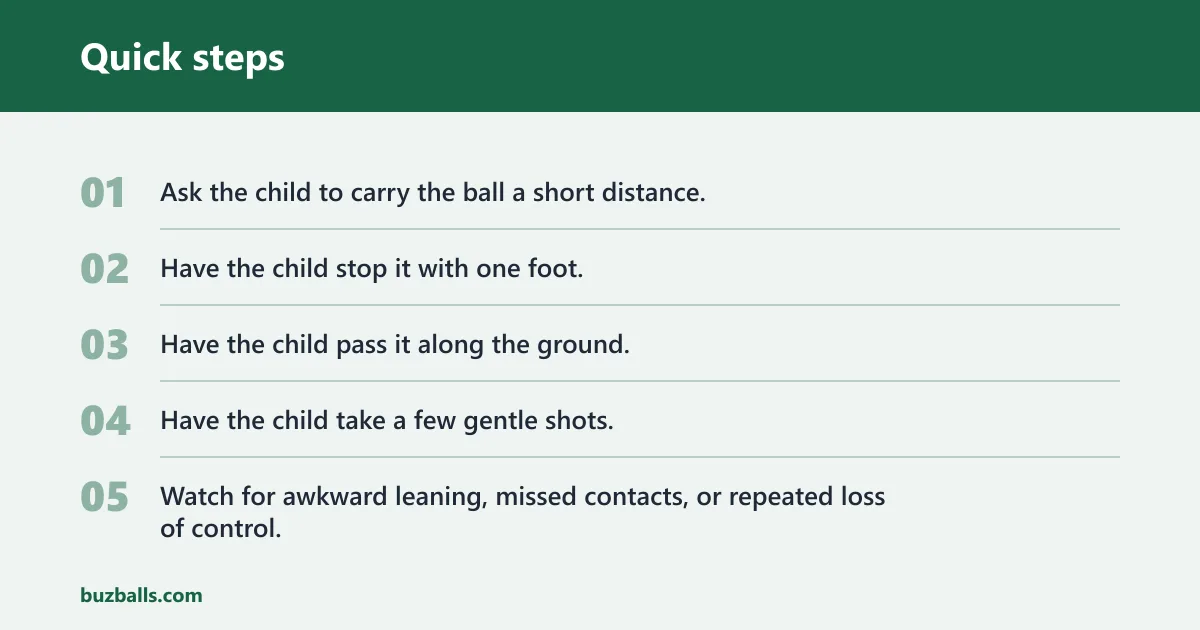
- Ask the child to carry the ball a short distance.
- Have the child stop it with one foot.
- Have the child pass it along the ground.
- Have the child take a few gentle shots.
- Watch for awkward leaning, missed contacts, or repeated loss of control.
If the ball passes those steps cleanly, the size is usually close. If not, the ball may be too large, too light, or underinflated. Small players notice these differences quickly.
What to do if the ball feels wrong
First check the pressure. Then check the size against the league band and the child’s body size. If the ball still feels off, go smaller for training and only move up when the child can keep form under pressure.
A common first-timer mistake is buying size 4 for a 7-year-old because the child is tall. Height alone does not settle the question. If the child cannot trap the ball cleanly or looks tense on contact, size 3 is still the better choice.
Indoor and outdoor ball choices

Where the child plays matters. Backyard work, indoor practice, and team sessions do not always call for the same ball. A child who mainly practices at home may need a slightly different setup than a child who trains with a team twice a week.
Backyard use by age group
For younger children, a size 3 works well in the backyard because it is easier to control in small spaces. Older youth can use size 4 or size 5 outdoors if the surface is open enough and the child has the strength to manage it.
Can my child practice indoors with a smaller soccer ball?
Yes, a smaller ball can make indoor practice easier if the space is tight and the goal is control work rather than match simulation. Use the smaller ball for dribbling, trapping, and short passes. For game prep, still return to the league size regularly.
When a softer cover makes sense
Cover material changes feel and durability. PU is softer and more match-like, TPU is a practical middle ground, and rubber is tougher but usually firmer. For a child who practices a lot on rough surfaces, the tougher cover may last longer, even if it feels less soft.
Say your child is a U8 player using a size 3 ball indoors on a smooth floor. That ball should feel easy to trap and control. If the same child switches to an over-inflated size 4, the touches will feel harder and the ball will rebound more sharply off the foot.
Bladder type and construction
A butyl bladder often holds air longer than natural rubber, which is practical for young players and busy families. Construction also matters: machine-stitched balls are common, hand-stitched balls tend to be more durable and consistent, and thermally bonded balls are often used for higher-end match models.
Frequently asked questions
What size soccer ball should my child use by age?
Use age as the starting point, then check league rules and comfort. Size 3 is the usual pick for ages 5–8, size 4 for ages 9–12, and size 5 for ages 13 and up. If the ball feels too large or too hard to control, move back a size for practice.
What age is a size 3 soccer ball for?
Size 3 is commonly used for U5–U8 players, which is roughly ages 5–8. It measures 23–24 inches in circumference and weighs 11–12 oz. It is the best fit for younger children who are still learning basic control, trapping, and shooting form.
When should kids move from a size 3 to a size 4 soccer ball?
Most kids move up around U9/U10, especially when the league switches sizes. The move makes sense when the child can trap, pass, and strike size 4 without losing form. If the larger ball makes the player tense or sloppy, stay with size 3 a bit longer.
Is a size 4 soccer ball too big for a 7 year old?
Often, yes. A size 4 can be too large for many 7-year-olds, especially if they are still building coordination or confidence. Some tall, strong children may handle it in drills, but most 7-year-olds do better with size 3 for cleaner touch and less frustration.
How do I know if a youth soccer ball is properly inflated?
Check the feel first. A properly inflated ball should bounce in a controlled way, not flop dead or jump too sharply. If the ball sags or the touch feels hard and harsh, adjust the pressure before play.
What is the difference between size 3, 4, and 5 soccer balls?
Size 3 is 23–24 inches around and 11–12 oz, size 4 is 25–26 inches and 12–13 oz, and size 5 is 27–28 inches and 14–16 oz. Size 3 suits U5–U8, size 4 suits U9–U12, and size 5 is the full adult and match ball.