Pickleball Ball Types Chart: Indoor vs Outdoor

Indoor pickleball balls usually have 26 larger holes and a softer, lighter feel; outdoor balls usually have 40 smaller holes, a firmer shell, and hold up better in wind. If you pick the wrong type, control drops, wear speeds up, and flight can feel uneven. This guide gives you a chart to spot indoor vs outdoor balls, then explains when hybrid and approved tournament balls make sense.
| Factor | indoor | outdoor differences | Winner |
|---|---|---|---|
| Hole pattern | Usually 26 larger holes, with about 0.43 inches per hole | Usually 40 smaller holes, with about 0.28 inches per hole | Depends on court |
| Flight in air | Slower flight and more touch on smooth surfaces | More wind resistance and steadier flight outdoors | outdoor differences |
| Shell feel | Softer plastic | Harder shell | Depends on surface |
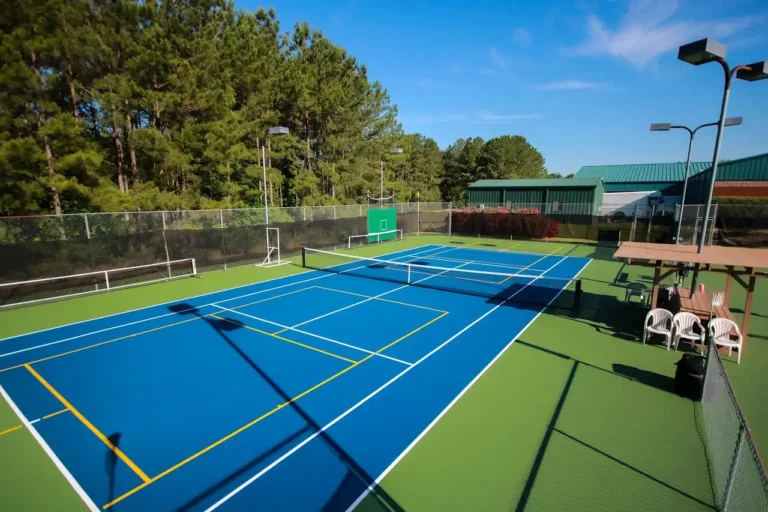
| Best surface | Wood, linoleum, and smooth sport courts | Asphalt, concrete, textured hard court, and windy play | Depends on venue |
| Wear resistance on rough ground | Less suited to rough asphalt or concrete | Higher durability on rough surfaces | outdoor differences |
What is the difference between indoor and outdoor pickleball balls?
The main difference is court fit. Indoor balls usually favor softer touch and quieter play, while outdoor balls favor a harder shell, better wind resistance, and longer life on rougher courts.
Hole count and hole size differences
Indoor balls usually have 26 holes, and outdoor balls usually have 40. USA Pickleball’s Equipment Standards Manual allows circular holes from 26 to 40, so hole count alone does not prove a ball is legal or that it matches your venue.
The hole layout changes drag. Fewer, larger openings let the ball move more softly through the air indoors. More, smaller openings help the ball hold a cleaner line when wind and rougher surfaces are part of the game.
Plastic hardness and flight
Indoor balls use a softer plastic. Outdoor balls use a harder shell. That difference changes how the ball feels off the paddle, how long it holds shape, and how much the wind can push it around.
Say your group plays in a school gym with smooth flooring and a low ceiling. An indoor ball is usually the safer first choice because the slower flight gives you more control and a quieter bounce. If that same ball goes outside on a breezy court, the softer shell can feel less stable.
Bounce, sound, and wear
Indoor balls are usually quieter and feel less harsh on gym floors. Outdoor balls are built to take more abuse from concrete and asphalt, so they usually last longer where the court surface is rough.
Both types still have to fit the same approved size and weight window: 2.874 to 2.972 inches in diameter and 0.78 to 0.935 ounces in weight. The manual also records bounce and hardness data, which helps separate true equipment specs from marketing language.
How many holes does each pickleball ball have?
An indoor pickleball usually has 26 holes. An outdoor pickleball usually has 40 holes. That is the simplest field check, but treat it as a clue, not the full answer, because approved balls still need to stay inside the official size, weight, and bounce limits.
26-hole indoor pattern
The 26-hole pattern is the common indoor setup. The larger openings help the ball move more slowly and predictably on smooth indoor courts, where wind is not the main problem.
40-hole outdoor pattern
The 40-hole pattern is the common outdoor setup. The smaller holes help the ball cut through wind better and cope with the harsher wear that comes from rougher outdoor surfaces.
Why hole layout affects drag
Hole count and hole size change how much air presses on the ball. That changes drag, which changes speed, shape stability, and how much the ball gets nudged by gusts. A ball with the wrong pattern for the setting can feel jumpy even when it is still within approved size limits.
Which ball works best on your court?
Match the ball to the court first, then think about player level. Smooth indoor surfaces usually favor indoor balls. Rough outdoor courts and windy conditions usually favor outdoor balls. If you split time across both, a hybrid can make sense, but only when you understand the trade-offs.
| Court / condition | Best ball choice | Why |
|---|---|---|
| Wood, linoleum, smooth sport court | indoor | Slower flight and quieter feel suit smooth floors |
| Concrete or asphalt | outdoor differences | Harder shell stands up better to rough surfaces |
| Windy outdoor play | outdoor differences | Smaller holes help with wind resistance |
| Split use across gym and outdoor court | Hybrid or two-ball setup | Different venues reward different designs |
Gym floors and sport courts
Which pickleball ball is best for gym floors? Indoor. The softer shell and larger-hole pattern suit wood, linoleum, and smooth sport courts. The ball tends to feel calmer off the paddle and easier to control in a contained space.
Concrete and asphalt
Which pickleball ball is best for concrete or asphalt? Outdoor differences. The harder shell is built for rougher ground, where indoor balls wear faster and can crack, split at the seam, or lose shape sooner.
Windy outdoor play
Outdoor balls are the safer default when wind matters. The 40-hole design is built to resist gusts better than an indoor ball, which can drift or wobble more in open conditions.
Choose indoor if… / Choose outdoor differences if…
Choose indoor if you play on smooth indoor surfaces, want a softer and quieter feel, or need more controlled pace for a gym setting. Choose outdoor differences if you play on concrete or asphalt, face regular wind, or need a ball that holds up better on rough courts.
Choose indoor if you play on smooth indoor surfaces
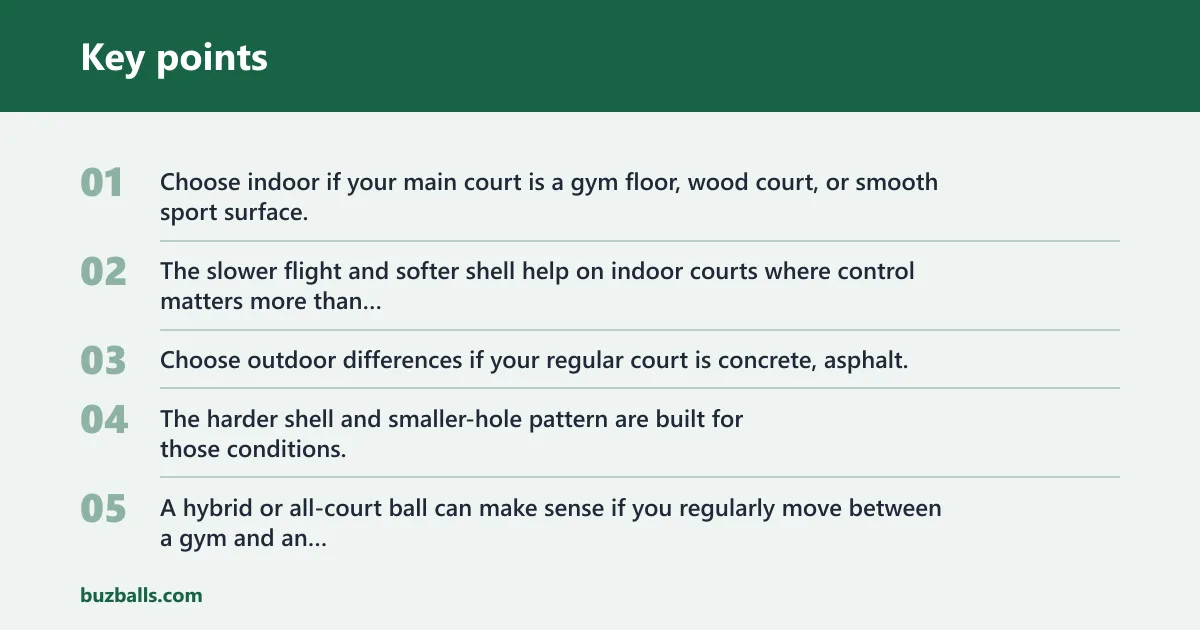
Choose indoor if your main court is a gym floor, wood court, or smooth sport surface. The slower flight and softer shell help on indoor courts where control matters more than wind stability.
Choose outdoor differences if you play on rough or windy courts
Choose outdoor differences if your regular court is concrete, asphalt, or any textured hard court exposed to wind. The harder shell and smaller-hole pattern are built for those conditions, and the ball is less likely to break down quickly.
Choose a hybrid if you split time across both
A hybrid or all-court ball can make sense if you regularly move between a gym and an outdoor court. Some all-court models use 30 to 36 holes, which puts them between the standard indoor and outdoor patterns. They are a compromise, not a universal fix.
When do hybrid pickleball balls make sense?
Hybrid balls make sense when you need one ball for two very different settings and can accept a middle-ground feel. They are most useful for mixed schedules, shared facilities, or players who do not want to carry separate indoor and outdoor balls.
30 to 36 hole designs
Some hybrid and all-court balls use 30 to 36 holes. That puts them between the common 26-hole indoor pattern and 40-hole outdoor pattern, so they usually aim for a compromise in flight and durability.
All-court claims versus real use
Brand labels can help, but they are not the same as a court match. A hybrid may be acceptable indoors and outdoors, yet still feel too lively in a gym or too soft on rough asphalt. Read the spec sheet, then match it to the court you actually play on.
Who should skip hybrids?
Skip hybrids if you want the cleanest match to one setting. Competitive players on a fixed indoor court or a windy outdoor court usually do better with a purpose-built ball than with a compromise design.
Picture a player who alternates between a school gym on Tuesdays and a rough outdoor park court on Saturdays. A hybrid may be a reasonable middle step. But if the gym sessions matter more, a true indoor ball still gives the more controlled baseline.
Replacement checklist
Pickleball balls do not fail all at once. Check them for cracks, seam splits, flattening, out-of-round wear, and dead bounce. If more than one of those shows up, the ball is usually past useful play even if it still looks usable from a distance.
| Check | What to look for | What it means |
|---|---|---|
| Cracks | Visible breaks in the shell | Retire the ball |
| Seam splits | Opening along the seam line | Retire the ball |
| Flattening | Ball no longer feels round | Ball shape has changed |
| Out-of-round wear | Wobble or uneven roll | Flight will be inconsistent |
| Dead bounce | Drop test feels dull or low | Replace it |
- Inspect the shell under bright light for cracks.
- Check the seam for splits or lifting.
- Roll the ball on a flat surface to spot wobble.
- Drop it and compare the bounce to a fresher ball of the same type.
- Retire the ball if the bounce feels dead or the shape looks uneven.
Frequently asked questions
How many holes does an indoor pickleball have?
An indoor pickleball usually has 26 holes. The larger hole pattern helps slow the flight and gives more control on wood, linoleum, and smooth sport courts. It is the common choice for gym play.
How many holes does an outdoor pickleball have?
An outdoor pickleball usually has 40 holes. The smaller holes are made for steadier flight in wind and better wear on concrete, asphalt, and other rough hard courts. That pattern is the standard outdoor setup.
Can you use outdoor pickleballs indoors?
Yes, but they may feel firmer and faster than most indoor players want. On a gym floor, an outdoor ball can be noisier and less touch-friendly than an indoor ball. If control matters more than durability, indoor is usually the better choice.
Can you use indoor pickleballs outdoors?
You can, but it is usually a compromise. Indoor balls are softer and less suited to rough ground and wind, so they can wear faster and drift more outside. They make the most sense only for calm, temporary outdoor use on a smooth surface.
What should I buy if I play in both indoor and outdoor venues?
If you split time between both, start with the ball that matches your most frequent court. If both settings matter equally, a hybrid in the 30 to 36 hole range can be worth a look, but keep a true indoor and a true outdoor ball on hand for best fit.