
How to Care for a Carbon Fiber Pickleball Paddle

Clean carbon fiber pickleball paddles with a damp microfiber cloth, then dry them, store them in a cover, and keep them away from heat and abrasive contact. Skip that, and grit wears down faster, surface texture dulls, and spin plus touch can drop. This guide covers cleaning, drying, storage, edge protection, and the habits that help preserve the paddle face.
Before you clean the paddle
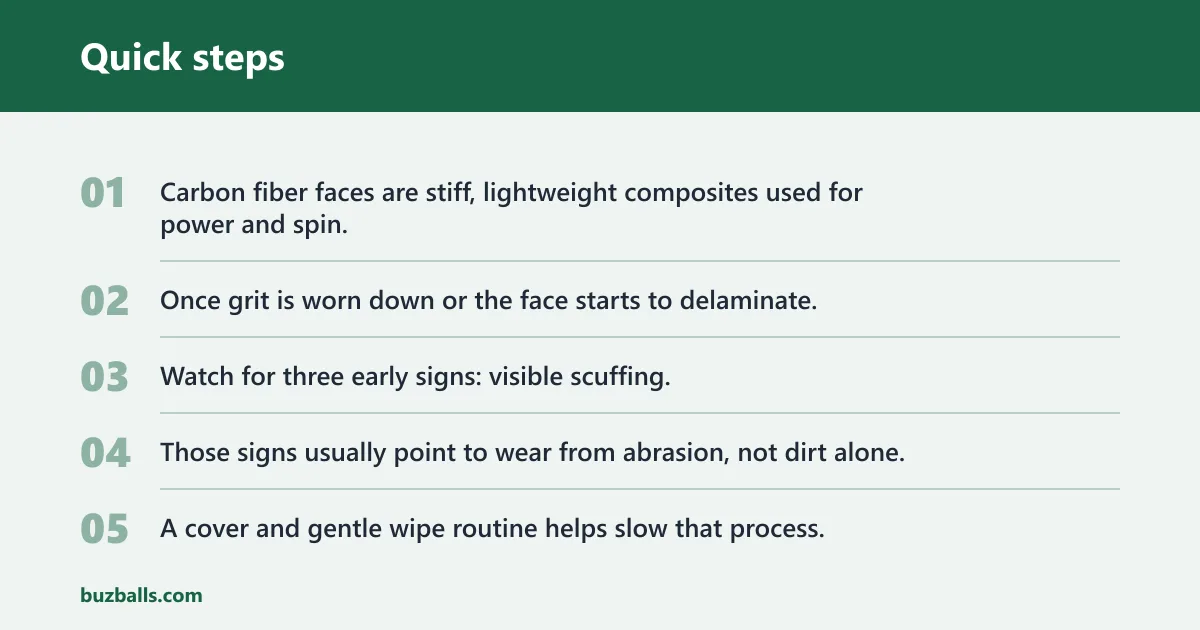
Carbon fiber faces are stiff, lightweight composites used for power and spin, and face texture matters because roughness helps the ball grab. Care is about preservation, not restoration. Once grit is worn down or the face starts to delaminate, cleaning will not bring back factory texture.
Watch for three early signs: visible scuffing, a glossy patch where the face used to feel gritty, and spin that feels less consistent on the same contact. Those signs usually point to wear from abrasion, not dirt alone. A cover and gentle wipe routine helps slow that process.
USAP and UPA-A compliant equipment generally still needs to keep a legal surface condition after care. That means you should avoid anything that changes dimensions, weight, or surface roughness. A clean paddle is fine. A sanded, over-scrubbed, or softened face is not.
What damage looks like on carbon fiber faces
Damage usually shows up first as dulling, then as uneven texture, and sometimes as edge wear where the paddle has taken bag pressure or court knocks. Raw carbon weave can be very durable, but even durable faces can lose performance if they are scrubbed hard or stored badly.
What you’ll need
- A clean microfiber cloth
- Mild soap and water
- A dry towel
- A paddle cover
How do you clean a carbon fiber paddle without damaging the surface?
Use a dry microfiber cloth first, then a lightly damp microfiber cloth if dust or court residue stays on the face. Dry the paddle fully before it goes into a cover or bag. That keeps grit from packing into the surface and keeps moisture away from the core and edge guard.
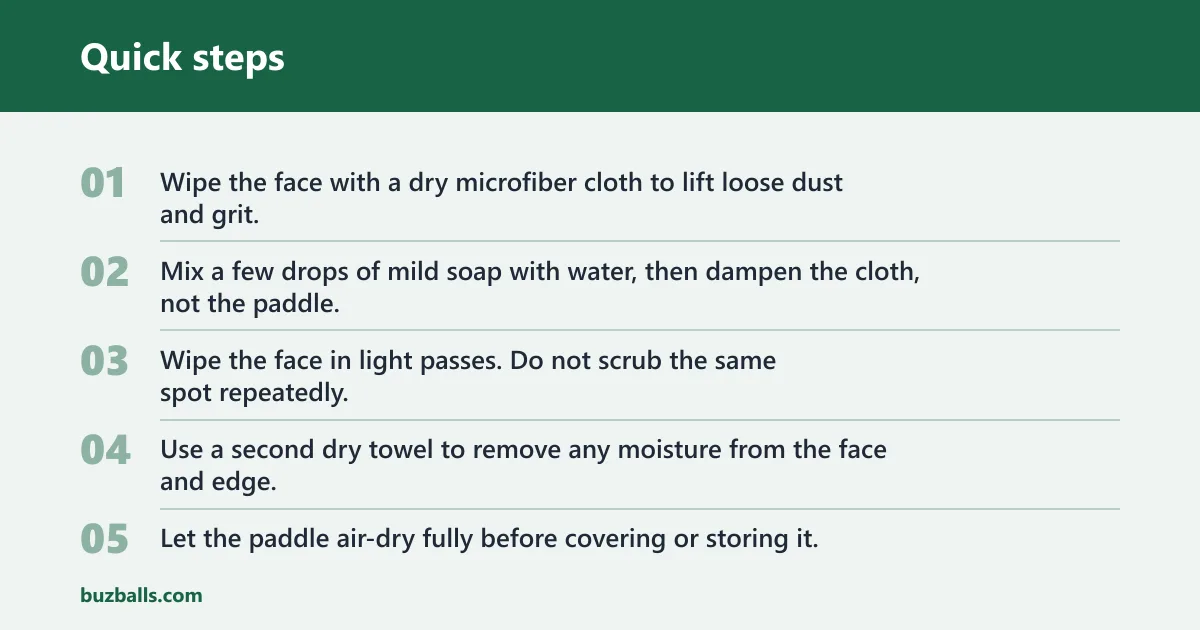
- Wipe the face with a dry microfiber cloth to lift loose dust and grit.
- Mix a few drops of mild soap with water, then dampen the cloth, not the paddle.
- Wipe the face in light passes. Do not scrub the same spot repeatedly.
- Use a second dry towel to remove any moisture from the face and edge.
- Let the paddle air-dry fully before covering or storing it.
If that did not remove the residue, repeat the damp-cloth pass once. Add one more light wipe, then recheck the face. Do not move to harsher cleaners because the goal is to lift grime, not strip texture.
Say your paddle has a dusty face after an outdoor session and a few white marks near the sweet spot. A microfiber wipe usually clears that without changing the surface. If the marks stay after one damp pass, the issue is likely scuffing or wear, not dirt.
How often should you clean a carbon fiber pickleball paddle?
Clean it after visible dust, sweat, court film, or ball residue appears, and give it a dry wipe after most sessions. A full soap-and-water wipe should stay occasional, not routine. Over-cleaning can wear down the surface texture that helps generate spin.
For many players, that means a quick dry wipe after play and a deeper gentle cleaning only when the face looks dirty enough to justify it. If the paddle stays clean and dry, leave it alone. Every extra scrub is one more chance to flatten grit.
How do you care for raw carbon fiber?
Raw carbon surfaces have a weave-exposed finish, and that texture is part of the performance. Keep the weave clean without scrubbing it. Treat visible glossing as a wear sign, because a shiny patch often means the roughness is fading in that area.
Keep the weave intact
Use only soft cloth contact on raw carbon. Avoid pressure that compresses the weave or drags debris across it. Raw carbon is often described as having very high durability, but that durability does not mean the grit stays unchanged forever.
Do not try to “refresh” the surface with abrasive towels or cleaners that feel like they polish. A raw carbon face should stay textured, not smoothed out. If the face is losing bite, the best move is to protect what remains.
Coated and painted faces need the same caution
Some carbon fiber paddles use coated or painted faces instead of exposed weave. Those finishes can look fine even while surface roughness is fading underneath. Clean them the same gentle way, but expect wear signs to show up as glossing, paint thinning, or reduced spin rather than heavy fraying.
Picture a paddle with a painted carbon face that starts to feel slick on topspin serves. The face may still look intact from a distance, yet the spin drop can tell you the texture is changing. That is a care issue first, and a replacement question later.
How should you store and protect it?
Use a paddle cover for storage and transport. It helps protect against scratches and abrasion, and it can preserve both grit and edge condition. Keep the paddle out of hot car trunks, damp gear bags, and spots where other equipment can press against the face.
Protect the edge guard
The edge guard protects the perimeter from impact and cuts down on chipping, so it deserves the same care as the face. Avoid dropping the paddle onto concrete, wedging it under heavy gear, or letting the bag crush one edge. Edge damage often starts small and spreads with repeated knocks.
If the paddle will sit in a bag, place it where the face will not rub against metal zippers, keys, or a second paddle. A cover is useful, but it works best when the paddle is also stored where it will not be compressed or overheated.
For carbon fiber pickleball checklist
| Task | Safe method | What to avoid | Frequency | Warning signs | Replace vs. clean decision |
|---|---|---|---|---|---|
| Raw carbon care | Dry microfiber wipe, then light damp wipe only when needed | Scrubbing, polishing, abrasive towels, repeated pressure on the weave | After play; deeper clean only as needed | Glossing, flatter texture, less spin on the same shot | If the face is just dirty, clean it. If the grit is visibly worn, start thinking replace. |
| Coated carbon care | Soft wipe with mild soap and water on a cloth, then dry fully | Solvents, scouring pads, soaking, repeated heavy rubbing | As needed, not on a fixed schedule | Scuffing, uneven shine, fading surface feel | If residue is present, clean it. If spin keeps dropping after cleaning, inspect for wear. |
| Edge guard care | Check for chips, wipe off dirt, and store in a cover | Bag crush, impacts, trunk heat, sliding against hard gear | After transport and weekly checks | Chipping, separation, fraying around the perimeter | Clean if dirty. Replace sooner if the edge is separating or the protection is compromised. |
| Surface wear decision | Compare current grip and look to a clean baseline | Assuming a cleaner face means a fresher face | Whenever spin or touch changes | Spin loss, glossy patches, uneven scuffing | If the problem is dirt, clean. If the surface itself is worn, replacement is the likely answer. |
What should you avoid?
Avoid abrasive towels, scrub pads, sandpaper-like cleaners, melamine sponges, bleach, alcohol-heavy cleaners, pressure washing, and soaking the paddle. Those choices can flatten grit, weaken the face finish, or push moisture where it does not belong. They can also shorten the useful life of the edge guard and core.
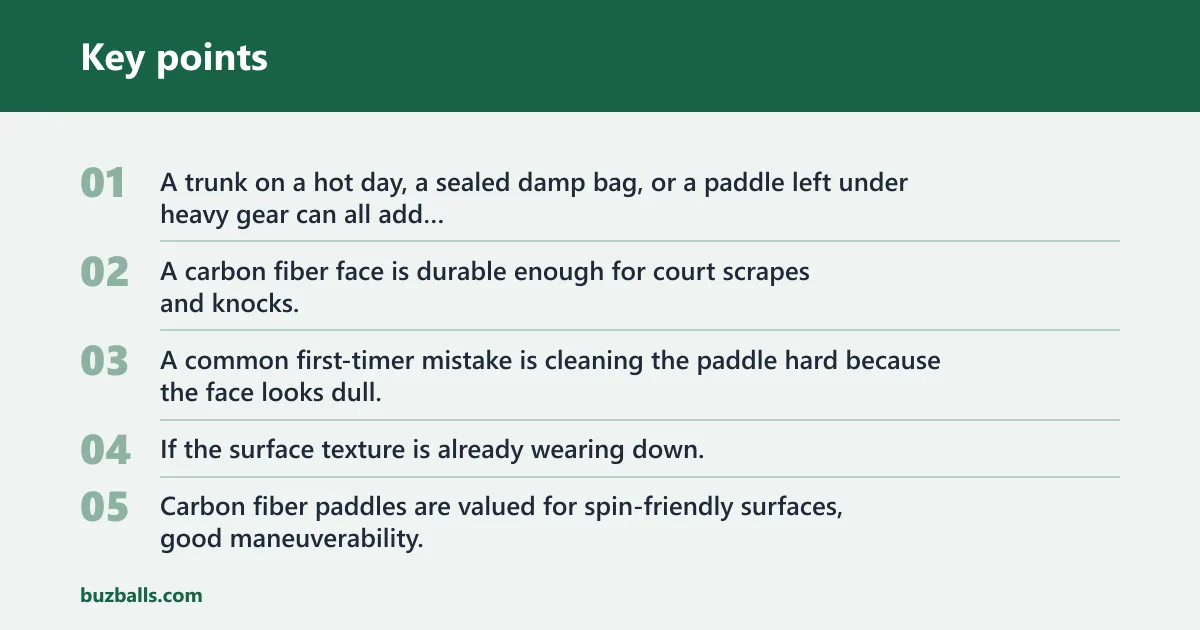
Keep heat out of the equation too. A trunk on a hot day, a sealed damp bag, or a paddle left under heavy gear can all add stress. A carbon fiber face is durable enough for court scrapes and knocks, but durability is not the same as immunity.
A common first-timer mistake is cleaning the paddle hard because the face looks dull. That often makes the problem worse. If the surface texture is already wearing down, more abrasion can speed the loss of spin instead of fixing it.
Are carbon fiber pickleball paddles good for spin and durability?
Yes. Carbon fiber paddles are valued for spin-friendly surfaces, good maneuverability, and a crisp feel. They are also durable enough for normal court knocks, but that durability is not unlimited. If the grit wears down, spin can fall even while the paddle still looks serviceable.
They often cost more than fiberglass or graphite paddles. Fiberglass usually gives more pop and a softer feel, while graphite is described as softer than carbon fiber. That is why reviews and product specs matter before buying, especially if you care about spin retention.
Examples to compare in specs and reviews include 12K carbon builds from brands such as JOOLA, Selkirk, CRBN, and Six Zero. Look for surface type, core thickness, edge construction, and whether the face is raw carbon or coated carbon rather than guessing from the name alone.
Frequently asked questions
How do you clean a carbon fiber pickleball paddle without damaging the surface?
Wipe it first with a dry microfiber cloth, then use a cloth lightly dampened with mild soap and water if needed. Dry the face fully afterward. That keeps abrasive debris off the surface without scrubbing away the grit that supports spin.
Can you use water or soap on a carbon fiber pickleball paddle?
Yes, but sparingly. Use mild soap and water on a microfiber cloth, not a soaked paddle. Keep liquid away from the core and edge area, then dry the face fully before storage or transport.
How do you care for a raw carbon fiber pickleball paddle so the grit lasts longer?
Use only soft cloth cleaning, avoid repeated rubbing, and store it in a cover. Raw carbon’s exposed weave has very high durability, but heavy abrasion can still flatten the texture. Watch for glossing, because that often signals wear in the spin surface.
What should you avoid doing with a carbon fiber pickleball paddle?
Do not scrub it with abrasive pads, soak it, use harsh cleaners, or leave it in hot storage. Avoid impacts against hard gear as well. Those habits can damage the face, chip the edge guard, and reduce spin-related surface roughness.
Does carbon fiber need a paddle cover or edge protection?
A cover is strongly useful for storage and transport because it helps prevent scratches and abrasion. Edge protection matters too, since the edge guard takes repeated knocks. Neither one is mandatory for play, but both help preserve the paddle’s condition longer.
How do you know when a carbon fiber paddle surface is wearing out?
Look for spin loss, glossy patches, and scuffing that stays after cleaning. If the face still feels smooth instead of textured, the grit may be worn. At that point, cleaning can remove dirt, but it cannot restore the original playing surface.
