How to Care for a Junior Cricket Bat as Kids Grow

Check fit every season and after any growth spurt of about 5 cm or more. Oil the blade lightly once a year, keep the bat dry, and replace it when the child’s stance or swing starts to look cramped. Miss those signs and the bat wears out faster, the face and toe weaken, and poor technique or early breakage becomes more likely. This guide covers cleaning, storage, grip care, toe protection, and the clearest signals that a junior bat is ready for resizing or replacement.
When has a junior bat been outgrown?
A junior bat has usually been outgrown when it no longer matches the child’s height, grip, and swing path. The clearest signs are a cramped stance, a bat that feels long in the pickup, or a top handle that no longer sits where the body can control it. Age alone is a weak guide.
Fit signs to check first
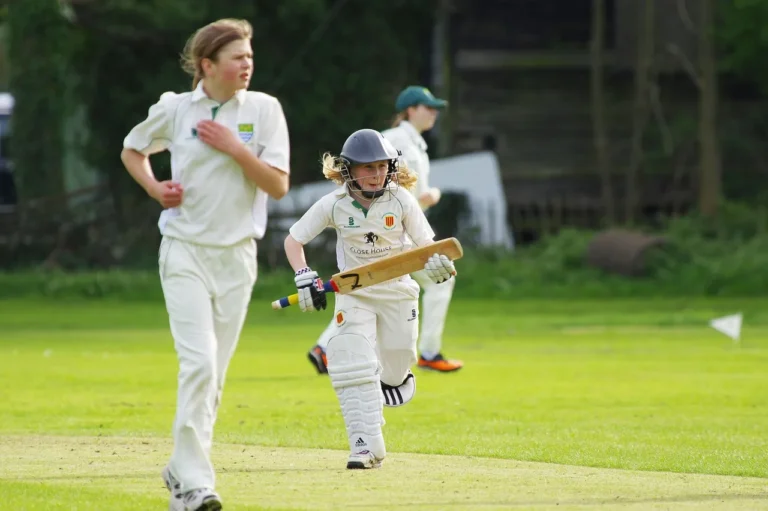
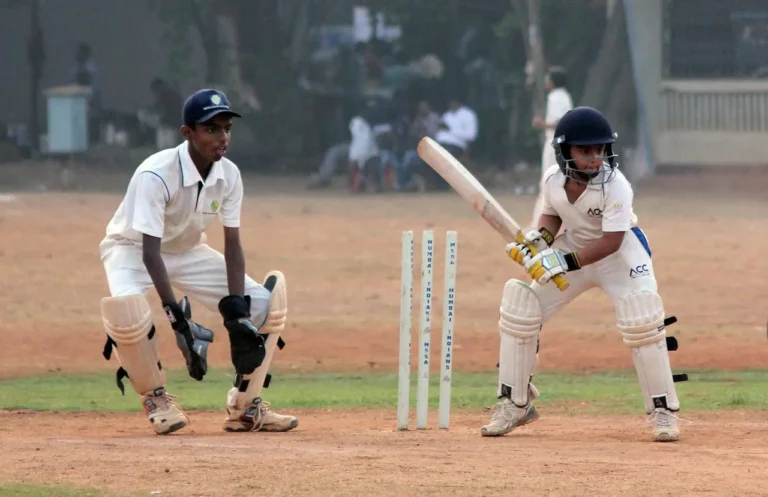
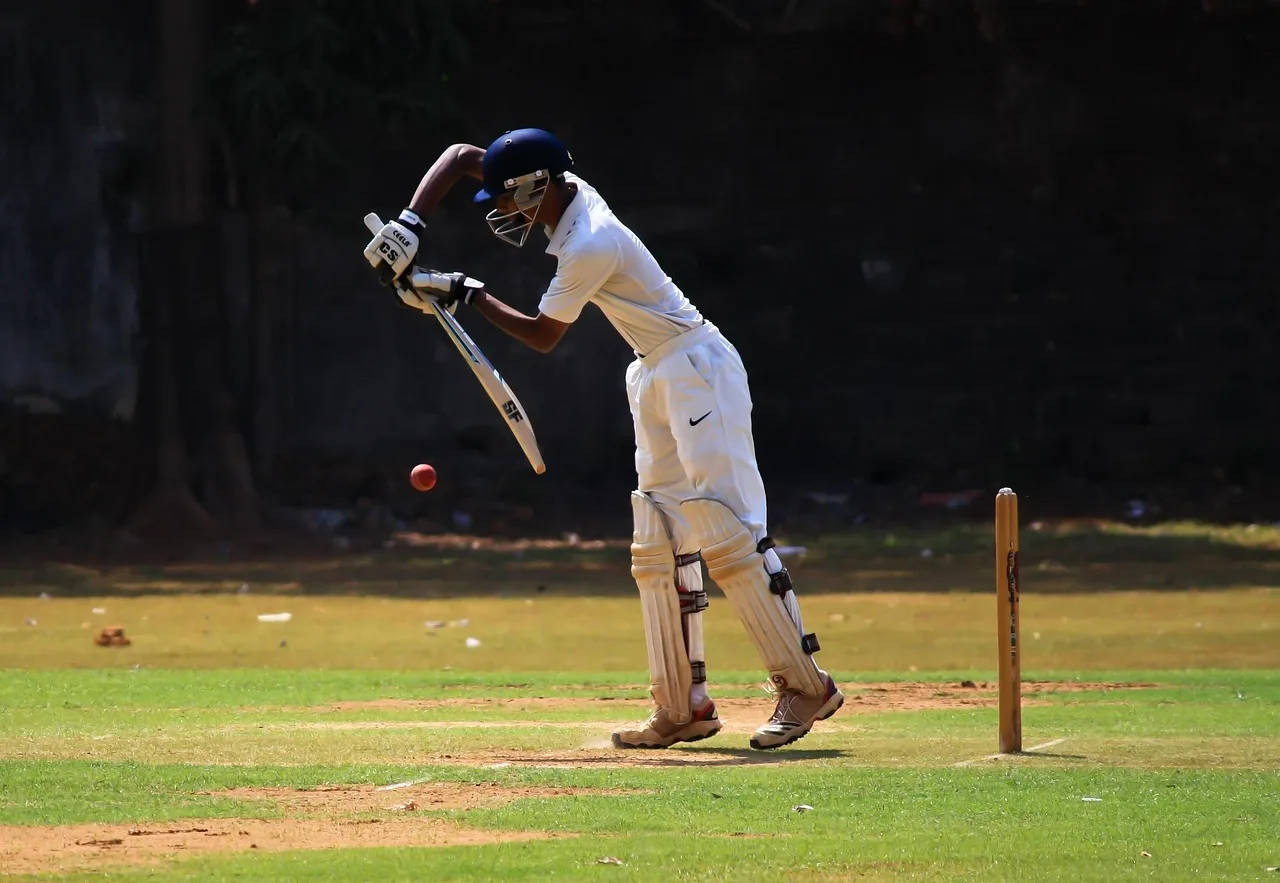
Look at the bat’s top of handle against the inside groin of the front leg. That is the usual sizing reference when the child stands ready to play. If the bat sits higher than that point, or if the child’s top hand cannot control it cleanly, the bat is likely too large.
Choosing a bat that is too long can lead to poor batting habits. A bat that is too heavy makes pull and cut strokes harder to play, and a child should be able to hold the bat at arm’s length with the top hand if it is not too heavy.
When a size change makes sense
Move up a size only when the child can still control the current bat comfortably and the next bat does not force awkward posture. A bat should suit the child right now, not the next growth spurt. If the new size changes both length and feel too sharply, stay put or choose a lighter option.
Suppose a child grows 5 cm in a term and the old bat suddenly rests above the inside groin reference. If the pickup also feels sluggish and the bottom hand starts to drag, that is a sign to move to the next size band rather than wait for another season.
What size junior bat fits your child now?
Size should follow height and control, not age alone. Junior cricket bats are generally available from Size 0 through Size 6, followed by Harrow and adult sizes. Age can help narrow the search, but brand sizing charts differ, so the final check should always be the child’s body and pickup.

Common size bands in plain terms
Sizes five to three are recommended for young children around eight years old. Kids around 12 years of age will generally use a Harrow, the largest junior-size cricket bat. If Harrow is unavailable, a size six may still suit many 12 year olds.
For older juniors, Harrow is often the last stop before adult bats. Around 13 and above, some players may move into adult sizing, but only if the bat still feels balanced and the length is manageable. A larger label is not enough on its own.
Why brand charts differ
One brand’s Size 6 can feel different from another brand’s Size 6 because shape, blade profile, handle build, and pickup vary. That is why a specialist cricket retailer may ask the child to stand with the bat rather than rely on the size tag alone.
A children’s bat and ball should be chosen by height, weight, length, and safety considerations. If a brand chart and the fit test disagree, trust the fit test first.
Size bands, fit checks, and rough ages
| Height band | Typical size band | Fit check | What to watch |
|---|---|---|---|
| Shorter primary-school height | Size 0 to Size 2 | Handle rests close to the inside groin reference | Bat should feel light enough to lift cleanly |
| Young child, around eight | Sizes five to three | Top of handle meets the inside groin of the front leg | Long bat habits usually show up here first |
| Older junior, around 12 | Harrow | Child can hold the bat at arm’s length with the top hand | Pickup should stay controlled for school or club play |
| Early teen, 13+ | Harrow or adult size | No crowding in the stance or backlift | Move up only if weight and balance still suit the player |
How should a junior bat feel in the hands?
The bat should feel easy to lift, stable through the swing, and comfortable to hold with one hand at arm’s length. Balance and pickup matter more than the number on a scale. A bat can look light on paper and still feel awkward if the weight sits badly in the blade or handle.
The one-hand hold test
Hold the bat at arm’s length with the top hand. If the child can control it without the wrist collapsing or the shoulder rising hard, the weight is usually manageable. If the bat droops, twists, or makes the arm strain, it is likely too heavy for that stage.
A bat that feels too heavy can slow swing speed and make stroke choices less clean. That matters more in junior hard-ball cricket, where timing and face control matter, than in backyard tennis-ball cricket, where the ball is lighter and contact is less punishing.
What changes with playing format
Backyard tennis-ball cricket can tolerate a slightly less refined bat, but hard-ball cricket cannot. School or club use puts more stress on the face, edges, and toe, so pickup, control, and protection matter more as soon as the child moves into that format.
A common first-timer mistake is choosing the lightest bat on the shelf without checking pickup. A bat that is light but badly balanced can still feel slow through the shot, while a well-balanced bat of the same size may feel easier to swing.
Junior bat checklist table
Use this after each growth spurt, at the start of a season, and again after a period of heavy use. It helps you decide whether to keep the bat, repair it, hand it down, or replace it.
| Child height band | Fit test | Maintenance tasks | Protection upgrades | Replacement triggers |
|---|---|---|---|---|
| Shorter junior band | Handle sits near the inside groin reference; child lifts the bat cleanly | Wipe dry after use; check grip and toe monthly | Basic grip; toe guard if hard ground is common | Bat feels long after a growth spurt; stance looks cramped |
| Middle junior band | Child can hold the bat at arm’s length with control | Inspect face, edges, grip, and toe every few sessions | Rubber toe; face sheet or sleeve for hard-ball play | Pickup becomes sluggish; edges split or the grip twists |
| Older junior band | No crowding in stance; backlift stays smooth | Oil lightly once a year if needed; store dry and flat | Protective sleeve, toe protection, and a grip that will not slip | Child has moved into adult size or the bat is worn too far down the face |
-
Check the current fit. Use the inside groin reference and the one-hand hold test together. If both fail, the bat has probably moved beyond the child’s current size band.
-
Inspect wear points. Look at the face, edges, grip, and toe after every block of use. Cracks, soft spots, twisting grips, and toe splits are repair signals, not signs to ignore.
-
Match the bat to the format. Tennis-ball play can extend a bat’s life, but hard-ball use needs better protection and closer checks. If school or club use starts, raise the standard immediately.
-
Decide the next step. Keep the bat if the fit remains good, repair it if damage is local, hand it down if it is still sound but too small, and replace it if the child has outgrown it or the structure is tired.
How do you care for a junior bat between seasons?
Between seasons, the bat should be dry, clean, and stored where temperature and moisture stay steady. Seasonal care is about preventing face softening, toe damage, grip decay, and edge cracks. A bat that sits damp or in a hot shed ages faster, even if it is barely used.
Dry storage and moisture checks
Wipe the bat after use and let it dry before putting it away. Store it indoors, not in a damp garage or car boot, and keep it out of direct heat. Moisture and heat are hard on willow and can make small surface damage spread.
Face, edge, grip, and toe checks
Inspect the face for scuffs and the edges for splits. Check whether the grip has hardened, turned slick, or begun to twist, and look closely at the toe for wear from net lanes, rough ground, or repeated tapping. These are the places that usually fail first.
If the bat is for hard-ball cricket and needs it, a light annual oiling can help protect the blade, provided it is done sparingly. Too much oil can leave the surface soft and heavy, so the aim is protection, not soaking.
Regrip, repair, or protect
-
Replace the grip first. If the handle slips or twists, fit a fresh grip before the problem affects control. A secure grip matters more than cosmetic wear.
-
Patch minor damage early. Small edge scuffs and toe wear are easier to manage than cracks that travel into the blade. If the damage is shallow, protect it and watch it closely.
-
Retire warped bats. If the bat no longer sits straight, feels loose in the pickup, or shows spreading cracks, do not keep pushing it. That is a replacement signal, not a storage issue.
How much protection does a junior bat need?
Protection should match use. A backyard bat can get by with basic care, while a school or club hard-ball bat usually needs a rubber toe, face protection, and a grip that will not slip. Add protection when wear starts, not after the damage has already spread.
Toe, face, and grip choices
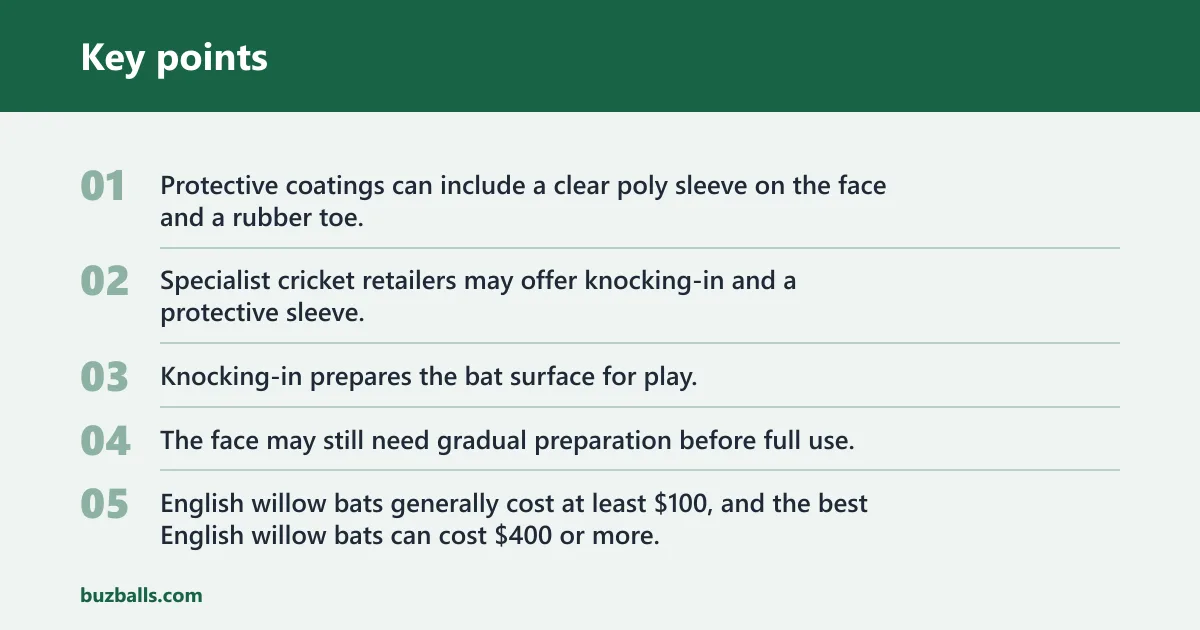
Protective coatings can include a clear poly sleeve on the face and a rubber toe. Those additions help against moisture, scuffs, and toe damage, especially when a bat is used on abrasive ground or moved between practice sessions and matches.
Specialist cricket retailers may offer knocking-in and a protective sleeve. A grip matters too: if it twists or slips, the child’s control goes first, and the bat often gets hit off-center more often as a result.
Knocking-in and ready-to-play labels
Knocking-in prepares the bat surface for play. Pre-treated bats labelled pre-prepared or ready to play have had initial knocking-in done, but that does not mean they are finished for hard-ball use. The face may still need gradual preparation before full use.
For a junior hard-ball bat, that matters. A ready-to-play label can shorten the early prep stage, but it does not remove the need for care, inspection, and sensible use during the first sessions.
Willow type and cost choices
English willow bats generally cost at least $100, and the best English willow bats can cost $400 or more. Kashmir willow is usually the cheaper route, and the trade-off is usually price against performance feel and, in many cases, less refinement in pickup.
For junior use, the right willow depends on format and budget. A child who mainly plays backyard tennis-ball cricket may not need premium willow. A child in school or club hard-ball cricket usually benefits more from a bat that is better prepared and better protected.
Frequently asked questions
How do I know when my child has outgrown their cricket bat?
The main signs are a cramped stance, a handle that no longer sits near the inside groin reference, and a bat that feels awkward in one hand. If the child’s swing starts to look shortened or the pickup gets sloppy after a growth spurt, the bat is probably too small or too heavy.
Should I buy a bigger junior bat so they can grow into it?
Not if it makes the bat too long or too heavy right now. A bat should suit the child’s current height and control, because a poor fit can cause bad batting habits. If the next size feels awkward, keep the current size until the child truly fits the larger one.
What size cricket bat is right for my child as they grow?
Use height and fit first, then compare the child with the common junior bands. Sizes five to three often suit children around eight years old, and kids around 12 years of age will generally use Harrow. Brand charts vary, so the fit test should always have the final say.
How heavy should a junior cricket bat be?
The right bat is the one the child can hold at arm’s length with the top hand and still control. Balance and pickup matter more than the scale number. If the bat makes pull and cut strokes hard to play, it is too heavy for that child.
When should I replace a junior cricket bat?
Replace it when the child has outgrown the size, the bat is too heavy for their current strength, or the wear has moved beyond routine repair. Cracks that spread, a loose feel in the pickup, or a stance that looks crowded are all clear replacement cues.
How do I care for a junior cricket bat between seasons?
Keep it dry, store it indoors, and check the face, edges, grip, and toe before and after the off-season. A light yearly oiling can help for hard-ball use, but only sparingly. If the grip twists or the toe starts to split, deal with it before the next season starts.