Cricket Ball Types: What Are They and How Do They Differ?

Cricket balls are commonly grouped into red, white, pink, and practice balls for most players, with red often used for longer daylight matches, white for limited-overs and night play, pink for day-night multi-session games, and practice balls for nets or skill work rather than formal matches. Pick the wrong one and you can get poor visibility, the wrong level of swing or seam, faster wear, and practice that does not match match conditions. This guide compares how each type is made, how it behaves in the air and off the pitch, how it wears, and which ball suits your format, surface, light, and skill level.
What are the main cricket ball types?
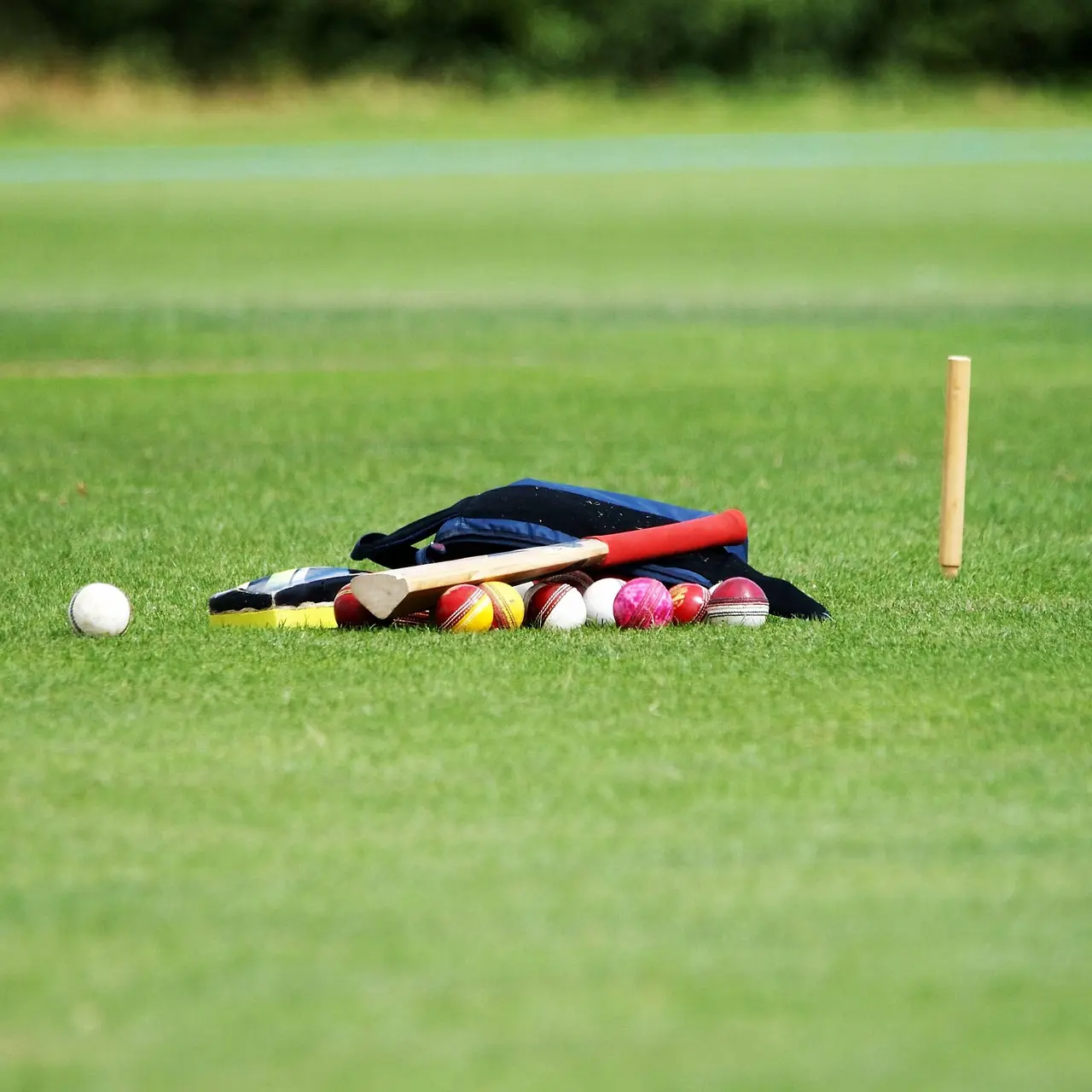
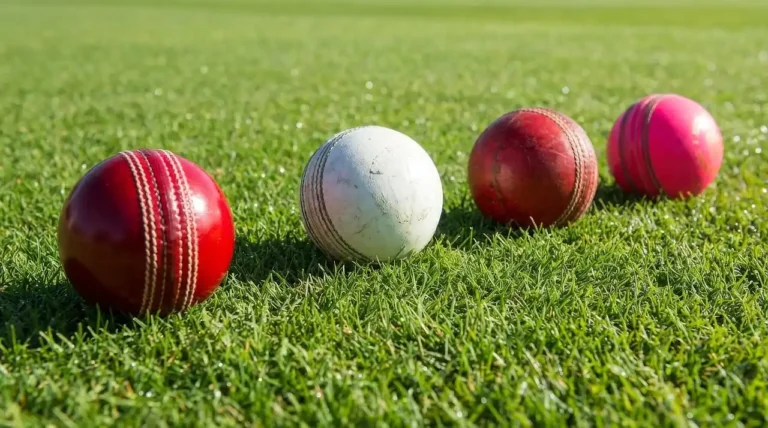
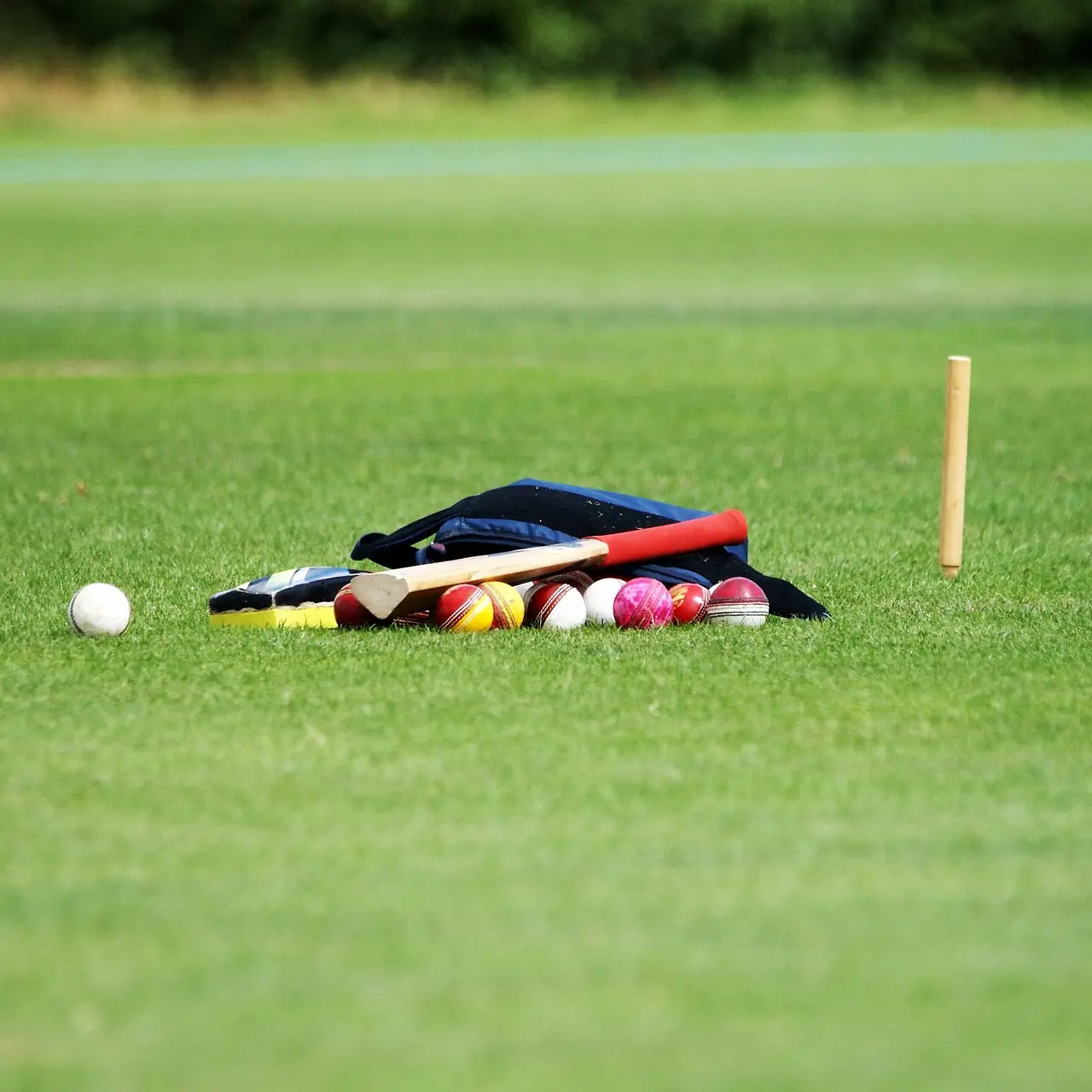
For most players, the useful split is simple: red match balls, white match balls, pink match balls, and practice balls. Colour explains part of the difference, but the real playing changes come from lacquer, seam profile, leather quality, and how quickly each ball loses shine, scuffs, and softens during use.
Red match balls
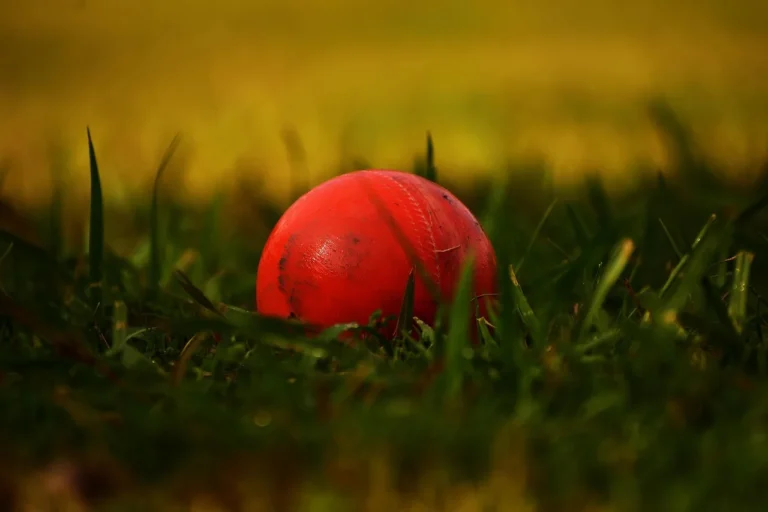
Red balls are commonly the standard ball for most Tests and first-class matches played in daylight, since they are generally easier to track against a daytime pitch and outfield and are designed to last through longer innings. They suit older-ball phases and make seam position easier to read on natural turf in daytime conditions.
That does not mean every red ball plays the same. Club-grade red balls can have a lower seam, thinner lacquer, or a looser finish than higher-grade balls, which changes how long the shine lasts and how well the seam keeps standing proud.
White match balls
White balls are commonly used in ODIs and T20s because they are generally easier to see under floodlights, against darker evening skies, and on broadcast cameras late in an innings. They also tend to show marks and scuffs faster, so visible wear often arrives earlier than with a red ball.
That quicker cosmetic wear matters. Once the surface dulls and the lacquer breaks down, bowlers can lose the cleaner new-ball feel sooner, and fielders can end up with a ball that looks older even when the innings is still young.
Pink match balls
Pink balls are generally made for day-night multi-session cricket, especially day-night Tests. They are tuned for visibility under lights, but their finish and wear pattern are their own thing, not a midpoint between red and white.
Players often notice that pink balls can stay shinier for a while, then change character in a less familiar way than a red ball. Depending on the light and background, some batters also find twilight harder than full daylight or full artificial light.
Practice and training balls
Practice balls can include leather training balls, softer training balls, rubber balls, wind balls, indoor balls, and age-group variants. They exist because match realism, safety, durability, and cost do not all point to the same ball.
A leather practice ball gives the closest seam feel and weight to a formal match ball. A rubber or softer training ball is better for repetition, junior sessions, confined spaces, and drills where getting hit is part of the learning risk.
Why do different cricket ball types play differently?
Cricket ball types play differently because the outer leather, lacquer, seam height, stitching quality, and internal build change how the ball grips the hand, moves through the air, reacts off the surface, and resists wear. Colour matters for sighting, but construction and finish drive most of the behaviour you notice.
Leather cover and surface finish
The leather cover affects grip, seam feel, and durability. A harder, cleaner-finished cover usually keeps a truer shine early on, while a softer or lower-grade cover can roughen faster and change release feel sooner.
Lacquer matters here. A heavier or more durable lacquer can help preserve shine and delay visible scuffing, but it can also make the surface feel slicker at first. Once that finish wears away, the ball often changes character quickly.
Seam shape and stitching
The seam is the stitched ridge that joins the leather pieces around the ball. It gives bowlers a raised line to grip, helps them set the seam at release, and can make the ball deviate off the pitch when it lands upright.
Seam height is a practical difference many beginner guides miss. A more prominent seam usually gives more obvious tactile grip and can hold up better for seam bowling. A flatter seam may feel easier for some spinners to roll, but it often offers less help when bowlers try to hit the deck and let the surface do the work.
Cork core and layered construction
Inside a match cricket ball is typically a cork core with layered winding around it, under the leather cover. The core and surrounding layers affect hardness, rebound, and how long the ball keeps a solid feel as overs pass.
That is why a match ball feels so different from a rubber training ball. The harder layered build gives the heavier rebound, sharper impact, and firmer contact off the bat that players associate with formal cricket.
Lacquer, shine, and wear rate
Shine and roughness are central to movement. A smoother side can travel through the air differently from a rougher side, especially when the seam is presented steadily. Faster wear usually means earlier changes in swing, grip, and visible condition.
White balls often show this fastest to the eye. Red balls often wear in a steadier, more familiar way across long spells. Pink balls can hold a polished look well, yet still present sighting or feel differences once evening conditions change.
Inside the ball: why construction changes performance
A cricket ball is more than just leather on the outside. The supporting article explains the cork core, string windings, stitched leather cover, and seam structure, then shows how each layer affects bounce, swing, seam movement, and overall durability. It also covers why a well-made ball feels more consistent, while wear or uneven construction can make it behave unpredictably.
This matters because ball quality affects control, safety, and match conditions for every level of play. If you want a clear breakdown of how the layers work together, see cricket ball construction.
Which ball is used in each cricket format?
Red balls are commonly used for most Tests and first-class matches, white balls for ODIs and T20s, and pink balls for day-night Tests. In club, school, and recreational cricket, local rules, budget, and playing time also matter, so the same format can use different grades or training variants.
Tests and first-class cricket
Red balls are the normal choice for long-format daylight cricket. That matches common viewing and scoring categories too: Cricinfo lists Tests and domestic first-class cricket as competition categories, and its main page includes a World Test Championship section.
Those references matter because they show the format mapping is not guesswork. A recent Test match example listed there is New Zealand vs India, and a live upcoming Test series example listed there is South Africa vs Bangladesh.
ODIs and T20s
White balls are used in one-day and T20 cricket because they remain easier to pick up under lights, against evening backgrounds, and during fast fielding exchanges. Cricinfo lists ODIs and international T20s as competition categories, which reflects that standard format split.
In practical terms, limited-overs cricket also puts more value on immediate visibility, a newer-ball phase, and a surface that still looks clean on camera and to fielders. That is where white has the edge despite faster visible scuffing.
Day-night Tests
Pink balls are used for day-night Tests so the ball stays more visible as natural light fades and floodlights take over. That format is still Test cricket, but the light conditions force a different ball choice.
Some players like the way the pink ball shows up at night. Others struggle most during the transition period, when the sky, sightscreen, and stadium lighting all shift at once.
Club, school, and recreational matches
This is where rules and reality can split. A club may schedule a 40-over daylight match with a white ball, a school may use a cheaper red leather ball for long practice games, and a recreational side may use a soft training ball on a small outfield.
Cricinfo’s live scores page tracks men’s and women’s top-level matches with ball-by-ball commentary and minute-by-minute updates, but local cricket often uses broader judgment on grade and cost. Check your competition rules first, then pick the best construction for the conditions.
Red, white, and pink ball differences
Visibility in daylight and under lights
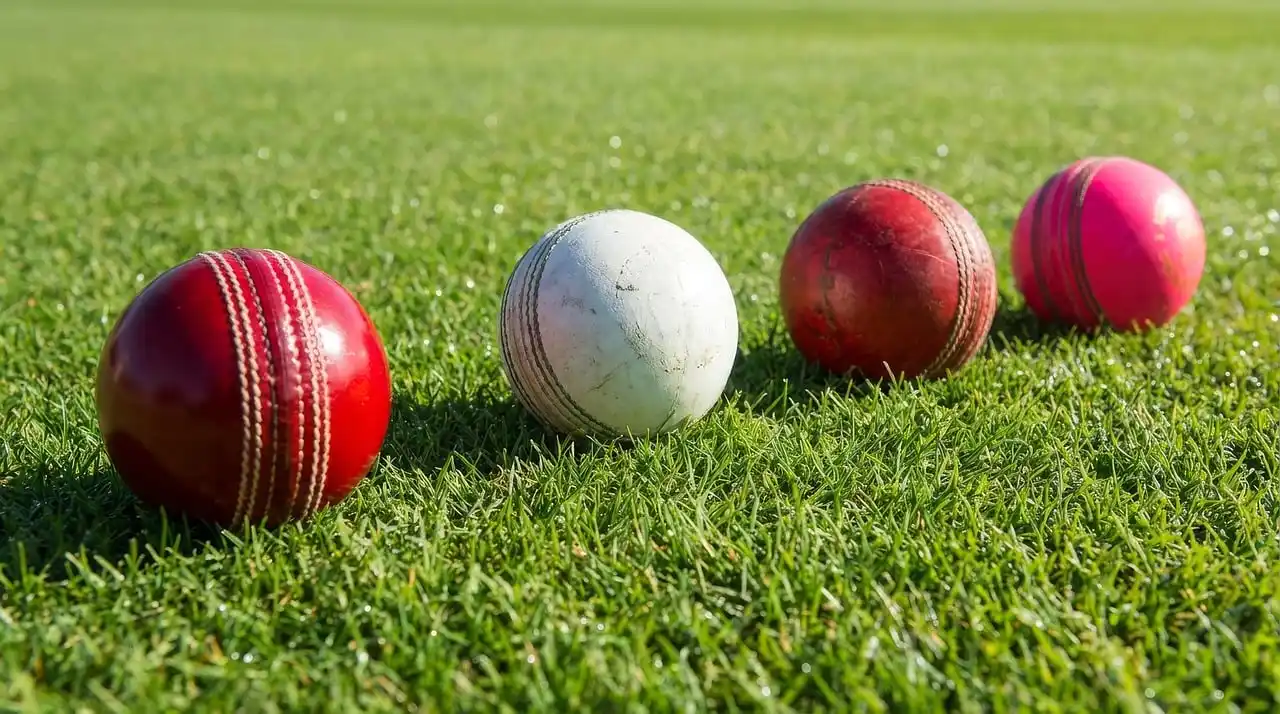
Red is usually easiest in bright daylight on natural grass. White is the standard under floodlights and in limited-overs play. Pink is built for the crossover from day to night, but some players still find twilight the hardest time to sight it cleanly.
Suppose a match starts late afternoon and runs into a bright-lit evening. A red ball can fade into the background sooner, while a white ball stays clear but may scuff fast. Pink is the compromise designed for that slot, though twilight can still be awkward for some batters.
Swing and seam behavior across innings
New-ball movement depends on shine, seam presentation, and pace through the air more than colour alone. Red balls are often preferred for long spells because their wear pattern suits a longer progression from new-ball swing to older-ball seam and softness.
White balls can swing well when new, but their visible wear can come sooner. Pink balls may hold lacquer longer, which can keep a polished look deep into a session, yet the actual movement pattern still depends on seam position, surface condition, and bowling quality.
Seam movement and swing are different. Swing is movement in the air before pitching. Seam movement is deviation after pitching because the upright seam grips or skids differently on the surface.
How quickly each ball scuffs and softens
White balls usually show dirt, grass marks, and scuffing fastest. Red balls tend to hide cosmetic wear better and often move into the older-ball phase more gradually. Pink balls can keep colour visibility well, but their finish can still move from glossy to tackier or duller over time.
A common beginner mistake is assuming a white limited-overs ball and a red multi-day ball will swing and wear in the same way just because they are the same brand. With white and pink balls in particular, shine, seam firmness, and hardness can change on a different schedule from the colour staying visible.
Common player complaints and tradeoffs
White balls can degrade visibly fast and feel less satisfying for very long net sessions on abrasive surfaces. Pink balls can be harder to pick up at twilight for some players, even though they are better than red once the lights fully matter. Red balls are poor for night use, even when they age well in daytime cricket.
Brand and grade also change the picture. Two white balls from different makers may share a colour but differ in seam height, lacquer thickness, and leather firmness enough to behave differently over the same number of overs.
Ball choice decision table
| Ball type | Match format | Visibility | Wear rate | Swing and seam behavior | Training suitability | Best use case | Recommendation rule |
|---|---|---|---|---|---|---|---|
| Red match ball | Tests, first-class, longer club daylight matches | Best in daylight on natural grass | Usually steadier-looking wear than white | Good new-ball swing if polished well; reliable long-format seam and older-ball phases | Good for advanced nets when match realism matters | Daytime turf cricket with longer innings | Choose red when the match is long, outdoors, and mainly in daylight. |
| White match ball | ODIs, T20s, many evening limited-overs matches | Best under floodlights and evening skies | Shows scuffs and discoloration fastest | Can swing well when new; feel may change sooner as lacquer and surface marks build | Useful for format-specific nets, wasteful for casual drills | Shorter matches where sighting under lights matters most | Choose white when you play limited overs or under lights and want match-true visibility. |
| Pink match ball | Day-night Tests and long evening multi-session games | Built for day-to-night transitions and floodlights | Moderate wear pattern; can keep a polished look for a while | Movement profile depends heavily on lacquer retention and light conditions | Best only when preparing for day-night cricket | Long-format games crossing from daylight into artificial light | Choose pink only when your match timing actually matches day-night conditions. |
| Leather practice ball | Nets, skill sessions, school and club training | Depends on colour chosen | Varies by grade; usually lower cost than match balls | Closest training option to match seam, release, and rebound | High | Batting and bowling practice that needs realistic feel | Choose leather practice balls when you need match-like weight and seam without using premium match stock. |
| Rubber or soft training ball | Drills, junior coaching, small spaces, casual play | Often bright and easy to track | Usually very durable on hard surfaces | Less true seam response; swing feedback is limited | Very high | Repetition, confidence building, and safer high-volume sessions | Choose rubber or soft balls when safety, cost, and repetition matter more than match realism. |
What cricket ball should you use for practice?
Use a leather practice ball when you need match-like weight, seam feel, and rebound in nets. Use a rubber, soft, or indoor training ball when safety, repetition, surface protection, or junior coaching matter more than exact match behaviour. Match balls are often the wrong tool for casual drills.
Leather practice balls for match-like nets
A leather practice ball is the closest training option to a formal match ball without using premium match stock every session. It suits bowlers working on seam presentation, batters preparing for realistic bounce, and wicketkeepers needing true pace and carry.
Picture a club net on a turf strip where opening bowlers need to rehearse new-ball lengths. A leather practice ball makes sense there because release feel, seam grip, and bat contact all stay close to match conditions.
Rubber and soft training balls for skill work
Rubber balls, soft training balls, and wind balls are better for throwdowns, junior catching, indoor sessions, and practice on concrete or in small spaces. They cost less to replace and reduce the penalty for a mistimed stroke or a poor pickup.
These are not substitutes for learning genuine seam bowling with a hard leather ball. They are tools for volume and safety, especially when the session goal is reaction time, hand-eye work, or basic technique.
Junior and age-group options
Age-group cricket often uses smaller or lighter balls under local laws or competition rules. That matters because correct size and weight let juniors learn timing and release mechanics without forcing adult-level impact and hand strength too early.
Check the specific playing conditions for your age group. Do not assume the same ball used by senior men also applies to women’s, junior, or school competitions.
When a match ball is the wrong practice choice
Using a premium match ball for every casual session can be poor value and can teach the wrong lesson if the surface is unrealistic. Abrasive concrete, wet outfields, and mixed-skill drills can ruin the finish before anyone gets useful match-style feedback from it.
Why do some cricket balls swing more than others?
Some cricket balls swing more because their surface condition, seam angle, lacquer retention, and release quality let air move differently over each side of the ball. Newer shine helps, but swing is never just about the ball itself, wrist position, pace, weather, and upkeep all change the result.
Shine, roughness, and airflow basics
A polished side and a rougher side create different airflow around the ball. If the bowler presents the seam steadily, that contrast can help the ball curve before it pitches.
Beginners do not need a physics lecture to use that idea. The practical lesson is to keep one side as smooth as the rules allow and avoid letting the whole ball become uniformly dull too early.
Seam position and wrist control
The seam acts like a guide. A stable seam angle gives the moving air a more consistent reference, and a stable wrist helps keep that angle from wobbling out of the hand.
Even a high-quality ball will not swing much if the seam tumbles. Conversely, a modest club ball can still move if the bowler controls seam position well and the ball has enough surface contrast left.
Ball age, lacquer loss, and reverse swing limits
As the lacquer wears and the surface roughens, conventional new-ball swing usually changes. In longer formats, older balls can still offer movement, but the conditions needed are narrower and harder for beginners to access consistently.
That is one reason red balls suit long-format cricket. Their wear pattern often lets the innings develop through more distinct phases instead of burning through the early polished stage too quickly.
Condition factors: surface, humidity, and lights
Surface and weather matter. Damp grass can mark a ball differently from a dry square, and humidity can alter how bowlers and batters perceive movement. Under lights, visibility changes can also affect how late a batter picks the line, which can make the ball seem livelier than it is.
How hard is a cricket ball and what is inside it?
A cricket ball is hard compared with most common field-sport balls because it has a solid layered build around a cork core and a tight leather cover. That hardness affects safety, rebound, hand comfort, and the sharp feel off the bat, which is why ball choice matters so much in training.
Why a cricket ball feels harder than most sports balls
Footballs, soccer balls, and volleyballs are air-filled and deform on impact. A cricket ball does far less of that. The result is a firmer strike on the bat, more sting in the hands, and a higher penalty for poor protective habits.
That hardness is part of the sport’s design. It helps the ball keep shape, carry well, and respond clearly off the pitch, but it also means beginners should treat match balls with respect from the first session.
Inside the ball: cork core, winding, and cover
A standard hard cricket ball is usually built around a cork core, then wrapped in layers, then covered in stitched leather. The stitched seam joins the leather pieces and creates the raised ridge bowlers use for grip and control.
The exact internal recipe varies by maker and grade, but the main components remain the same: cork for the centre, layered material for shape and firmness, leather outside for durability and handling.
How construction affects rebound, feel, and safety
A firmer ball rebounds faster from bat and surface and transfers more force into the hands. A softer training ball reduces that impact, but it also changes timing and can hide flaws in technique that a real leather ball would expose.
What is the standard cricket ball size?
For senior men’s cricket, most laws and manufacturer specs list a match-ball circumference of 22.4 cm to 22.9 cm and a weight of 155.9 g to 163 g. Women’s and junior competitions may use different sizes, so buying by “cricket ball” alone is not specific enough.
Circumference and weight ranges
If a ball is outside that range, it should not be treated as a standard senior men’s match ball.
Men’s, women’s, and junior variations
Competition rules can specify smaller or lighter balls for women’s or junior cricket. Cricinfo’s live scores page includes women’s matches in its coverage, which is a useful reminder that “top-level cricket” does not always mean one identical ball specification across every category.
Why size and weight matter when buying
Size and weight change release feel, bounce, and confidence. A ball that is too heavy for the age group can distort technique. A ball that is too light or too small can make the step into formal cricket feel abrupt later.
How to choose the right cricket ball
Use this selection process
- Check the format first. Match the ball to the game before anything else: red for most Tests and first-class style play, white for ODIs and T20s, and pink for day-night long-format cricket. If your league publishes its own ball rule, follow that over general advice.
- Match the light conditions. Choose for visibility as much as movement. Daylight usually points to red, full floodlights usually point to white, and mixed day-to-night sessions point to pink.
- Judge the surface honestly. Abrasive artificial turf, concrete, or dusty squares will mark a ball faster than good grass. If the surface is rough, a cheaper practice leather ball or training ball often makes more sense than a premium match ball.
- Pick the right skill level. Beginners and juniors usually benefit from safer or lower-cost practice options for volume sessions. Move to match-grade leather when the goal is true seam grip, realistic bounce, or format-specific net work.
- Inspect the ball details. Check size, intended age group, seam finish, leather quality, and whether the ball is sold as match, practice, training, or indoor use. If the seam is already low or the finish looks uneven, expect shorter useful life.
- Buy for the overs planned. A long multi-session game, a 20-over evening match, and a one-hour junior drill do not need the same ball. Choose the build that fits the length and purpose instead of defaulting to the hardest or most expensive option.
Basic buying guidance that matters
Check competition rules, then look at grade, leather cover quality, seam finish, and intended use. A club-grade leather ball can be perfectly suitable for weekend cricket, but if you want longer seam life and a steadier finish, the ball’s construction matters more than colour alone.
Say your team trains twice a week on an abrasive artificial strip and plays Sunday 40-over daylight matches on grass. A sensible split is a red leather practice ball for nets and a proper red match ball for games, rather than burning through premium stock in every session.
Frequently asked questions
What are the different types of cricket balls?
The main types are red match balls, white match balls, pink match balls, and practice balls. Practice balls then split further into leather training balls, rubber balls, soft training balls, indoor balls, and age-group versions. The useful difference is how they wear, move, and suit actual playing conditions.
How do red, white, and pink cricket balls differ?
Red balls suit long daylight cricket, white balls suit limited-overs and floodlit play, and pink balls suit day-night long-format matches. They also differ in lacquer, visibility, wear pattern, and how soon the surface starts to look and feel old during an innings.
Which ball is used in Test, ODI, and T20 cricket?
Most Test and first-class cricket uses a red ball, while ODIs and T20s use a white ball. Day-night Tests use a pink ball. That format mapping lines up with mainstream score coverage categories such as Tests, ODIs, international T20s, and domestic first-class cricket.
What is the circumference of a cricket ball?
For senior men’s cricket, most laws and manufacturer specs list 22.4 cm to 22.9 cm. Weight is commonly listed at 155.9 g to 163 g. Women’s and junior competitions may use different ball sizes, so always check the specific rules for your league or age group.