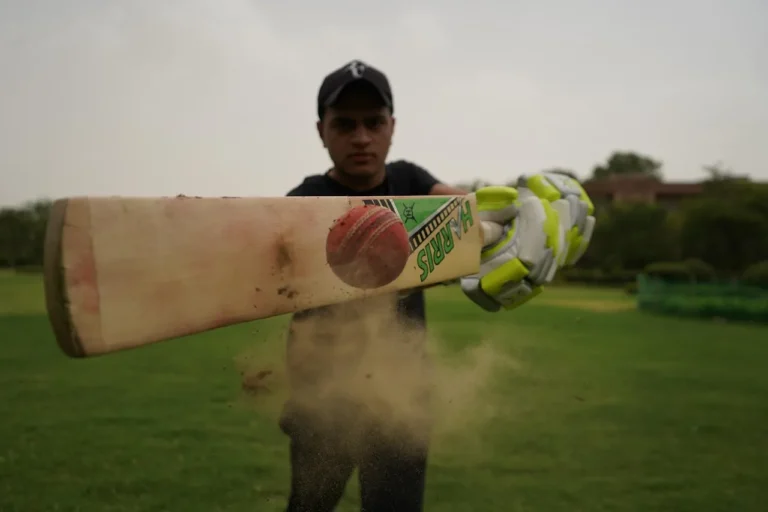

How to Store Your Cricket Bat to Prevent Warping and Cracks

Store a cricket bat in a dry indoor room at about 45% to 55% relative humidity, out of direct sun and heaters, and avoid putting it away wet or in a sealed cover. Bad storage causes warping, edge cracks, soft toe damage, and a shortened bat life. This guide gives a storage-first checklist for humidity, trapped moisture, heat exposure, and long idle periods, with clear do-and-don’t steps for each.
What causes bat damage in storage
A cricket bat warps when willow dries unevenly, swells from trapped moisture, or sits under heat for too long. The face, edges, toe, and back all move at different rates, so the safest storage keeps temperature steady, airflow decent, and the bat free from pressure points.
Humidity is the first thing to control. A damp room, a closed kit bag, or a bat left straight after rain can feed moisture into the toe and lower blade, and that is where cracks often begin.
Humidity and trapped moisture
Willow reacts to water. If the bat stays damp, the toe can swell first, and moisture can then work through the blade. Moisture can weaken the bat toe and affect the whole blade, so a wet bat should dry before it returns to a cover or bag.
Heat, sunlight, and hot cars
Heat pulls moisture out too fast and can bend a bat over time. Direct sun through a window, a radiator shelf, or a hot car boot can dry one side faster than the other, which makes warping more likely and can leave the surface brittle.
Pressure points during long idle periods
If a bat sits for weeks or months with weight on the blade or toe, the wood can take on a set. That is why the resting position matters almost as much as the room. A flat, supported surface is safer than a leaned angle with pressure on one edge.
Where should you keep a cricket bat at home?
Keep a cricket bat in a dry indoor room with stable temperature, away from heaters, direct sun, and damp walls. A shelf, wall rack, or stand is better than a floor corner because it keeps the toe off cold surfaces and reduces the chance of accidental knocks.
For home storage, the target is simple: steady air, light handling, and no squeeze from other kit. If the room feels damp to you, it is not a good bat room.
Best room conditions
A room around 45% to 55% relative humidity is a useful target. That range helps limit swelling without drying the willow too aggressively. If the room is much damper than that, use a better room rather than trying to fix the bat later.
Shelf, rack, or stand placement
Store the bat upright or flat where the blade is supported evenly. Keep the toe clear of concrete floors and keep the edges from touching hard surfaces. If you lay it flat, use a soft, dry surface and avoid stacking pads, shoes, or other heavy kit on top.
What to keep away from the bat
Keep the bat away from radiators, hot pipes, sunny windows, laundry rooms, and unventilated basements. Those spots create either heat stress or moisture stress, and both can lead to blade bowing, edge splitting, or surface dryness.
Say your bat has just come home from a match and the grip feels dry, but the toe still feels cool and slightly damp. Leaving it in a closed hallway cupboard overnight traps that moisture; moving it to an airy room on a shelf gives the toe a better chance to dry evenly.
Should you keep a cricket bat in a cover or kit bag?
A cricket bat cover helps during storage and transport, but it should not trap moisture against the blade. A kit bag can hold residual humidity, so it is fine for travel, not as the only place to leave a damp bat. If the bat is dry, a cover is useful. If it is wet, air it first.
What a bat cover protects
A cover shields the face from scuffs, light knocks, and dust. That matters for a bat with a clean face, a toe guard, or a fitted anti-scuff sheet. It does not replace dry storage, and it should not seal in damp willow after a wet session.
When a kit bag becomes a moisture trap
Kit bags often hold humidity from sweaty gloves, damp clothing, and wet ground contact. If the bat goes back into that space while still damp, the toe and lower blade are the first risk areas. A sealed bag keeps the damp close to the wood.
When to unpack and air the bat
Take the bat out as soon as the session ends if it is wet, cool, or marked by rain. Wipe it down, open the cover, and leave it in moving air before it goes back into a bag. A wet bat should not stay in the bag.
Suppose a junior player packs a damp bat into a zipped kit bag after a rain delay. The next morning, the toe feels soft and the face shows a dull patch near the lower edge. That is the kind of moisture hold-up that storage can prevent.
How should you dry a bat after a wet match?
After a wet match, dry the bat before any cover or bag goes back on it. Start by removing surface moisture, then let the bat stand in a horizontal drying position in an airy indoor spot. The goal is even drying, not fast heat.
-
Wipe off surface moisture.
Use a dry cloth to remove water from the face, edges, toe, back, and splice area. Do not rub hard enough to fuzz the willow. The aim is to stop water sitting on the surface while the wood dries. -
Remove the cover and bag.
Take the bat out of any sealed or padded space so air can reach every side. If the cover is damp, dry that separately. A dry bat inside a wet cover can still absorb moisture again. -
Lay it flat.
Place the bat horizontally on a dry shelf or table with the blade supported evenly. This reduces uneven settling during drying and is a sensible reference after oiling too. Keep it away from heaters and direct sun. -
Wait before storing.
Do not return it to the kit bag until the surface is fully dry and the toe no longer feels cool or damp. A 12-hour drying interval is a useful reference after oiling, but wet-match drying should be judged by dryness, not the clock alone.
When the bat is dry enough for storage
The bat is ready when the face is dry to the touch, the toe no longer feels cool, and there is no visible sheen from water. If the willow still darkens under your fingers, it needs more time. A bat should be dry enough that the cover will not trap new moisture against it.
Oiling and protection before storage
Raw linseed oil belongs on dry willow in thin coats. A raw bat should receive 2-3 thin coats of oil over several days, and one teaspoon per coat is cited as enough oil for a bat. Heavy oiling can add weight and affect performance, so thin coats matter more than coverage thickness.
A bat needs light re-oiling every 4-6 weeks during active use, not constant soaking. CA Sports recommends two light oil coats with 12 hours drying between applications. A horizontal drying position helps the oil settle evenly on the face, edges, toe, and, when needed, the back.
When to use raw linseed oil
Use oil when the bat looks dry, feels thirsty in the grain, or needs seasonal upkeep. If the bat has not been used for a while, inspect first rather than oiling by habit. The same source says many repaired bats were either under-oiled or over-oiled, so moderation matters.
How toe guards change storage
A toe guard protects the most vulnerable area of the bat and helps against ground moisture. It is useful for long-term storage and wet conditions because it reduces direct exposure at the toe, where damage often starts. That does not remove the need to dry the bat first.
How anti-scuff sheets affect face care
An anti-scuff sheet protects the face from abrasion and changes how the front face needs oiling. If the face is fully covered, the exposed wood needs less direct attention than a bare face, but the edges, toe, and back still need inspection. Do not treat the sheet as moisture protection.
-
Check the bat surface.
Look for dryness, raised grain, or pale patches on the willow. If the face or edges look chalky, apply a thin coat rather than a heavy one. This helps reduce dryness-related cracking without loading the blade with oil. -
Protect the weakest zones.
Fit a toe guard if the bat will see travel, damp grounds, or a long storage spell. Add an anti-scuff sheet only if it suits the face and current wear pattern. Both protect specific areas, but neither replaces dry storage. -
Let oil settle flat.
Leave the bat in a horizontal drying position after oiling so the coat settles evenly. CA Sports’ 12-hour drying interval is a practical reference between coats. Put the bat away only after the surface no longer feels tacky.
Cricket bat storage checklist
This checklist separates the main storage scenarios, because the right action changes with moisture, transport, and time away from play. Use it as a quick decision table before the bat goes back on the shelf, into the cover, or into the kit bag.
| Scenario | Ideal location | Safe handling steps | What to avoid | First visible damage sign |
|---|---|---|---|---|
| Daily home storage | Dry indoor room with steady airflow | Store on a shelf, rack, or stand; keep the toe off cold floors; use a cover only if the bat is fully dry | Radiators, sunny windows, damp walls, heavy items stacked on the blade | Surface dryness or grain opening |
| Post-wet-match drying | Open indoor space away from heat | Wipe the bat dry; remove it from the bag and cover; dry it flat in a horizontal position before storage | Sealed kit bag, direct heater blast, immediate re-bagging | Toe swelling or dull wet patches |
| Kit-bag transport | Ventilated bag space for short transit only | Use a bat cover for knock and abrasion protection; unpack the bat after arrival if moisture is present | Leaving the bat packed in a damp bag for hours | Edge softening or condensation marks |
| Off-season storage | Cool, dry indoor shelf or stand | Check dryness, apply light oil only if needed, fit toe protection if the storage spell is long, inspect monthly | Hot cars, lofts with heat swings, damp garages, sealed plastic storage | Blade bowing or early cracks near the toe |
How often should you inspect a stored bat?
Check a stored bat about monthly during the season, and more often if it has been wet, carried in a crowded kit bag, or sat idle for a long spell. Early checks catch dryness, toe swelling, edge splitting, and blade bowing before they become permanent damage.
Early signs of dryness
Look for pale patches, a chalky feel, raised grain, or a face that looks flat and thirsty. Dryness often appears first on the face and edges, especially if the bat has not been oiled lightly in the last 4-6 weeks during active use.
Early signs of warping or cracks
Check whether the blade sits flat on a table, whether one edge has lifted, or whether a fine crack has opened near the toe or on the edge line. A slight bow or toe swelling is an early warning sign; waiting until the crack is visible is too late.
When to recheck during the season
Recheck after wet matches, long travel, heat exposure, or any time the bat has been left in a bag for several hours. If the bat has a toe guard, inspect the edge of the guard and the area just above it. That is often where moisture damage starts.
Frequently asked questions
How should I store my cricket bat to stop it warping?
Keep it in a cool, dry room with steady airflow, away from sun, heaters, and damp walls. Store it on a shelf or stand so the blade is evenly supported. Do not leave it in a hot car, sealed bag, or wet cover, because those conditions can make the wood move unevenly.
What is the best place to keep a cricket bat at home?
The best place is a dry indoor room with stable temperature and low humidity, ideally around 45% to 55% relative humidity. A shelf, rack, or stand is better than the floor. Avoid rooms with moisture swings, such as laundry spaces, garages, or lofts that get very hot.
Should I keep a cricket bat in a bat cover or kit bag?
Use a bat cover for transport and light protection, but only after the bat is dry. A kit bag can hold residual humidity, so it should not be the long-term home for a wet bat. If the bat must travel, unpack it as soon as possible and let it air.
Can heat or sunlight crack a cricket bat?
Yes. Heat and direct sunlight can dry willow too fast and create uneven stress across the face, edges, and toe. A hot car is especially poor storage. Over time, that stress can lead to warping, edge splitting, or surface checks that turn into cracks.
Do I need to oil a cricket bat before storing it long term?
Light oiling helps if the bat is dry, but do not soak it. A raw bat should receive 2-3 thin coats of oil over several days, and one teaspoon per coat is cited as enough oil for a bat. If the bat already has an anti-scuff sheet, treat the exposed wood only.
How dry should a cricket bat be before storage?
Dry enough that the face, edges, and toe feel dry to the touch, with no cool dampness left in the willow. If the bat was wet, wipe it down and let it dry in a horizontal position before you cover or bag it. Never store it while it still feels wet.
How do I store a cricket bat after a wet match?
Wipe off surface water, remove it from the kit bag and cover, and dry it flat in an airy indoor space. Do not use direct heat. Once dry, return it to a cool, dry home location rather than leaving it in a sealed bag overnight.
How often should I check a stored bat for cracks?
Check it monthly during active seasons, and after any wet or hot spell. If the bat is used often, inspect the toe, edges, and face every few weeks. Early signs such as toe swelling, surface dryness, or blade bowing are the warning points that matter most.
Does moisture in a kit bag damage a cricket bat?
Yes. A damp kit bag can hold humidity against the willow and keep the bat from drying properly. That raises the risk of toe swelling, edge softening, and cracks. If the bat goes into a bag after play, make sure both the bat and the bag are dry first.