What Is the Difference Between Red, White and Pink Cricket Balls?

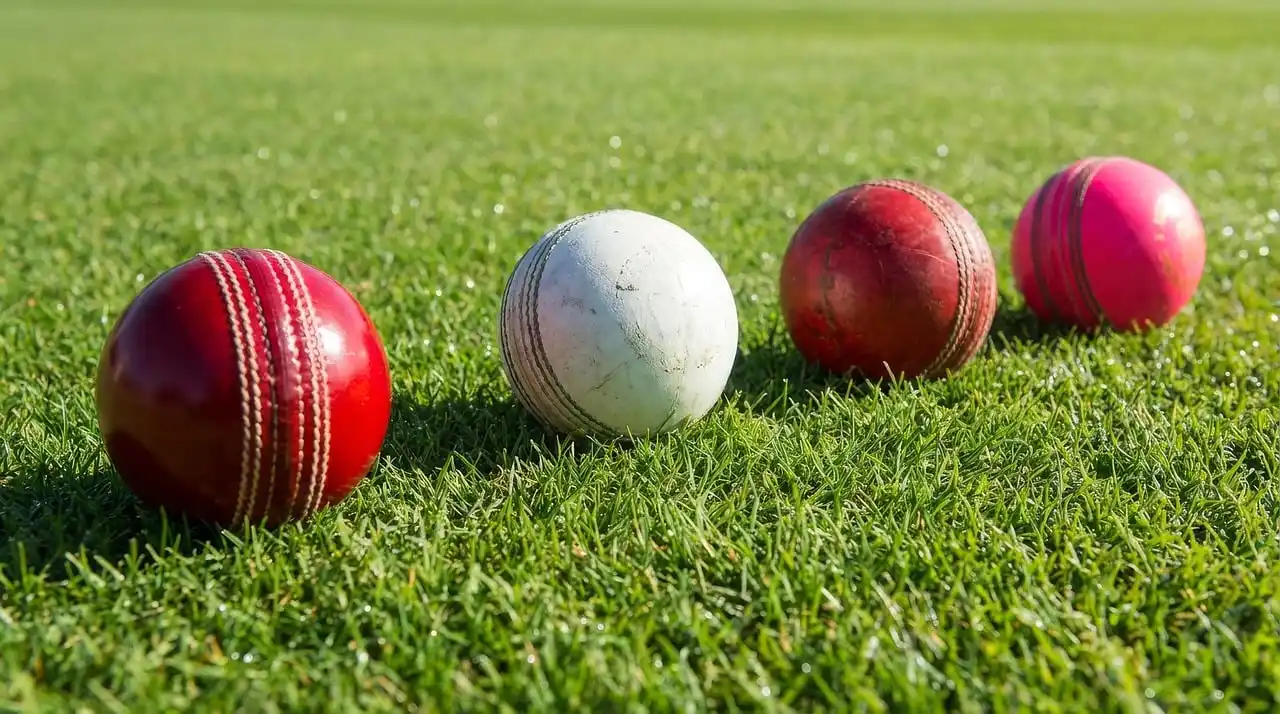
Red balls are the standard for long-format cricket, white balls are used in limited-overs matches, and pink balls are made for day-night Tests. That choice changes visibility, swing, and how long the ball stays useful. Use the wrong ball for the format, and batters can misread movement, bowlers lose the help they expect, and match control becomes harder.
How ball colour changes match conditions
The core difference is format and how the ball behaves in different light. Red balls are used mostly in Test matches and first-class cricket, white balls are used in ODIs and T20s, and pink balls are used for day-night Tests. Colour matters because it changes how well players see the ball, and the manufacturer and surface also change swing, seam movement, and wear.
The same leather ball does not act the same way in every match. A red ball usually keeps its shine longer, a white ball loses colour faster, and a pink ball is built to stay visible as daylight fades into floodlights.
What colour balls are used in cricket?
Cricket commonly uses three colours: red, white, and pink. Red is the standard choice for Tests and first-class games, white is the standard choice for ODIs and T20s, and pink is used in day-night Tests where play moves from daylight into dusk and artificial light.
That colour split is only the starting point. The practical question is how each ball looks to batters, how long it swings for bowlers, and how quickly it changes as the innings moves from the new-ball phase into the middle overs and then the old-ball phase.
Why is the red ball used in Test cricket?
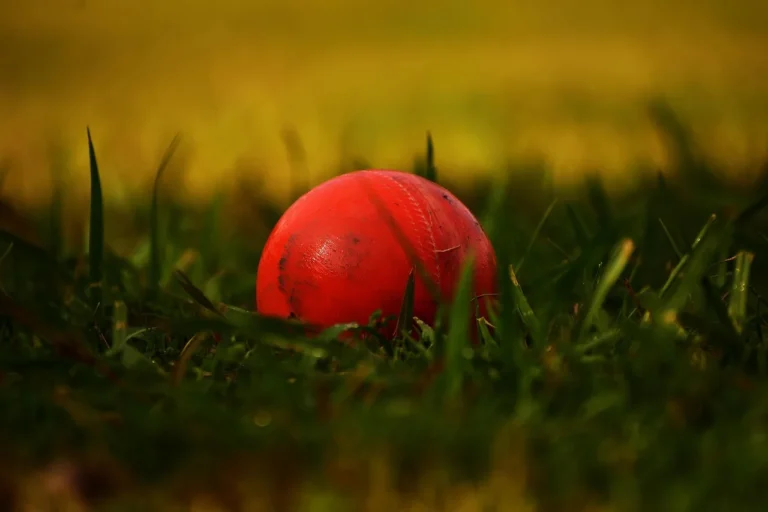
The red ball suits Tests because the format is long enough for a ball to age, a pitch to change, and weather to matter. It is also easier to pick up in daylight than white paint on a red leather surface would be in a long outdoor match. The red ball can last up to approximately 80 overs, which fits the extended pace of Test and first-class cricket.
Daylight visibility and long sessions
In daylight, a red ball is usually clear enough for batters, fielders, and umpires to track across long sessions. That helps in a format that can run for five days and includes extended spells from seam bowlers and spinners.
Swing, seam and shine over longer spells
Red balls generally support conventional swing and seam movement for longer than white balls. Because they hold shine longer, bowlers can keep one side smoother and the other side rougher for longer periods, which helps new-ball bowlers early and leaves room for reverse swing later.
Picture a Test opening spell with a hard red ball on a fresh morning pitch. The seam bowler can attack the top of off stump while the ball is still new, then work for movement later when the ball has aged and the surface has changed.
Why red balls suit Tests and first-class cricket
Tests reward patience. A red ball lasts long enough for that patience to matter, and its slower change in appearance lets bowlers build pressure across sessions instead of forcing results in a short innings.
Why is the white ball used in ODIs and T20s?
White balls are used in limited-overs cricket because they are easier to see under floodlights and better suited to shorter matches where scoring rate matters. They are designed for ODIs and T20s, but they lose shine and colour faster than red balls, so the movement window is shorter. In ODIs, the fielding side starts with two new balls.
Floodlight visibility and broadcast use
White is easier to track when the game is played under lights, especially against dark backgrounds and coloured kit. That makes it the practical choice for evening cricket and for formats where the ball needs to stay visible during fast scoring, catching, and boundary riding.
How the white ball changes early and late
The white ball usually swings for a shorter period, usually the first 10 overs. After that, it tends to become flatter and easier for batters to line up, which is one reason limited-overs innings often shift from caution in the first overs to boundary-hitting later.
Why do white balls get dirty so quickly? The white leather shows grass stains, pitch marks, and bat or glove contact very quickly, so the ball can look discoloured even before it is fully worn. That change affects visibility more than the basic core shape, but it still matters for both batters and fielders.
Two new balls in ODI cricket
ODIs use two new balls so each end of the innings starts with a fresh white ball. That helps maintain visibility and keeps the game moving, but it also reduces the amount of reverse swing that a single older ball might produce later in a Test.
What batters and bowlers should expect
For batters, the white ball often means a sharper early challenge and a flatter middle-overs contest. For swing bowlers, the useful movement window is short. For seam bowlers, the seam can still bite early, but the ball often stops offering the same help once the shine goes and the surface gets softer.
When is the pink ball used in cricket?
The pink ball is used in day-night Tests, where play spans daylight, dusk, and floodlights. It was introduced as a compromise because red balls can fade under lights and white balls are not suited to the long-format conditions. Day-night Test cricket began in 2015, and the pink ball was developed to help bridge those visibility gaps.
Why pink was chosen as a compromise
Pink is easier to see than red under lights and stands out better than white against grass and twilight skies. That makes it a practical middle ground for a Test that starts in daylight, moves through changing light, and often finishes under floodlights.
How pink ball behaviour differs from red and white
The pink ball is not simply a red ball with different dye. It is made to hold visibility in mixed light, and its surface treatment is adjusted so it does not disappear as quickly as a red ball under lights. Compared with a white ball, it is usually more durable in a long-format setting.
Say your local club is watching a day-night Test that starts at 2:00 pm. The pink ball can look clear in the afternoon, stay visible as the shadows lengthen, and remain readable once the floodlights take over, which is why it exists at all.
Cricket ball comparison table
This table separates colour from match behaviour. The first row set compares the three common ball colours. The second row set shows why the manufacturer matters just as much, because Kookaburra, Dukes, and SG create different swing windows, seam life, and innings patterns.
| Ball type | Typical format | Visibility | Swing window | Durability/aging | Player tactics |
|---|---|---|---|---|---|
| Red | Tests and first-class cricket | Best in daylight | Longer, especially early and again later if the seam holds | Holds shine longer; can last up to approximately 80 overs | New-ball seamers attack early; batters defend more in the first session; spinners often come into play later |
| White | ODIs and T20s | Best under floodlights | Shorter, usually the first 10 overs | Discolours quickly; two new balls are used in ODIs | Strike bowlers try to use the early swing; batters target the middle overs once the ball softens |
| Pink | Day-night Tests | Clear in twilight and under lights | Closer to red-ball behaviour than white, but can vary more by conditions | More durable than a white ball in a long match; made for mixed light | Bowlers aim for movement in the changing-light periods; batters need extra judgment as visibility shifts |
| Kookaburra | Common in ODIs, T20s and some Tests | Usually easy to see when new | Seam tends to deteriorate after 20 to 30 overs | Surface often flattens sooner, which reduces seam help | Pace bowlers attack early; batters can cash in once the ball stops biting as much |
| Dukes | Used in England | Good daylight visibility | Seam lasts longer | Supports longer spells of movement | Seam and swing bowlers stay in the contest longer; batters need tighter technique against the moving ball |
| SG | Used more commonly in India | Readable in daylight | Often loses shine quickly | Favors wear patterns that help spin later | Spinners gain more from later grip; seam bowlers often get less help after the ball loses its shine |
How the phases of an innings change tactics
In the new-ball phase, seam and swing bowlers look for movement off the seam and through the air. In the middle overs, batters try to settle against a softer ball, and in the old-ball phase, the best ball type depends on whether it still swings, grips, or holds its seam.
For limited-overs cricket, that means white-ball batting often becomes easier as the innings goes on. For Tests, the red ball gives bowlers more chances to create a second wave of difficulty later in the innings.
How cricket ball construction changes behaviour
All cricket balls share the same core idea: a cork core, tight string winding, a leather casing, and a raised seam. The difference is not only colour. Small changes in lacquer, stitching, seam height, and finish change how long the ball shines, how much it grips, and how strongly it swings.
-
Check the format first. Use the ball that matches the match type: red for Tests and first-class cricket, white for ODIs and T20s, pink for day-night Tests. The format tells you the likely visibility and durability profile before the first ball is bowled.
-
Read the light conditions. Daylight helps red and pink balls, while floodlights favor white and pink. Mixed light can make the pink ball the most practical option because it stays visible as the sky changes.
-
Watch the seam and shine. A strong seam and a polished side extend movement. If the seam flattens or the ball loses shine, swing and seam help fall away, and batters can play straighter lines.
-
Match tactics to age. Early overs demand caution from batters and attacking fields from bowlers. Later overs reward teams that can adjust to a softer, older ball and decide whether pace, spin, or control matters most.
The men’s professional ball specification is also fixed within a narrow range. A men’s professional ball must weigh between 155.9 and 163 grams, and it must have a circumference between 22.4 and 22.9 centimetres. Those limits keep the ball close enough in size and mass for fair competition, even when brands differ in feel and wear.
A common first-timer mistake is assuming two balls with the same colour will play the same way. A 156-gram white ball from one manufacturer can age differently from another brand’s white ball, and that difference changes the way a bowler plans the first 10 overs and the way a batter judges risk.
Frequently asked questions
What is the difference between red, white and pink cricket balls?
Red balls are used mainly in Tests and first-class cricket, white balls in ODIs and T20s, and pink balls in day-night Tests. The biggest differences are visibility, swing duration, and how fast the ball changes shape, shine, and colour as the innings progresses.
Why is the red ball used in Test matches?
The red ball suits the long format because it stays useful for a long time and remains readable in daylight. It holds shine longer than a white ball, supports conventional swing and seam movement, and can last up to approximately 80 overs.
Which cricket ball swings more?
Red balls generally swing for longer than white balls, especially when the seam stays upright and the shine is maintained. White balls can swing early, but the useful movement window is usually shorter. Pink balls can move too, yet the result depends heavily on conditions and manufacturer.
Do red, white and pink balls behave differently for spinners?
Yes. Spinners often benefit more when a ball gets older, rougher, and less shiny. Red balls can give them a stronger later-stage role in Tests, white balls often become softer and less lively more quickly, and pink balls sit between the two depending on light and surface wear.
Are all cricket balls made the same way?
No. All cricket balls use a cork core, string winding, leather casing, and raised seam, but manufacturers finish them differently. Kookaburra, Dukes, and SG produce different seam life, shine retention, and swing behavior, so colour alone does not explain how a ball will play.
How long does a cricket ball stay effective in a match?
That depends on format and manufacturer. A red ball can last up to approximately 80 overs, a white ball usually swings for the first 10 overs, and a Kookaburra seam often deteriorates after 20 to 30 overs. Effective life means more than shape; it includes shine, seam, and visibility.
What colour balls are used in cricket: cricket mainly uses red, white
Cricket mainly uses red, white, and pink balls. Red is for Tests and first-class cricket, white is for ODIs and T20s, and pink is for day-night Tests. The best choice depends on the format, the light, and how long the ball needs to stay effective.