Golf Club Sizing for Kids: What Parents Need to Know

Size junior golf clubs by the child’s height first: under about 42 inches usually needs the shortest set, and each roughly 6-inch height step after that often calls for the next size up. Too-long clubs push the child upright and weaken contact. Too-short clubs crowd posture and can slow progress. This guide shows a height-first sizing checklist, the club specs to verify, and the signs it is time to move up.
How do you size kids golf clubs?

Start with height, then confirm the fit with driver length and 7-iron length. Age bands can help narrow the search, but a child’s standing height is the main sizing guide, not age alone. The goal is a set that lets the child stand athletic, reach the ball cleanly, and swing without reaching or crowding.
Use height first
Height matters because club length changes across several bands, and those bands line up better with body size than birthday age. Children under 3’6″ are usually matched to ultralight toddler or ages 3-5 sets. Children 3’6″-4’0″ fit ages 5-7 junior sets, 4’0″-4’6″ fit ages 7-9, 4’6″-5’0″ fit ages 9-12, and children over 5’0″ may need a teen or small adult beginner set.
Use driver and 7-iron as fit checks
Driver length is the quickest way to spot a bad fit because it changes posture immediately. The 7-iron gives a second check for the full set, since it should also let the child set up with balance and room to swing. If both clubs fit, the rest of the set is usually in the right range.
- Measure standing height. Measure in bare feet, against a wall, from floor to top of head. Use inches or feet and inches, because that gives a cleaner match to retail size charts than age alone.
- Match the height band. Start with the set label that fits the child’s height band, then check the club specs. That first pass should narrow the list to one or two junior sizes.
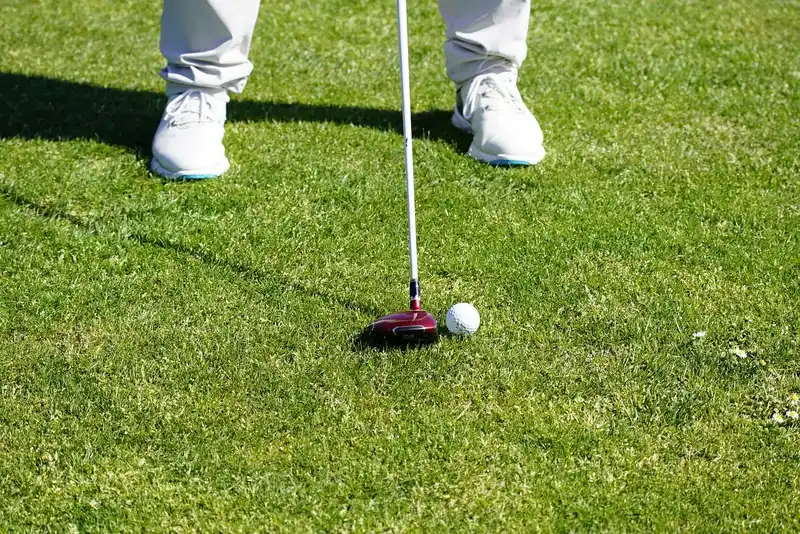
- Check the driver length. Set up with the driver at address. The child should not have to stand tall or reach for the ball. If the posture breaks, the driver is the wrong length even if the set label looks close.
- Check the 7-iron next. Use the 7-iron to confirm the child can repeat the same balanced setup. A second club matters because one club can feel close while the rest of the set is off.
- Confirm the grip and weight. Small hands need smaller grips, and the club should feel light enough to swing without strain. If the child tightens the hands or looks tired after a few swings, the set is too demanding.
Picture a child who measures 4’2″. That height sits in the 4’0″-4’6″ band, so the better starting point is an ages 7-9 junior set, not a guessed age label. If the driver lets the child stand naturally and the 7-iron reaches the ball without stooping, the set is a workable fit.
Height versus age for junior clubs
Height should lead the decision. Age bands are useful as a retail shortcut, but they are broad, and two children the same age can need different club lengths. When a child sits between sizes, choose the size that preserves posture and contact, even if that means the label looks younger or older than expected.
Why age bands are only a shortcut
Retail charts often group junior clubs by age because that is quick for shopping, but age does not show arm length, stance, or reach. A short 9-year-old may need a smaller set than a tall 7-year-old. Height-based fit is more reliable because it tracks the child’s actual shape.
What to do between two sizes
If the child lands between bands, choose the shorter option for control if the child is still learning clean contact. Choose the longer option only if the child already swings with balance and the shorter set would clearly hold back reach. That rule is simple: beginner first, growth second.
- Start with control. If the child is new to golf, pick the size that keeps setup simple and repeatable. Clean contact matters more than extra reach in the first stage.
- Move up for fit. If the child already makes solid contact and the shorter size looks cramped, size up only when the taller option still lets the child keep posture and balance.
- Recheck after growth. A growth spurt can move a child into the next band quickly. Refit after obvious height changes, not only at the start of a season.
| Child height | Recommended driver length | Recommended 7-iron length | Grip size | Upgrade trigger |
|---|---|---|---|---|
| Under 3’6″ | Shortest toddler or ultralight junior driver | Shortest matching junior 7-iron | Small junior grip | Move up when setup looks cramped or the child outgrows toddler gear |
| 3’6″-4’0″ | Short junior driver | Short junior 7-iron | Small junior grip | Move up when the child must stand too upright to reach the ball |
| 4’0″-4’6″ | Mid junior driver | Mid junior 7-iron | Junior grip | Move up when solid contact is easy and the child has clear room to grow |
| 4’6″-5’0″ | Long junior driver | Long junior 7-iron | Junior grip or small teen grip | Move up when the child outgrows junior length or needs a more advanced set |
| Over 5’0″ | Teen or small adult beginner driver | Teen or small adult 7-iron | Smaller adult grip if hands fit it | Move up when junior clubs look short in address and swing path |
How can you tell if clubs are too long?
Too-long clubs usually show up first in posture. The child stands too upright, reaches for the grip, or lets the club sit far from the body at address. Ball contact often gets thin, off the toe, or inconsistent because the longer club changes the swing plane before the swing even starts.
Too-big clues in posture and contact
Watch the setup before the swing. If the hands are forced high, the elbows lock out, or the feet keep shuffling to find balance, the club is likely too long. During the swing, weak contact and trouble returning the face to the ball often point to the same problem.
Too-small clues in reach and balance
Too-short clubs create a different problem. The child may hunch, bend too much from the waist, or feel crowded at address. The swing can get short and cramped, and the child may lose speed because there is no room to make a smooth turn.
A common first-timer mistake is buying the tallest set “for room to grow.” That usually backfires. A child around 4’1″ with clubs sized for about 4’8″ may reach the ball by standing upright, but the swing often loses balance and contact quality before growth solves the fit.
What should be in a beginner junior set?
A beginner set should be simple. A junior starter set should include only essential clubs, not a full bag: a driver or fairway wood, one iron, a wedge, and a putter. Hybrids are also a smart choice for beginner kids because they are easier to hit than long irons.
Which clubs matter most first?
The first set should support basic swing learning, not carry every possible club. A few clubs keep the bag lighter, reduce confusion, and make practice easier. That matters because a child who is fighting the equipment is less likely to repeat a good motion.
Why hybrids are easier than long irons
Hybrids usually sit lower in the bag because their shape helps launch the ball more easily than a long iron. For slower swings, that can mean better contact and more usable height. If a child is choosing between a long iron and a hybrid, the hybrid is usually the simpler pick.
How weight, flex, grip size, and loft should fit together
Junior clubs should be light enough for repeated swings without fatigue. Shaft flex should be softer than adult flexes so slower swing speeds can load the shaft and launch the ball more easily. Grip size should suit small hands, because oversized grips can increase tension and make the clubface harder to control. Junior clubs may also use more loft than adult clubs, which helps slower swings get the ball airborne.
- Choose the lightest workable set. A club that is too heavy slows the swing and tires the child quickly. Light weight keeps practice productive longer.
- Pick junior flex first. Softer shafts match slower swing speeds better than adult flexes. That helps the child get the ball up without forcing the motion.
- Check grip diameter. The fingers should wrap naturally around the handle. If the grip looks oversized, the set may be too large even if the club length seems close.
- Prefer lofted options. For beginner kids, extra loft can help the ball launch more easily on short shots and with the driver or fairway wood. That matters more than chasing adult-style distance.
When should you replace a junior set?
Replace the set when height changes start to change address position, balance, or contact. Growth signs matter most, but skill can matter too. If the child is making solid contact and the clubs now look short at setup, moving up sooner can keep progress moving.
Growth signs that call for a new size
Look for a higher hand position at address, a setup that feels cramped, or a swing that now works only with a forced bend in the knees or waist. Those are common signs that the child has outgrown the original height band. Refit after a noticeable growth spurt, especially if the child has jumped a full height band.
Skill signs that justify moving up sooner
Some children outgrow their clubs by skill before they outgrow them by height. If a child already makes solid contact, keeps balance, and the shorter set begins to look obviously short, a larger junior set can be the better next step. The new size should still preserve clean setup first.
Suppose a child starts in a 4’0″-4’6″ set and then grows to around 4’7″ during the season. If the driver now forces the child to crouch less and stand more upright, that is the moment to move to the next band instead of waiting until contact gets worse.
Can you cut down adult clubs?
Cut-down adult clubs are usually a poor shortcut. They can be poorly balanced after trimming, and the remaining weight distribution may still feel wrong for a child. A proper junior club is usually the better buy because it is built around junior length, weight, grip size, and flex together.
When a cut-down club still misses the mark
Shortening a club does not automatically make it junior-friendly. The shaft can still feel too stiff, the grip can still be too large, and the head can still feel heavy. That combination can leave the child with less control than a true junior club of the same length.
Why junior clubs are usually the better buy
Junior clubs are designed as a package. The length, weight, flex, and grip are meant to work together, which matters most for beginners. If a child is just starting, that matched design is usually worth more than a cheaper adult club cut to length.
- Compare the full fit. Check length, weight, flex, and grip size together. A single adjustment cannot fix a club that is wrong in several areas.
- Buy the correct junior size. If the child fits a junior chart, start there before considering adult gear. That keeps the setup simpler and the swing more repeatable.
- Use adult clubs only with caution. If a child is over 5’0″ and nearing teen size, a small adult beginner set can make sense. Even then, the clubs should still be light and easy to swing.
Frequently asked questions
How do I know what size golf clubs my child needs?
Start with the child’s height, then check driver length and 7-iron length. Height is the main sizing guide, not age alone. If the child stands naturally at address, reaches the ball without stretching, and swings without crowding the body, the size is likely in the right range.
Should I size kids’ golf clubs by height or age?
Use height first. Age bands are helpful for quick sorting in retail charts, but they are only a shortcut. Two children of the same age can need different clubs, while height gives a better match to posture, reach, and balance.
What length driver should a child use?
The driver should be the junior length that matches the child’s height band and allows a natural setup. It should not force the child to stand tall or reach forward. If the posture changes before the swing starts, the driver is too long.
Are junior golf clubs different from adult clubs?
Yes. Junior clubs are lighter, shorter, and usually softer in flex. They also often use smaller grips and more loft than adult clubs. Those differences matter because children need help with swing speed, control, and getting the ball airborne.
When should my kid move up to a bigger golf club set?
Move up when the child grows into the next height band, or sooner if the clubs look cramped at address and solid contact is already easy. A good sign is when the child no longer has to work to reach the ball and can still keep balance with the new size.
Can a child use cut-down adult golf clubs?
Sometimes, but it is usually not the best choice. Cut-down adult clubs can remain poorly balanced, too stiff, or too heavy for a child. A purpose-built junior set is usually easier to swing and better matched to small hands and slower swing speeds.