
How to Use a Golf Club Cleaning Brush for Best Results

Wet the brush only when dried mud or sand will not lift cleanly. Scrub the grooves with short heel-to-toe strokes using light-to-moderate pressure, then wipe the face clean. That sequence clears dirt fast without scuffing plated or painted finishes. Skip it, and packed grooves can dull spin, leave mud in the score lines, and slow your next shot. This guide shows the exact brushing order, pressure level, and quick on-course habits that keep clubs clean without wasting time.
What you’ll need
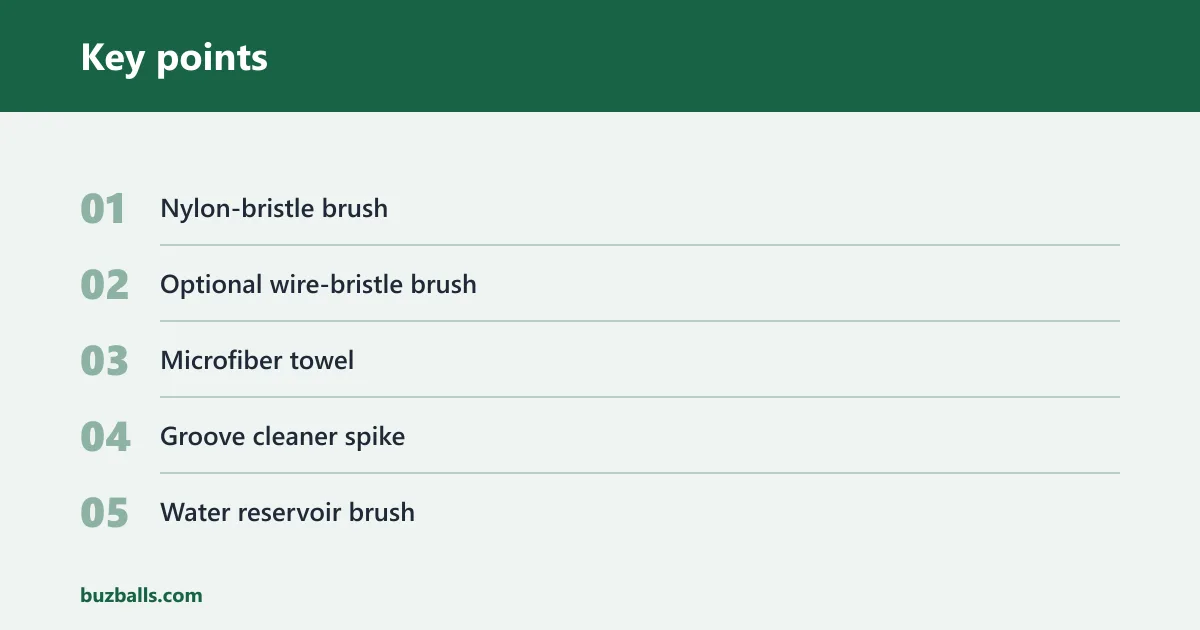
- Nylon-bristle brush for regular groove cleaning; it is the safer default for most club finishes.
- Optional wire-bristle brush for caked-on mud or wet turf only, used cautiously on less delicate heads.
- Microfiber towel to wipe loosened residue and dry the clubhead after brushing.
- Groove cleaner spike for packed debris after brushing loosens it; use a retractable tip if possible.
- Water reservoir brush for dried mud or sand when dry brushing is not enough.
- Bag attachment with either a retractable cord or magnetic clip for fast access during play.
- Lightly damp towel section for in-round use; keep it damp, not dripping.
How do you use a golf club cleaning brush properly?
Start by knocking off loose dirt and grass, then brush the grooves with short heel-to-toe strokes and light-to-moderate pressure. Move across the face only after the grooves are open, then use the spike for any packed debris that remains. Finish with a dry wipe so residue does not sit on the clubhead.
- Tap the clubhead against the ground or towel to drop loose debris.
- Brush each groove with short strokes along the score lines, not deep into the face.
- Brush across the face once the grooves are open to remove the loosened grit.
- Use the groove cleaner spike only on stubborn packed material.
- Wipe the head dry with a microfiber towel before the next shot.
Suppose a wedge comes out of damp rough with grass packed into three grooves. A nylon brush clears most of it in a few passes; if one groove stays clogged, the spike can lift the last bit after the brush has already loosened it. Do not force the spike straight into the face.
Should you clean the grooves or the whole face first?
Clean the grooves first. Dirt, grass, and sand affect contact most directly there, and opening the score lines makes the rest of the cleanup faster. Once the grooves are clear, wipe the whole face and then the sole, topline, and cavity or back of the head if needed.
Why groove cleaning comes first
Grooves collect the debris that most often interferes with spin and launch consistency. If you wipe the whole face first, loose grit can smear back into the grooves and slow the cleanup. A groove-first pass keeps the work targeted.
How different clubs need different cleanup
Wedges and irons need the most attention because their grooves do the most work in wet grass and sand. Woods and hybrids usually need a light brush on the face and sole, since their surfaces are larger and usually carry less packed debris. Putters often need only a quick face wipe unless the insert or milled face has picked up dust or sand.
Golf brush decision table
| Dirt type | Best brush action | Pressure | Add water? |
|---|---|---|---|
| Dry dust | Nylon-bristle passes along each groove, then one face wipe | Light | No |
| Wet mud | Firm nylon first; wire only if the mud is caked | Light-to-moderate | Yes, a little |
| Bunker sand | Brush grooves first, then towel off the loosened sand | Light | Usually no |
| Grass clippings | Short groove strokes, then a quick face wipe | Light | No, unless damp clippings stick |
A golf brush is commonly reported as very convenient for on-course use and effective for on-course cleaning, while a traditional golf towel is often rated poorly for cleaning effectiveness. That is why the brush does the first pass and the towel finishes the job. The brush saves time when you need cleaner grooves between shots.
60-second post-shot workflow: 10 seconds to tap off loose debris, 20 seconds to brush the grooves, 10 seconds to wipe the face, 10 seconds for the sole and back, and 10 seconds to dry the head and put the brush away. Clean after bunker shots, wet rough shots, and any shot that leaves visible debris in the grooves.
How hard should you scrub club grooves?
Use light-to-moderate pressure. The bristles should move debris, not bend the groove edges or dig into the finish. If the brush needs heavy force to work, the problem is usually moisture, packed clay, or the wrong tool, not your pressure.
Safe pressure for nylon bristles
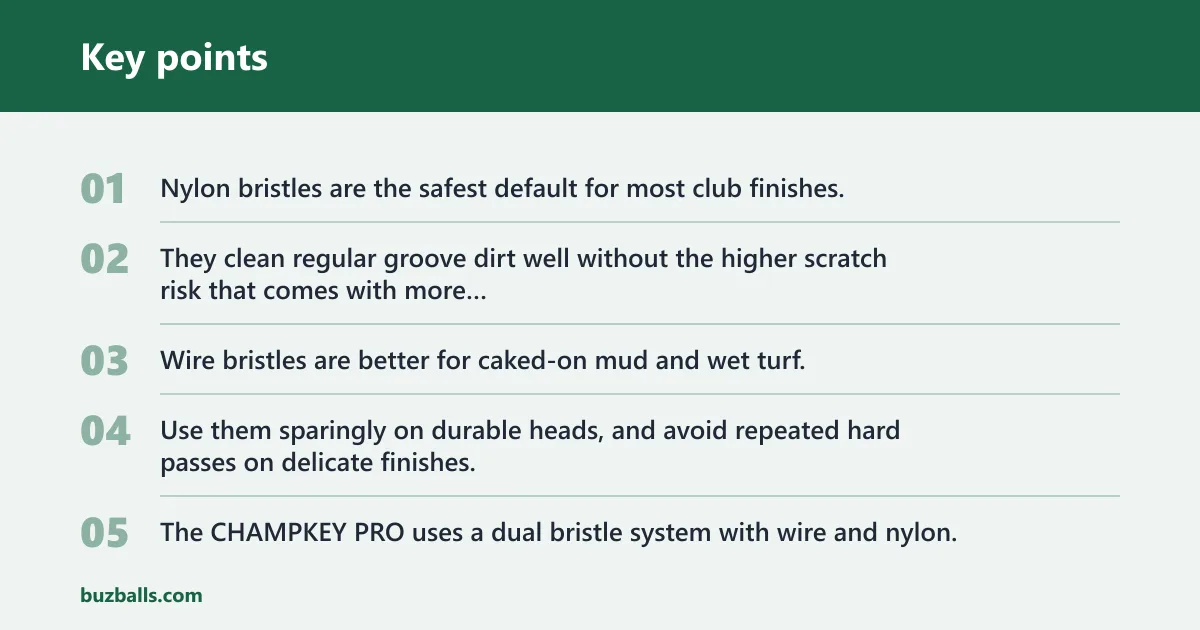
Nylon bristles are the safest default for most club finishes, including plated or black heads. They clean regular groove dirt well without the higher scratch risk that comes with more aggressive tools.
When wire bristles are worth using
Wire bristles are better for caked-on mud and wet turf, but they should stay in the exception category. Use them sparingly on durable heads, and avoid repeated hard passes on delicate finishes. The CHAMPKEY PRO uses a dual bristle system with wire and nylon, which reflects that split use case.
Signs you are pressing too hard
If the brush skates, chatters, or leaves visible marks on the finish, pressure is too high. Groove edges should stay crisp; they should not look rounded or shiny from abrasion. A firm brush stroke should clear debris without changing the shape of the score lines.
Picture a black wedge with fine surface marks already showing near the sole. Nylon bristles with two or three short passes keep the finish safer than repeated wire brushing, especially when only a few grooves are dirty. Use the spike only after the brush has already loosened the packed grit.
What should you look for in a golf brush?
Look for bristle stiffness, head size, spike shape, and attachment style. For most players, a nylon-dominant brush with a cleanly shaped spike and a bag-friendly clip is the best starting point. Larger heads clear more surface quickly; smaller heads can be easier to guide in tight spots.
Bristle stiffness and head size
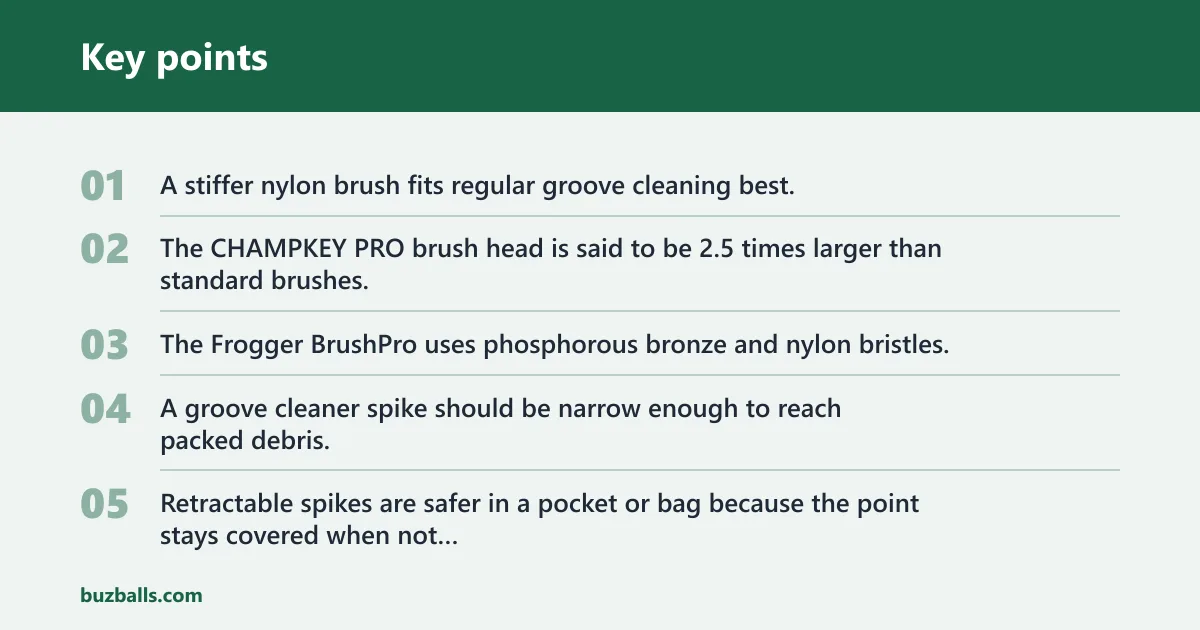
A stiffer nylon brush fits regular groove cleaning best. The CHAMPKEY PRO brush head is said to be 2.5 times larger than standard brushes, which can speed up face coverage. The Frogger BrushPro uses phosphorous bronze and nylon bristles, giving it a more aggressive cleaning mix than nylon alone.
Spike shape and safety
A groove cleaner spike should be narrow enough to reach packed debris, but not so sharp that it invites forcing. Retractable spikes are safer in a pocket or bag because the point stays covered when not in use. The spike is for finishing a stubborn groove, not prying at the face.
Retractable cord versus magnetic attachment
A retractable cord keeps the brush attached and easy to reach, but the cord can wear over time. The Frogger BrushPro uses a 2.5-foot retractable cord. Magnetic attachment reduces snagging and is quick to remove, and the Callaway H2GO uses a quick-release magnetic attachment with an internal water reservoir and spray function.
A common first-timer mistake is buying the harshest brush and using it everywhere. That slows cleanup, can scratch delicate finishes, and does not help much on dry dust. A better setup is nylon for regular use, with water or wire reserved for the cases that need more help.
Common mistakes
- Using wire bristles too often: save them for caked mud or wet turf, not every shot.
- Forcing the spike into the face: loosen the debris first, then pick out what remains.
- Leaving moisture on the head: dry fully with a microfiber towel to reduce streaks and water spots.
- Cleaning too slowly during play: keep the brush clipped to the bag so you can clean and move on.
- Skipping the grooves: a face wipe alone leaves the score lines dirty.
BC Golf News says cleaning clubs after every single round is the baseline, and it recommends a stiff-bristle nylon brush plus a damp microfiber towel clipped to the bag during the round. It also includes warm water and liquid dish soap for deeper cleanup after play. Grooves are regulated under the rules of golf, so avoid anything that changes their shape.
Frequently asked questions
Should I clean the grooves or the whole clubface first?
Clean the grooves first. Once the score lines are open, wipe the whole face, then dry the rest of the clubhead. That keeps loosened grit from moving back into the grooves and saves time during a round.
Do I need water with a golf club brush?
Not usually. Dry brushing is enough for dust, grass, and light sand. Add a little water only when mud or dried grime will not lift cleanly; a water reservoir brush can help, but it is messier and needs refilling.
How hard should I scrub golf club grooves?
Use light-to-moderate pressure. If you need more force, switch to a slightly firmer brush or add a little water before pressing harder. Heavy pressure risks scratching delicate finishes and can deform groove edges over time.
Can a brush damage my club finish or grooves?
Yes, if the brush is too abrasive or the pressure is too high. Nylon bristles are generally safer for most finishes, while wire bristles carry more scratch risk. Keep the spike out of the face unless it is clearing packed debris that brushing already loosened.
What’s the best way to clean a wedge after a bunker shot?
Brush the grooves first to remove sand, then wipe the face with a microfiber towel. If sand is packed into a groove, add a few drops of water or use a water reservoir brush before a second pass. Dry the head before putting the wedge back in the bag.
How often should I use a golf club cleaning brush during a round?
Use it after bunker shots, wet rough shots, and any shot that leaves visible debris in the grooves. For the rest of the round, clean only when dirt is obvious so you do not slow pace of play. A quick wipe after each dirty shot is enough.
What should I look for in a golf brush with a groove cleaner?
Look for stiff-enough nylon bristles, a spike that retracts or stays covered, and a head size that fits quick one-handed use. A magnetic clip is neat and snag-resistant; a retractable cord gives constant attachment but can wear. Pick the style that keeps the brush accessible without getting in the way.