Golf Club Sizing Guide: How to Choose the Right Length and Fit

Start with height and wrist-to-floor measurement: many adults land near standard iron length at about 34-36 inches wrist-to-floor, and each 1/2-inch iron-length change often pairs with about 1° of lie-angle change. Get it wrong and a decent swing can turn into heel strikes, toe strikes, pulls, pushes, and posture problems. This guide shows how to choose a starting length, when standard works, how lie angle changes the fit, and when a real fitting should overrule the chart.
The practical way to size clubs is to start with the problem you see on the course, not with a chart by itself. Distance loss, posture discomfort, directional misses, and scattered strike location can point to different fixes, and length is only one part of the answer.
A golfer can be the “right” height for standard clubs and still need a length change because wrist-to-floor, posture, and hand position at address do not match the chart average. The reverse happens too: a chart may suggest longer clubs, but ball flight and sole contact show that lie angle or swing delivery is the real problem.
Why golf club sizing starts with the problem you are trying to fix

If the complaint is lost distance, ask first whether the golfer is losing clubhead speed or losing centered contact. A longer club can add speed on paper, but an off-center strike often gives back more distance than the added length creates.
If the complaint is posture discomfort, hand position, back bend, and knee flex matter right away. Clubs that are too short can force extra bend from the hips; clubs that are too long can make a player stand too upright, crowd the ball, or let the sole sit awkwardly at address.
Directional misses need more care. Start direction can shift because of face delivery, strike location, or lie angle. Length matters because changing length changes how the sole meets the turf and where the strike drifts on the face.
Say your 7-iron contact lives on the toe and your setup feels cramped even though your height suggests standard. That does not automatically mean “go longer.” It means the chart result needs to be checked against wrist-to-floor, posture, and strike pattern before any build change is made.
How to tell which club specs matter first
If you are trying to figure out the right club size, start by checking the spec that matches the problem you notice. The supporting guide explains a simple triage: wrist-to-floor and hand size point you toward length and grip size, while ball flight clues can suggest whether lie angle or shaft flex needs attention. That matters because the wrong fit can change yardage, dispersion, and how natural the club feels at address. For a practical walkthrough, see golf club sizing guide.
The article also shows what to measure, what numbers are worth comparing to stock specs, and when a small adjustment is enough versus when a different club spec is the better fix.
How do you know what length golf clubs you need?
Start with static fitting, then verify it with impact and ball flight. Height and wrist-to-floor set the first baseline; posture, hand height, strike location, and miss pattern decide whether that baseline stays at standard, moves to minus 0.5 inch, moves to plus 0.5 inch, or calls for a dynamic fitting.
Start with static fitting
Static fitting uses body measurements rather than swings. The key inputs are height and wrist-to-floor, taken from the wrist crease to the floor with the arms hanging naturally. Those numbers give you a workable starting range, not a final build spec.
Height by itself leaves out too much. Two golfers of the same height can need different club lengths because one has longer arms, a different posture, or a much lower hand position at address.
Add posture and hand position
Posture can shift the recommendation even when the measurements are similar. A golfer who sets up with more hip hinge and lower hands may fit shorter than height alone suggests. A golfer who stands taller with higher hands may fit longer.
Suppose two players are both the same height and both measure the same wrist-to-floor. One addresses the ball with the handle low and a lot of forward bend; the other stands taller with the hands higher. They should not be pushed into the same final club length without watching impact.
Pressure-test the chart with ball flight
Strike pattern and start direction are the fastest checks. Heel strikes, toe strikes, pulls, pushes, and sole marks can confirm that a static recommendation makes sense or show that lie angle and delivery are changing the picture.
- Frequent heel contact can show that the club is functionally too long for the setup, or that the player is crowding the ball.
- Frequent toe contact can show that the club is functionally too short, or that posture is forcing the hands too low and far from the body.
- Pulls and pushes need lie-angle context; they are not clean proof of length by themselves.
What is golf club length, and how is it measured correctly?
Golf club length is the full playing length of the club, not the raw shaft length. It is measured from the grip top to the sole on a 60-degree plane, which is why two clubs with the same shaft can end up with different finished playing lengths.
Club length versus shaft length
Shaft length is only one part of the finished club. Grip cap, head design, hosel insertion, and the official measuring method all affect the final number. When a fitting chart says standard, minus 0.5 inch, or plus 0.5 inch, it is talking about club length.
The 60-degree measurement method
The accepted method measures from the top of the grip to the sole with the club set on a 60-degree plane. That matters because measuring a club laid flat on the ground or against a wall can give a different result and send the fitting decision the wrong way.
Why driver and 7-iron are the usual reference points
Most fitting charts use the driver and the 7-iron as anchor points because they sit near the top and middle of the set. Typical men’s standard driver length is 45.5 inches, and a typical men’s standard 7-iron length is 37 inches, though manufacturer standards vary by model. Typical women’s standard driver length is about 44 inches, and a typical women’s standard 7-iron length is about 36 inches, again with variation by manufacturer and model.
The 7-iron is the common iron benchmark because it gives a clean midpoint for set progression. If the 7-iron needs changing, the rest of the irons usually follow that build pattern unless wedge gapping or a specialty club calls for a different choice.
How do height and wrist-to-floor affect club fit?
Height and wrist-to-floor work together because height estimates overall build while wrist-to-floor shows where the hands sit relative to the ground. Using both is better than using either one alone, and it is the normal starting point for static fitting before any shots are hit.
How to measure at home
- Stand naturally. Wear golf shoes or shoes close to that sole height, stand on a hard floor, and let the arms hang without reaching. The goal is to measure your normal address-related body geometry, not a stretched pose.
- Measure total height. Record height in bare feet or note the shoe difference if needed. Height helps group the initial range, but it should never be used alone to lock in final club length.
- Measure wrist-to-floor. Measure from the wrist crease to the floor with the arms hanging naturally. Take the number on both sides if posture is uneven, then use the normal side or the average if the difference is small.
- Compare both inputs. Use height and wrist-to-floor together rather than chasing one number. If height points toward standard and wrist-to-floor points longer or shorter, treat that as a sign to check posture and ball flight before ordering.
What static fitting can tell you
Static fitting can narrow the first decision fast: standard, minus 0.5 inch, plus 0.5 inch, or a likely need for more fitting.
When body measurements point in different directions
Height can suggest longer clubs while wrist-to-floor suggests standard if the golfer has longer arms. The reverse can happen with shorter arms. In those mixed cases, posture and impact matter more than trying to force a neat chart answer.
Sizing junior clubs by height
For kids, the safest starting point is usually height, not age. This guide explains how to choose junior clubs based on a child’s height, why shorter sets matter for posture and contact, and how to tell when a set is already too long or too small. It also covers what to look for in a beginner set, so you can avoid buying clubs that make learning harder than it needs to be.
If you’re trying to match a child to the right size quickly, the kids club sizing guide gives a practical checklist and clear signs that it’s time to move up to the next set.
Club length decision matrix
Use this matrix as a starting recommendation, not a final order form. It combines the static measurements with setup posture and the miss pattern that most often shows up on the course or range. In general, wrist-to-floor measurements around 34-36 inches often land near standard, lower measurements can point shorter, and higher measurements can point longer or to fitting required once posture and impact are checked.
| Height range | Wrist-to-floor | Posture at address | Common miss pattern or strike clue | Starting adjustment | What to check next |
|---|---|---|---|---|---|
| Average adult range | 34-36 in | Neutral posture, hands neither unusually high nor low | Centered or mixed strike, no clear posture issue | Standard | Confirm lie angle and strike location with a 7-iron |
| Average adult range | Below 34 in | Lower hand position or more forward bend | Toe strikes, crouched setup, club feels short | +0.5 in | Recheck lie angle after length change |
| Average adult range | Above 36 in | More upright posture, higher hands | Heel strikes, crowded setup, club feels long in transition | -0.5 in | Recheck swingweight and sole contact |
| Taller golfer | 34-36 in | Neutral posture | Strike pattern mostly centered | Standard or fitting required | Use actual impact to break the tie; height alone is not enough |
| Taller golfer | Above 36 in | Neutral to upright posture | Heel-side contact or pull/push pattern that changes with turf interaction | +0.5 in | Check lie angle immediately after changing length |
| Shorter golfer | 34-36 in | Neutral posture | No strong strike bias | Standard or fitting required | Do not assume shorter clubs from height alone |
| Shorter golfer | Above 36 in | Very upright setup, handle high | Heel contact, control loss, club looks long at address | -0.5 in | Check swingweight and start direction |
| Any height | Any value that conflicts with height | Extreme posture, unusual hand height, or changing setup club to club | Mixed miss pattern, face contact scattered heel to toe | Fitting required | Use lie board, face marks, and launch data |
| Any height | Any | Neutral posture | Low-left or push pattern appears only from turf, not on a tee | Fitting required | Length and lie may both be involved |
What happens if your clubs are too short or too long?
Clubs that are too short usually force extra bend and can move strike location toward the toe; clubs that are too long can push posture too upright and move contact toward the heel. Either error can also change sole interaction and start direction, which is why length and lie angle have to be checked together.
Signs the clubs are too short
A club that is too short can make the player reach down and fold more from the hips than intended. Common results include toe contact, inconsistent strike depth, and a setup that never looks settled.
Directional results vary with delivery. One golfer may see a low-left pattern because lie and face delivery combine that way; another may simply hit weak toe strikes that start right. The bad fit is the posture and strike pattern, not one single ball-flight rule.
Signs the clubs are too long
Too much length can move the handle high and the body upright. Heel strikes show up often, but that pattern can also come from setup or delivery, so control can fade because the club becomes harder to return to the ball from the same place every time.
A common first-timer mistake is adding length to chase distance with the driver, then finding impact drifting toward the heel and dispersion widening. The added speed only helps if center contact and face control stay in place.
What strike pattern and start direction reveal
Strike location gives the cleanest clue. Heel and toe trends show whether the club is arriving too close or too far from the body for the golfer’s setup and motion, but they still have to be separated from posture and delivery errors that can create the same pattern.
Start direction adds context when the shot is hit from turf. If the sole is interacting badly because length changed lie delivery, the ball can start offline even when contact feels decent. That is where static fit stops and dynamic fitting earns its keep.
How do length changes affect lie angle, swingweight, and shaft flex?
Changing club length rarely changes only length. Lie angle must be checked because sole interaction and start direction can move; swingweight must be rechecked because shortening or extending changes head-heaviness feel; and shaft flex may need review because a new playing length can alter tempo, delivery, and launch.
Lie angle after a length change
Lie angle is linked to effective club length at impact. When the club gets longer or shorter, the sole can sit differently and the head can arrive with a different toe-up or heel-up condition.
A common rule of thumb is that each 1/2-inch iron-length change often pairs with about 1° of lie-angle change. That is not a law, but it is a good warning that a length adjustment without a lie check is incomplete.
Swingweight and balance
Swingweight is the perceived head-heaviness balance measure. Extend a club and it usually feels more head-heavy; shorten it and it often feels lighter in the head. That feel change can alter tempo, release timing, and where the strike lands on the face.
That is why a club that measures “right” can still feel wrong after a build change. Swingweight is not about total weight alone; it is about balance during the swing.
Shaft flex is separate from length
Shaft flex and shaft length are different fitting choices. A player can need standard length with a softer or firmer flex, or a length change with the same flex kept in place.
Still, length can force a second look at flex because the club may deliver differently after the change. If launch, spin, or tempo feel shift after a build change, the shaft fit deserves a review rather than blind trust in the original spec.
How should you size driver, irons, wedges, and putter differently?
Each club category solves a different job, so one length answer should not be copied across the bag. Driver fitting is often most sensitive to the speed-versus-control trade-off, irons commonly use the 7-iron as a main benchmark, wedges often care more about turf and partial-shot control, and putters are commonly driven by posture and eye line.
Driver
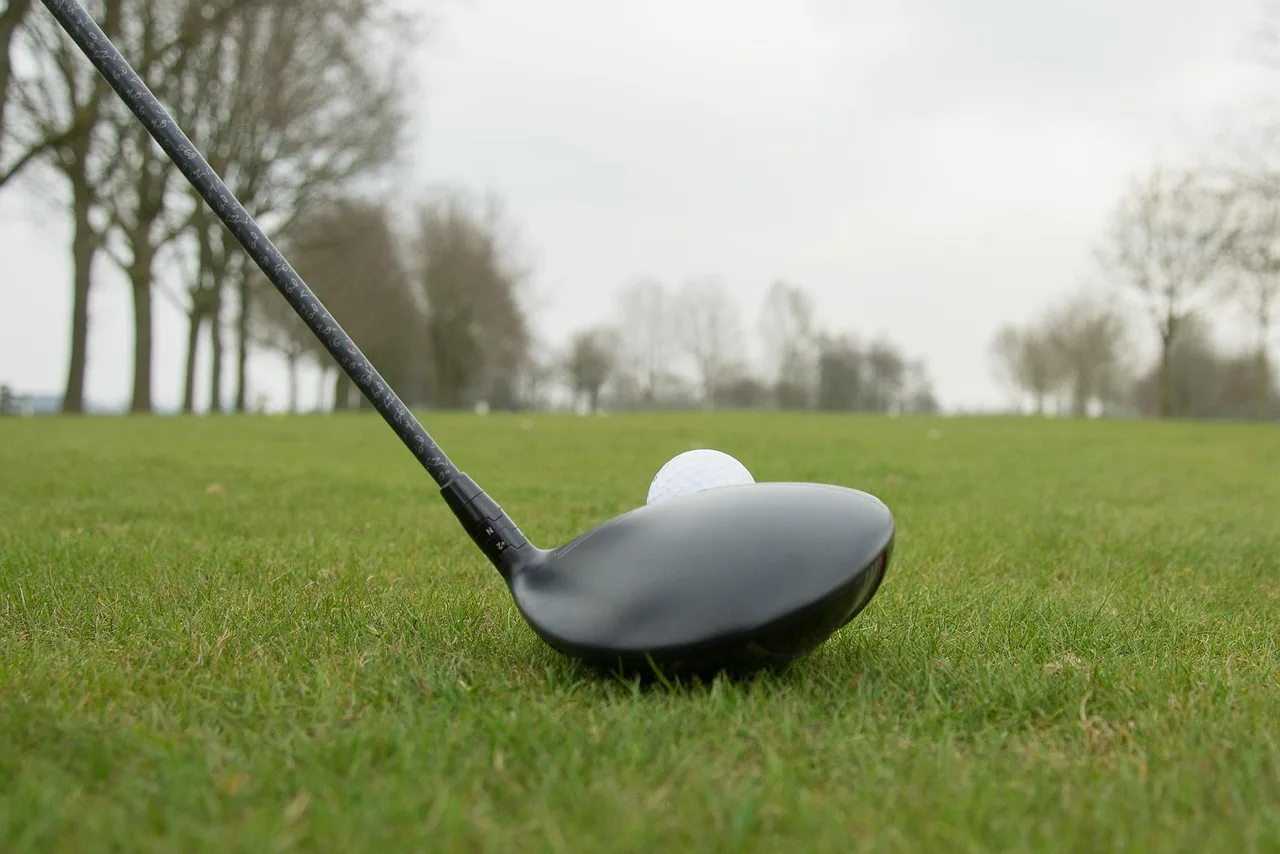
Driver length deserves extra care because it is the longest club most golfers carry and the hardest one to center consistently. Typical men’s standard driver length is 45.5 inches, while typical women’s standard driver length is about 44 inches, but manufacturer standards vary by model.
Longer does not automatically mean farther. If the strike moves away from center, launch and ball speed can drop even when swing speed rises. Driver fitting should weigh centered contact, face control, and dispersion before chasing more length.
The rules also matter here. The maximum allowed club length is 48 inches, with putters excluded, and the minimum is 18 inches. In some competitions, a Local Rule option can reduce the maximum to 46 inches.
Irons
The 7-iron is the common reference because it sits in the middle of the set and anchors iron progression. Typical men’s standard 7-iron length is 37 inches, and typical women’s standard 7-iron length is about 36 inches, though manufacturer standards vary by model.
Once the 7-iron length makes sense, the rest of the iron set usually follows the manufacturer’s progression. The job then is to confirm that the lie angle and strike pattern stay consistent through the set.
Wedges
Wedges are often where golfers notice a bad fit late, because full swings can look acceptable while partial shots feel awkward. Length affects turf contact, handle height, and distance control on swings that are not made at full speed.
If irons are lengthened or shortened, wedges should be checked on pitches and partial swings rather than assumed to fit because they match the iron build sheet.
Putter
Putter length is about posture, eye line, and how the sole sits on the green. A putter that is too long can raise the hands and alter aim; one that is too short can force too much bend and change how the stroke arcs.
Putter fitting should look at where the eyes sit relative to the ball, whether the sole rests evenly, and whether the setup can be repeated without strain.
When does dynamic fitting override a static chart
Dynamic fitting should overrule the chart whenever actual impact disagrees with the measurements. If face contact, sole marks, launch, or start direction show that the club is arriving poorly, real shots matter more than a static estimate because they reveal how the golfer actually delivers the club.
What a dynamic fitting checks
Dynamic fitting uses actual shots. It can include impact tape or spray for strike location, a lie board or face and sole marking for ground interaction, and launch monitor data for launch, spin, speed, and dispersion.
The point is confirmation. Static fitting says where to begin; dynamic fitting shows whether the club is returning to the ball in a way that matches that starting build. Face marks should show whether contact is centered or repeatedly heel or toe biased, sole or lie-board marks should be read with start direction to see whether turf interaction supports the build, and launch data is most useful here when strike quality and dispersion stay consistent rather than when one number looks good by itself.
When the chart is usually close
Static charts are often close for golfers with average proportions, neutral posture, and a repeatable setup. They are also useful for beginners who need to avoid an obvious mismatch before paying for a deeper fitting session.
When the chart is often wrong
Charts miss more often when the golfer has unusual arm length relative to height, very upright or very bent posture, changing hand height, or a strike pattern that shifts across clubs.
Picture a junior using adult irons that have only been gripped smaller. Even if the child can hold the club, total length, swingweight, and lie can all be off at the same time. That is a fitting problem, not just a grip problem.
What to verify after measuring at home

After measuring at home, the next move is to confirm the starting adjustment by club type and by impact. Check whether the recommendation is standard, minus 0.5 inch, plus 0.5 inch, or fitting required, then verify lie angle, swingweight, and strike pattern before assuming the whole bag is solved.
What to do next
- Choose the starting adjustment. Use height and wrist-to-floor to place each club category at standard, minus 0.5 inch, plus 0.5 inch, or fitting required. Keep driver, irons, wedges, and putter separate because they do not need the same final answer.
- Check impact pattern. Hit balls with face spray, impact tape, or another simple strike marker. Centered contact supports the chart result; repeated heel or toe bias means the recommendation needs another look.
- Confirm lie angle. Check sole interaction and start direction, especially on irons and wedges. Any change in length should trigger a lie-angle check because the sole can arrive differently even if the setup looks better.
- Recheck swingweight. Have the balance measured after shortening or extending a club. If the club suddenly feels too head-heavy or too light, strike quality and timing can drop even when the length looks correct on paper.
- Test on real shots. Compare tee shots, iron shots from turf, partial wedges, and putts rather than judging fit from one club only. A change that helps the driver may still need a different answer in the wedges or putter.
Club-type checklist table
| Club type | Verify length for | Verify lie angle for | Verify swingweight for | Verify strike or roll pattern for | Most common reason a chart gets overridden |
|---|---|---|---|---|---|
| Driver | Setup comfort and ability to return the head to center | Less about turf, more about delivered face and setup geometry | Yes, especially after any extension or cut-down | Heel-to-toe strike spread and dispersion | Control loss outweighs any speed gain |
| Irons | 7-iron benchmark and set progression | Yes, because sole interaction affects start direction | Yes, to keep feel consistent through the set | Centered strike and turf contact | Static fit conflicts with actual sole marks or start lines |
| Wedges | Partial-shot comfort and distance control | Yes, especially on pitches and open-face shots | Yes, because feel matters on touch shots | Low-point control and strike consistency | Full-swing fit does not match partial-swing use |
| Putter | Posture, eye line, and hand height | Check sole position at address | Useful if head feel changes after length change | Start line and face-center contact | Setup cannot be repeated comfortably |
Frequently asked questions
What is the difference between standard and custom club length?
Standard length is the manufacturer’s default build for a given model, while custom length changes that build to fit the golfer better. In practical terms, many first fittings start by comparing standard with minus 0.5 inch or plus 0.5 inch, then checking whether lie angle and swingweight still work.
Do longer clubs make you hit farther?
Sometimes, but only if strike quality holds up. Extra length can add speed, especially in the driver, yet off-center contact often costs more ball speed and control than the added length creates. Distance gains have to be judged against centered contact, start line, and dispersion, not speed alone.
How does club length affect lie angle and swingweight?
Length changes can alter how the sole meets the ground and where the ball starts, which is why lie angle must be checked after a build change. They also shift swingweight, the club’s head-heaviness balance, so a club can feel too heavy or too light even if the new length looks correct.
What are standard driver and 7-iron lengths?
Typical men’s standard driver length is 45.5 inches, and a typical men’s standard 7-iron length is 37 inches. Typical women’s standard driver length is about 44 inches, and a typical women’s standard 7-iron length is about 36 inches. Those are reference points, not guaranteed fits, and manufacturer standards vary by model.
What does a golf fitting check besides length?
A proper fitting checks strike location, lie angle, sole interaction, swingweight, shaft flex fit, launch, spin, and dispersion. Dynamic sessions often use impact tape or spray, a lie board or sole marks, and launch monitor data to confirm whether the chart-based starting length actually works in motion.
What is the maximum allowed golf club length under the rules?
The Rules of Golf allow a maximum club length of 48 inches, with putters excluded, and set a minimum of 18 inches. Some competitions can adopt a Local Rule option that reduces the maximum to 46 inches, which matters most when driver length is being considered.