Cricket Bat for Beginners: How to Choose and Use Your First Bat

Choose your first cricket bat by matching three things: ball type first, then player size, then practice volume. For many adult beginners, the sensible starting point is a short-handle bat in a light-to-medium weight band, often Kashmir willow for tennis-ball or casual play. Get it wrong and you end up with poor control, sore hands, and a bat you outgrow fast. This guide covers size, weight, tennis-ball and leather-ball choices, setup, care, and upgrade triggers.
Start with your playing route

A first bat only makes sense in context. The right choice for a backyard tennis-ball game is often the wrong choice for regular net sessions with a leather ball.
Backyard and tennis-ball beginners
This route suits casual play, school-yard games, tape ball, and family sessions in a park or driveway. The bat deals with lighter impacts, so price and easy handling matter more than fine response.
For this route, Kashmir willow usually makes the most sense. It is a sensible first bat for occasional use, and it suits tennis-ball sessions well. A lighter pickup helps new players learn a straight downswing instead of dragging the blade late through the line.
Casual junior hard-ball practice
This route fits a child starting coached sessions or occasional hard-ball practice without a heavy weekly schedule. Accurate size matters more than buying ahead for growth. If the bat is too long, the player grips low and control drops.
Willow choice depends on ball type and session intensity. Kashmir willow can still work at this stage if practice volume is low and leather-ball use is limited. Once hard-ball use becomes frequent, the starter brief changes.
Regular leather-ball training
This route covers juniors or adults going to nets regularly and expecting the bat to face proper leather balls often. Here, English willow is usually the better fit for regular hard-ball use because it is softer and more responsive, though it costs more and needs preparation before match use.
Do not treat this as a brand decision. It is a workload decision. More leather-ball contact means more need for proper prep, and more reason to care about sweet-spot position and pickup instead of sticker claims.
First-bat chooser matrix
| Playing route | Size | Willow | Target weight band | Sweet spot | Handle shape | When to upgrade |
|---|---|---|---|---|---|---|
| Backyard or tennis-ball first bat | Match height first; juniors use Size 1 to Size 6, then Harrow, then full size | Kashmir willow | As light as the player can control without wobble; adult beginners usually start in the light band | Mid or high for easier pickup and back-foot-friendly casual play | Round for maneuverability | Upgrade when play shifts to regular leather-ball sessions, the bat jars the hands on hard-ball contact, or technique becomes consistent enough to notice limited response |
| Casual junior practice first bat | Height-based fit in the correct junior size; do not buy long for growth | Kashmir willow for low-volume mixed use; English willow only if leather-ball training is becoming regular | Light, with easy stance control and no drop toward the toe | Mid for general use; low if most shots stay on the ground | Round for smaller hands unless front-foot stability is clearly better with oval | Upgrade when weekly hard-ball use rises, edges and seams leave frequent surface marks, or the player starts timing the middle consistently and wants a cleaner response |
| Regular leather-ball training first bat | Exact height fit in Harrow or adult full size as needed | English willow | Adult beginners usually fit light to medium; avoid heavy unless strength and technique are already sound | Mid or low for front-foot play and ground shots | Oval for stability and front-foot control, or round if hand comfort is clearly better | Upgrade when training frequency rises again, the face shows repeated seam compression, the pickup starts to feel limiting rather than stable, or shot range expands beyond the bat’s sweet-spot bias |
What size cricket bat should a beginner use?
Start with height, then check stance, rather than relying on age by itself. Cricket bat sizes run from Size 1 up to Harrow, then full size, and a bat should not be longer than 38 inches (96.52 cm). The right size keeps the handle in a controllable position and stops beginners from dragging the toe or gripping too low.
Use height first
For juniors, exact charts vary by maker, so height works best as a shortlist before a stance check. A Size 6 bat fits players from 5’0″ to 5’3″. Harrow fits players from 5’3″ to 5’6″. Most adults between 5’6″ and 6’1″ use a Short Handle bat.
Those markers do more work than an age chart because children of the same age often differ a lot in arm length, stance width, and strength. Height gets the shortlist right, then the stance check confirms it.
How to confirm fit in the stance
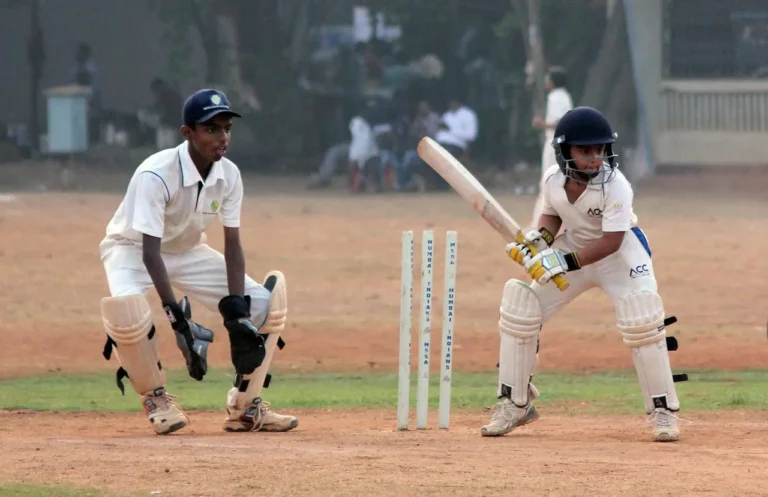
Have the player take their normal batting stance with top hand and bottom hand placed naturally, not choked down. If the bat looks long enough only when the hands slide lower on the handle, it is too much bat for now.
A bat that is too long forces you to grip low and reduces control. That shows up fast in beginners: late swings, a drifting backlift, and contact near the toe.
Picture a player at 5’2″ using Harrow because it “leaves room to grow.” The blade may reach the ground fine, but the hands sit too low and the face arrives open. Size 6 usually gives a cleaner setup and less fight against the bat.
Should a child size up to grow into a bat?
No. An oversized junior bat teaches compensation. The child lifts with the bottom hand, drops the toe behind them, and starts sweeping across the ball instead of coming down straight.
Parents often spot the symptom before the cause: the player says the bat feels slow, heavy, or awkward even though the listed weight looks normal. In many cases, the problem is length and balance, not grams.
How heavy should your first bat be?
A beginner should start light enough to hold the bat steady and swing it on time. For many adult beginners, a light-to-medium bat is the safe starting band.
Beginner weight bands that make sense
A beginner’s bat should weigh between 2 lbs 10 oz and 2 lbs 14 oz. That is why so many first-time adult buyers end up there.
Heavy bats have a place, but usually later. Once a bat reaches 1,245 grams and above, timing mistakes get harder to hide, especially for players still learning grip pressure and swing path.
When heavy becomes too heavy
If you cannot keep the bat steady for a few seconds, it is too heavy. That is the fastest practical screen because it checks strength, grip, and balance together instead of relying on the label alone.
Suppose an adult beginner likes the idea of a bigger bat and picks a heavy model off the rack. In shadow swings, the first movement looks strong, then the face dips closed and the bottom hand takes over. That is a poor trade for a first season.
Weight is not the same as pickup
Two bats with similar listed weights can feel different in motion. One may carry more mass low in the blade and feel slower to start. Another may balance closer to the hands and feel quicker even if the scale number is similar.
That is why the next step matters.
What is pickup in a cricket bat?
Pickup is how heavy the bat feels in your hands during stance and swing, not just the listed weight on a sticker. It changes with balance and weight distribution, so beginners should compare bats with a short stance hold and a few shadow swings before buying.
Why balance changes what you feel
A bat with more weight toward the toe usually feels slower and heavier in the first part of the downswing. A bat with a more central balance often starts easier and lets beginners set the face earlier.
This matters because new players rarely lose shots on pure bat speed. They lose them on late shape, unstable hands, and a face that arrives twisted.
Cricket bat checklist
| Step | What to do | What a good result feels like | What to reject |
|---|---|---|---|
| 1 | Take the normal batting grip with gloves off | Hands fit without squeezing; bottom hand does not bunch at the flare | Handle feels too thick, too thin, or forces extra grip tension |
| 2 | Stand in batting stance for a few seconds | Bat stays steady with relaxed shoulders | Toe drops, wrists shake, or the player has to brace hard |
| 3 | Make two slow shadow backlifts and downswings | Face tracks straight with no sudden pull toward leg side | Bat feels late, drags low, or closes too quickly |
| 4 | Hold the bat one-handed for a moment with the top hand | Top hand supports it without strain | Bat immediately tips or twists |
| 5 | Check toe clearance in stance | Blade sits naturally near the ground without choking down | Player grips low to make the bat sit right |
| 6 | Compare it with one lighter-feeling and one heavier-feeling option | Chosen bat still feels easiest to repeat | Choice changes once a balanced alternative is tried |
Should a beginner buy Kashmir willow or English willow?
The answer depends on ball type and practice volume. Kashmir willow is a sensible choice for a first bat or occasional play, especially for tennis ball or casual use. English willow is the better buy for regular leather-ball training because it is more responsive, but it costs more and needs prep.
Where Kashmir willow makes sense
Kashmir willow is commonly used for starter bats because it is harder, denser, and usually lower in price than English willow. That makes it a strong fit for backyard cricket, tape ball, tennis ball, and low-volume mixed use.
For parents, the appeal is straightforward: less money tied up in a bat that may be outgrown in size or purpose within a season or two.
When English willow becomes the right move
English willow is often preferred for leather-ball cricket because it is generally softer and more responsive. Players doing regular net sessions usually feel the difference in contact quality and timing control, especially once they find the middle more often.
New English willow also needs care from day one. A new English willow bat typically needs oiling and about four to six hours of knocking in before match use.
Failure cases for willow choice
A Kashmir willow bat becomes the wrong choice when the player moves into regular leather-ball training and starts striking hard balls often enough to want cleaner response and more predictable feel from the middle. It can also become the wrong choice when seam marks and jarring feedback show up session after session.
A common first-timer mistake is buying English willow for a child who only plays tape ball twice a month. The bat may be fine, but the extra prep, extra cost, and greater care demands do not match the use case.
How do sweet spot and handle shape affect control?
Beginners control the bat better when the sweet spot matches their usual shots and the handle shape matches their grip. Low sweet spots suit ground shots, high sweet spots suit back-foot play, and mid sweet spots cover mixed use. Round handles feel more maneuverable; oval handles feel more stable on front-foot shots.
Sweet spot position
Low sweet spot bats favor drives and grounded shots, which is useful on slower surfaces and for players learning to keep the ball down. Mid sweet spots work for mixed practice and varied lengths. High sweet spots help players who play more off the back foot or meet the ball higher in the swing.
For a first bat, mid or low is often easier to live with unless the player mostly relies on back-foot shots. That is because many beginners score more often with straight, grounded contact than with cut and pull shots.
Round versus oval handles
Round handles usually feel easier to turn in the hands. That helps maneuverability and can suit smaller hands or players still sorting out grip pressure. Oval handles resist twisting a bit more and tend to support front-foot control better.
Neither shape fixes technique. The test is whether the bat sits quietly in the hands and returns square through a simple shadow swing.
Grip size and setup mistakes
The grip should let the fingers wrap without strain. If the handle is too thick, beginners squeeze harder and lose wrist freedom. If it is too thin, the bat can roll in the hands on impact.
Say your child picks up the correct size but still looks cramped. Check the grip before changing the bat. A grip that is too bulky can make a suitable bat feel wrong, especially with smaller junior hands.
Why grip shape matters for control
A beginner’s grip sets up the whole shot: it helps the bat face stay square, keeps your swing repeatable, and makes it easier to correct mistimed contact. The supporting guide on cricket bat grip basics explains the orthodox V-grip, where to place both hands, how tightly to hold the handle, and how much space to leave between your hands. Those details matter because small grip errors can twist the bat face and send the ball off line.
If you’re choosing your first bat, learning the grip early is just as important as picking the right size or weight. A consistent hand position gives you a simple check before every ball, so you can build reliable contact before worrying about power.
How do you prepare and maintain a new bat?
If the bat is new English willow and intended for leather-ball use, it needs preparation before match play. Start with light oiling if the maker calls for it, then complete four to six hours of knocking in using a mallet and an old ball. Some modern bats come partially or fully pre-prepared, so follow the maker’s notes before adding oil or extra prep. After that, basic care is mostly about dry storage, surface checks, and replacing a worn grip.
When knocking in is required
English willow needs it before facing match-speed leather balls. The goal is to compress and prepare the face and edges gradually rather than letting the first hard impacts do the work all at once.
Kashmir willow starter bats used only for tennis ball or tape ball do not demand the same prep routine, though they still benefit from sensible care and avoiding harsh storage conditions.
A simple knocking-in plan
- Check the maker’s prep notes first, especially on pre-oiled bats.
- Apply a light coat of bat oil only if needed by the manufacturer guidance.
- Use a wooden mallet on the face with light taps, then moderate taps.
- Work the edges carefully without striking the splice or toe corners hard.
- Use an old ball for gentle throw-down impacts after the mallet stage.
- Spread the work across four to six hours rather than rushing one heavy session.
Storage, checks, and re-gripping
Keep the bat dry and out of extreme heat. Do not leave it in a hot car boot, a damp shed, or resting toe-down in a puddled kit bag. Moisture and heat both shorten a bat’s useful life.
Check the face and edges after sessions. Small marks are normal; spreading cracks, deep seam dents, or a loose toe guard are not. Replace the grip when it turns smooth, shifts on the handle, or forces you to squeeze harder to keep control.
When should you upgrade from a beginner bat?
Upgrade when the bat no longer matches the ball type, workload, or the player’s control. The clearest triggers are moving into regular leather-ball training, visible wear from repeated hard-ball contact, and a technique level where the player finds the middle often enough to notice the bat’s limits rather than their own inconsistency.
Upgrade triggers by route
Backyard and tennis-ball players should upgrade when hard-ball use becomes normal, not just occasional. Casual junior players should upgrade when coached sessions increase and the bat starts showing repeated hard-ball wear. Regular leather-ball trainees should upgrade when session frequency rises or the current bat’s pickup and response start holding back repeatable shot making.
Signs the player has outgrown the starter bat
Look for consistency before blaming equipment. If contact location is still random, a new bat is unlikely to fix much. If the player is finding the middle often, controlling the face, and training more often, equipment fit matters more.
The wrong upgrade is also common: buying heavier instead of buying a better match. More mass is not progress by itself.
Wrong-bat failure cases
| Mistake | What it feels like | What to change |
|---|---|---|
| Bat is too long | Player grips low, toe drags, control fades through the downswing | Go back to the correct height-based size |
| Bat is too heavy | Wrists shake in stance, swing arrives late, bottom hand dominates | Move to a lighter band or a better-balanced pickup |
| Kashmir willow used for regular leather-ball training | Harsh feedback, repeated seam wear, limited response as training load rises | Move to English willow prepared for leather-ball use |
| High sweet spot for a player learning grounded drives | Middle feels hard to access on fuller balls | Choose a mid or low sweet spot |
| Handle grip too thick | Hands tense early, wrists feel blocked, bat does not turn freely | Reduce grip thickness or try a rounder handle feel |
| Oval handle for a player who needs quick hand adjustment | Bat feels locked in, awkward in casual multi-shot practice | Try a round handle |
Frequently asked questions
How do I choose my first cricket bat?
Start with ball type, then size by height, then practice volume. Tennis-ball and backyard players usually do well with a lighter Kashmir willow bat, while regular leather-ball players should look at English willow. After that, confirm pickup, sweet spot, handle comfort, and whether the bat stays steady in stance.
Should I buy a bigger bat for my child to grow into?
No. A bat that is too big teaches bad habits because the player compensates with a low grip, extra bottom-hand force, and a dragging toe. Buy the right size for the child’s current height and replace it when height, strength, and playing route actually change.
What bat handle shape is best for beginners?
Round handles usually suit beginners who want easy maneuverability and a freer wrist feel. Oval handles usually suit players who want more stability and front-foot control. The better option is the one that lets the bat sit calmly in the hands without extra squeezing or twisting.
What sweet spot is best for a beginner cricket bat?
Mid or low sweet spots suit many beginners because early scoring often comes from straight, grounded shots. A high sweet spot fits players who play more off the back foot. Match the sweet spot to the usual shot pattern, not to a generic “all-round” label.
Do I need to knock in a new cricket bat before using it?
If it is a new English willow bat for leather-ball cricket, yes. It needs oiling if required by the maker and four to six hours of knocking in with a mallet and an old ball before match use. If the bat is sold as pre-prepared or pre-oiled, follow the maker’s notes before doing more. That prep reduces the risk of early surface damage from hard impacts.
When should I upgrade from a beginner cricket bat?
Upgrade when the bat no longer matches the ball type, training load, or skill level. Common triggers are moving from tennis ball to regular leather ball, increasing weekly practice, visible hard-ball wear, and consistent middle contact that makes the starter bat’s limited response easy to notice.