Tennis Ball Types: Differences, Uses and How to Choose

Tennis balls are commonly grouped into five main types: regular-duty, extra-duty, high-altitude, pressureless, and stage balls; a practical way to choose is to start with court surface, then consider player level and training purpose. Pick the wrong type and you get shorter ball life, odd bounce, sore arms, and slower skill development. This guide breaks down each category, compares bounce, felt, and durability, and gives a simple buying framework for matches, drills, kids, and ball machines.
A tennis ball is a felt-covered rubber ball, and that felt is not decorative. It changes drag, spin response, and wear rate. Construction also matters: some balls depend on sealed internal pressure for a fresh, lively rebound, while others depend more on the rubber core and hold up longer in heavy practice.
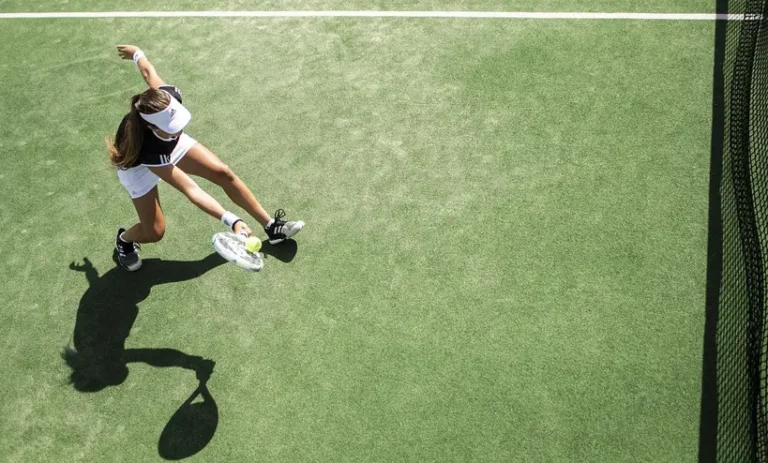
That matters because tennis is played on clay, grass, and hard courts, and each surface changes bounce, speed, and abrasion. On a 23.77m × 8.23m singles court, or a 23.77m × 10.97m doubles court, small shifts in bounce and pace can turn a comfortable rally into a rushed exchange. Tennis racquets rely on string tension for control and power, so the ball and the strings work together.
What are the main tennis ball types?
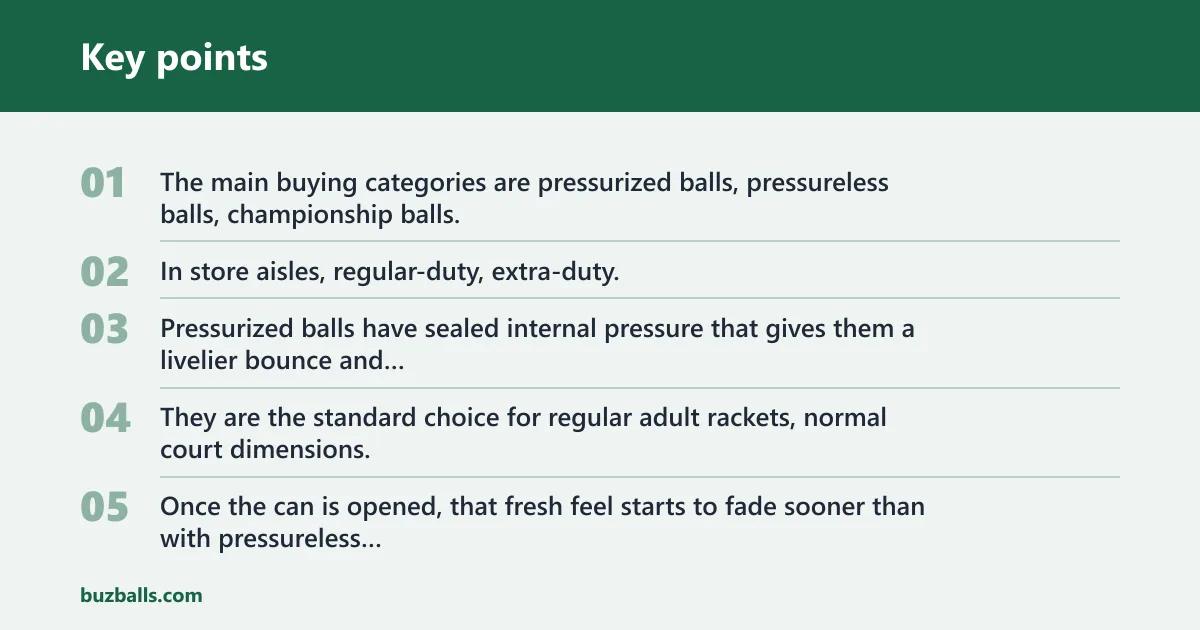
The main buying categories are pressurized balls, pressureless balls, championship balls, practice balls, and low-compression stage balls. In store aisles, regular-duty, extra-duty, and high-altitude balls usually sit inside the broader pressurized group, while stage balls cover junior and beginner development with slower, easier-to-control bounce.
Pressurized balls
Pressurized balls have sealed internal pressure that gives them a livelier bounce and quicker response off the strings. They are the standard choice for regular adult rackets, normal court dimensions, and most match play. Once the can is opened, that fresh feel starts to fade sooner than with pressureless balls.
Within this group, regular-duty balls are usually aimed at softer or smoother court conditions, while extra-duty balls use more durable felt for abrasive hard courts. High-altitude balls are built to avoid playing too lively where thinner air already speeds the game up.
Pressureless balls
Pressureless balls get much of their rebound from the rubber construction rather than from a pressurized interior. They usually feel drier and slower at first contact, but they stay usable far longer in baskets, carts, and ball machines. For repetitive training, their value often beats a cheaper can of pressurized balls that goes flat quickly.
Championship, practice, and low-compression balls
Championship balls are match-oriented balls with more consistent felt and more predictable play. They are built for competitive conditions and performance practice, usually at a higher price than drill-first options.
Practice balls are for volume. They can be pressureless or lower-cost pressurized models, and the priority is durability over a fresh match feel. They suit feeding drills, team sessions, serve baskets, and coaching carts.
Low-compression stage balls are slower and easier to rally with. They are common in junior pathways and beginner programs, often color-coded by stage, because they reduce the speed and bounce that make tennis feel harder than it needs to at the start. Tennis is often described as having a hard learning curve, and stage balls directly address that.
How do pressurized and pressureless balls differ?
Pressurized balls feel livelier, bounce higher at first, and suit matches or performance practice. Pressureless balls feel firmer and slower early on, but they last much longer and make more sense for baskets, machines, and heavy weekly training where consistency over time matters more than a fresh-can response.
Bounce, feel, and speed off the strings
Pressurized balls leave the strings with more pop, which matters when rallies are short and pace decides the point. Typical tennis rallies last 3–6 hits, so a ball that jumps predictably can shape the whole exchange. Championship pressurized balls are the clearest example: consistent rebound, more reliable depth, and a truer match-like feel.
Pressureless balls often feel slightly heavier through contact, even when the actual issue is rebound behavior, not scale weight. The response is calmer. That helps in repetitive hand-feeding and machine work, where too much jump can make a drill chaotic.
Durability after opening and storage life
Once a pressurized can is opened, the clock starts. The ball does not become useless right away, but usable life drops as internal pressure leaks and the felt wears. Unopened cans generally hold their intended play characteristics far better than opened cans, which is why match players often save fresh cans for matches or match-specific practice.
Pressureless balls age differently. They can get fuzzy, dirty, or worn, but they do not depend on trapped internal pressure in the same way. For storage, that means they are less sensitive to sitting in a hopper between sessions.
Best uses: matches, drills, baskets, and ball machines
Use pressurized balls for league matches, point play, and live-ball practice that is meant to copy match timing. Use pressureless balls for ball machines, serve baskets, feeding drills, and large group sessions where dozens of balls will be hit repeatedly.
If you run two carts of feeds on a hard court every weekday, fresh-can feel matters far less than stable bounce after repeated impact and abrasion. That is where pressureless practice balls usually beat lower-cost pressurized practice balls on cost per session.
When should you use championship, practice, or low-compression balls?
Use championship balls when you want match-like bounce and more consistent felt, practice balls when volume and durability matter most, and low-compression balls when the player needs slower rebound for control. These categories solve different problems, so treating them as substitutes usually leads to wasted money or the wrong training effect.
Championship balls for match conditions and performance practice
Championship balls are the best fit for competitive conditions because they aim for consistency from ball to ball. That matters in return practice, point construction, and serving under pressure, where a dead or overly fluffy ball changes timing and contact height.
They are still usually pressurized balls, but not every pressurized ball is a championship ball. That distinction matters. A generic pressurized practice ball may have less consistent felt and a shorter prime window, even if it comes in a similar can.
Practice balls for coaching, groups, and high-volume hitting
Practice balls are built for repetition. In a clinic, a serve basket, or a school program, the ball has to survive contact, collection, and reuse more than it has to feel fresh from the first strike. Pressureless practice balls dominate here, though some buyers choose lower-cost pressurized practice balls for short-cycle sessions.
A common first-timer mistake is buying championship balls for a ball machine because the can says match-ready. The first session feels great, then the rebound drops, the machine feed changes, and the cost per session climbs fast.
Low-compression balls for kids and beginner development
Low-compression balls slow the game down. For kids and first-time players, that means more contact in front, longer rallies, and less rushing between bounce and swing. Many stage programs use color coding by development level, which makes it easier to match ball speed to the player’s swing length and court size.
These are not only for children. New adult players can benefit too, especially when regular balls feel too fast to track or too lively to control. The goal is simple: make correct contact repeatable before adding full-speed bounce.
How court surface changes ball choice
Hard court: felt wear and durability priorities
Hard courts are commonly considered the toughest surface on felt. Extra-duty pressurized balls usually make the most sense here because thicker, more durable felt resists shaving and premature bald spots better than lighter felt. If the session is a hopper drill or ball-machine workout, pressureless balls often bring better value because hard-court wear will outlast fresh pressure anyway.
Clay: speed control, fluffing, and rally length
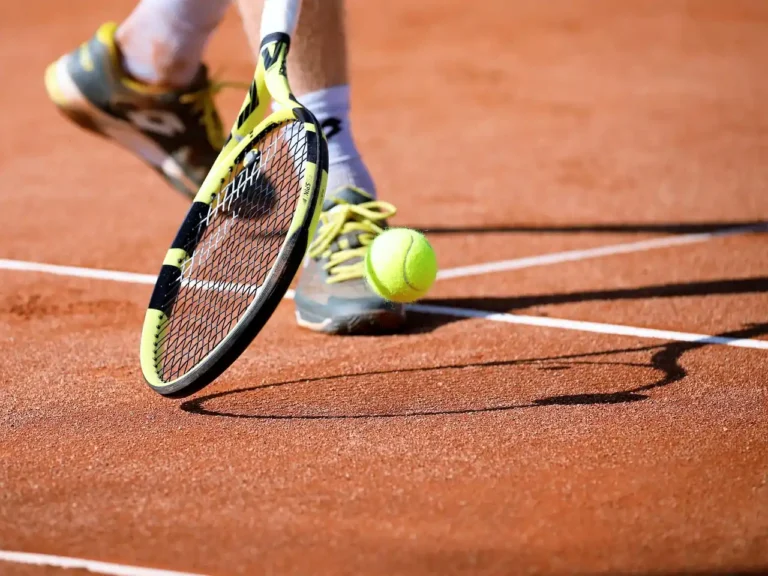
Clay tends to slow the ball and increase felt pickup. Balls can fluff up faster, which makes them feel larger through the air and slower off the bounce. On clay, a lively championship pressurized ball often gives the cleanest practice feedback, while very worn practice balls can become too slow and too fuzzy to judge depth well.
Grass and faster courts: skidding bounce and response
Grass and other fast, low-bounce conditions reward a ball that responds cleanly without turning erratic. Regular-duty pressurized balls are often aimed at softer court conditions, while high-altitude pressurized balls are the correction when thin air would otherwise make any standard pressurized ball jump too much.
Picture an adult league player switching from an abrasive public hard court to an indoor faster court with the same can of extra-duty balls. Nothing else changes, but the thicker felt can now feel slightly slower through the air and less lively off the skid. Surface fit, not player form, is the variable.
How ball construction affects bounce, spin, and feel
Core pressure and rebound
Internal pressure is the biggest reason two balls of similar size can play so differently. More live internal pressure usually means a higher, quicker rebound and a sharper response on flatter shots. Pressureless construction gives up some of that early jump in exchange for a longer useful training life.
Felt cover, aerodynamics, and spin response
Felt changes the way air moves around the ball. Thicker felt often feels slower because it creates more drag, while worn felt can make the ball travel faster but bounce lower or less predictably. Felt also affects spin response: a cleaner, more consistent nap usually gives a more readable grab on topspin and slice.
That is why felt is a buying clue, not packaging filler. Better consistency in the cover usually means more predictable play across a set of balls, especially important when points are decided by depth and margin over a 0.91m net.
Temperature and altitude effects
Cold conditions usually make balls feel slower and less lively. Heat tends to make them feel quicker. Altitude reduces air resistance and changes perceived speed and bounce, which is why high-altitude balls exist as a distinct pressurized subtype. If a ball feels overbouncy on a mountain court, the problem may be the wrong altitude category rather than a bad batch.
Ball choice decision matrix
| Player segment | Ball type | Court surface | Expected bounce | Durability | Best-use scenario |
|---|---|---|---|---|---|
| Kids | Low-compression stage balls | Short courts, beginner hard courts, junior clay | Lower and slower for easier rallying | Moderate; depends on felt and court abrasion | Starter lessons, red/orange/green stage development, first rallies |
| Recreational adults | Pressurized extra-duty or regular-duty, matched to surface | Extra-duty for hard court; regular-duty for softer or faster courts | Standard adult bounce with livelier feel | Moderate after opening | Weekly rallies, social doubles, light point play |
| Match players | Championship pressurized balls | Surface-specific choice; hard, clay, or grass conditions | Most consistent and match-like | Shorter prime life, especially once opened | League matches, tournament prep, serve and return practice |
| Coaches | Pressureless practice balls, plus a small stock of championship balls | Mostly hard courts; any court for feeding and machine use | Stable over many sessions, less lively than fresh pressurized | High | Ball machines, feeding drills, serve baskets, group clinics |
How to choose the right tennis balls for your use
A practical order is to choose by session goal first, then by surface, then by player level. Match-prep sessions need match-like pressurized balls; machine work and feeding drills usually need durable pressureless balls; kids and new players need low-compression stage balls; weekly social play usually lands on surface-matched pressurized balls.
For casual rallies and weekly recreation
If the goal is a normal adult rally once or twice a week, start with surface-matched pressurized balls. On hard court, that usually means extra-duty. On softer or faster conditions, regular-duty often makes more sense. Recreational players usually notice dead bounce sooner than minor felt differences, so buying a giant stockpile of pressurized balls rarely pays off.
For match prep and league play
Use championship pressurized balls, ideally in the same style used in the match environment. The closer the practice ball matches competitive conditions, the more useful the timing feedback becomes. This matters for first-strike tennis, returns, and serve location, where a softer practice ball can hide errors.
For ball machines, baskets, and feeding drills
Choose pressureless practice balls when the session is high volume. They hold up better in repeated compression, collection, and storage. If the drill needs exact match timing, keep a separate set of pressurized balls for the final block rather than asking one ball type to cover every job.
For kids’ stages and first-time players
Pick low-compression stage balls before adjusting strings or chasing a different racket. Because tennis racquets rely on string tension for control and power, players often blame the racket when the real issue is a full-speed ball that is arriving too fast. Stage balls slow the learning task at the source.
A simple buying checklist
- Identify the session: match, live-ball drill, machine work, serve basket, or beginner lesson.
- Match the court: hard, clay, grass, indoor fast court, or high-altitude conditions.
- Choose the construction: pressurized for match feel, pressureless for repeated practice.
- Choose the category: championship, practice, or low-compression stage.
- Buy for cost per session, not can price alone.
How long tennis balls last and when they feel wrong
Yes, tennis balls lose bounce over time, but they do it for different reasons. Pressurized balls lose their fresh rebound after opening, while all balls eventually lose felt quality and predictable response. Replace them when bounce, feel, or flight stops matching the session rather than by can age alone.
Why balls lose bounce or feel dead
For pressurized balls, the main issue is pressure loss after the can is opened. For any ball, felt wear changes drag and contact. A ball can also feel dead because the felt is packed down, dirty, or too shaved for the court, even before the rebound is completely gone.
Signs a ball is too lively, too slow, or too worn
Too lively: the ball jumps higher than expected, flies long on normal swings, or feels hard to time, especially in heat or at altitude. Too slow: rallies stall, topspin sits up, and the ball feels fuzzy and heavy through the air. Too worn: felt is bald, bounce varies, and contact feedback becomes inconsistent.
Cost per session versus sticker price
Cheap is not always cheaper. A basic calculation works better: divide the pack cost by the number of useful sessions for that job. If a low-cost pressurized can lasts one short drill block before feeling flat, its cost per session can exceed that of a pricier pressureless practice ball used across many feed sessions.
For match players, the reverse can happen. A durable pressureless ball may be cheaper per session on paper, but if it gives the wrong timing for competition, it is poor value for match prep. Use the cheaper-per-session ball for drills and the truer ball for performance sessions.
ITF standards and what they mean when buying
Speed and bounce categories
ITF standards matter because they standardize how tennis balls are categorized for regulated play. Buyers will see category differences related to speed and bounce, including products built for standard conditions and products built for altitude. That gives a common reference when comparing labels that otherwise look similar.
Regulated play versus training use
A training ball does not need to behave exactly like a regulated match ball if the drill goal is repetition, hand-feeding, or machine volume. Match balls do. The standard helps separate balls meant for official play from balls meant mainly for development and practice economy.
How standards help compare labels
Tennis is a global sport played by over 87 million people globally, so standardization matters. When labels mention approved play conditions, altitude, or stage progression, those references help buyers compare balls across brands without relying only on marketing words or package color.
Frequently asked questions
Which tennis ball is best for beginners?
For most kids and first-time players, low-compression stage balls are the best starting point because they rebound lower and travel slower, making rallies easier to sustain. New adult players can also benefit when standard pressurized balls feel too fast, too lively, or too hard to contact in front.
What is the difference between pressurized and pressureless tennis balls?
Pressurized balls have a sealed internal pressure that gives a livelier bounce and stronger match feel, but they lose that fresh response sooner after opening. Pressureless balls rely more on rubber construction, feel drier and slower at first, and usually last longer for drills, baskets, and machine sessions.
Which tennis balls are best for practice?
The best practice ball depends on the drill. Pressureless practice balls are usually best for ball machines, feeding carts, and serve baskets because they last longer. For live-ball practice meant to copy match timing, pressurized practice balls or championship balls make more sense than very durable but slower pressureless balls.
How do I choose tennis balls for my court surface?
Choose extra-duty pressurized balls for abrasive hard courts, regular-duty balls for softer or faster conditions, and high-altitude balls where standard pressurized balls feel too lively. Clay also tends to fluff felt and slow the ball, so avoid very worn practice balls there when you need clean depth and timing feedback.
Do tennis balls lose bounce over time?
Yes. Pressurized balls lose fresh bounce after the can is opened because internal pressure gradually drops. All balls also change as felt wears, picks up dirt, or goes bald. Replace them when the bounce, speed, or contact feel no longer fits the session, not simply because the calendar changed.
Are there different tennis balls for match play and training?
Yes. Championship pressurized balls are aimed at match conditions and performance practice, where consistency and predictable rebound matter most. Practice balls, especially pressureless models, are aimed at durability and repeated use in drills, clinics, and ball machines. Buying one type for both jobs usually means a compromise somewhere that matters.