Best Soccer Ball for Practice: How to Choose

For most players, the best all-around practice choice is a standard training ball because it balances durability, touch, and replacement cost better than a premium match ball or a cheap novelty ball.
Choose the best soccer ball for practice by starting with the surface and the session: size 3 for children under about 8, size 4 for about 8-12, size 5 for about 13 and up, a TPU or hybrid cover for frequent training, and FIFA Basic-level quality instead of paying extra for a match ball you do not need. Pick badly and you get faster wear, poor touch habits, and replacement costs that add up. This guide breaks the choice into the factors that actually change performance and lifespan: surface, size, cover and panel build, bladder type, and budget.
Quick picks
- Best all-around choice: standard training ball with a durable synthetic cover and butyl bladder.
- Best for backyard drills: durable recreational trainer that can handle hard fences, rough grass, and repeated solo touches.
- Best for club sessions: higher-grade training ball with better shape retention and cleaner flight for passing patterns and finishing work.
- Best for turf: scuff-resistant practice ball built for artificial grass, where cover wear happens faster.
- Best for indoor play: futsal ball with low-bounce construction for court control.
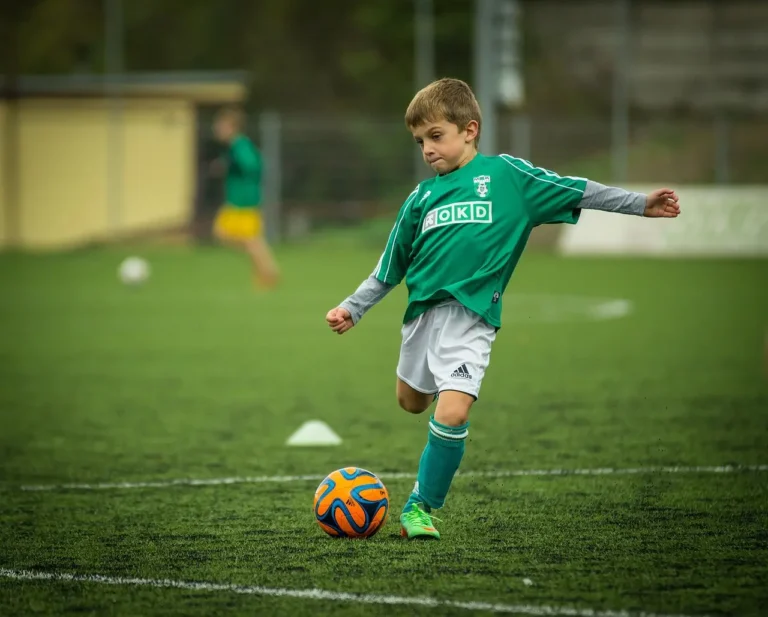
- Best for younger players: size 3 or size 4 training ball chosen for control, confidence, and clean contact, not age alone.
- Best for juggling: slightly softer, textured control ball that gives predictable touch without the hard rebound of an overinflated trainer.
What size soccer ball is best for practice?
The best practice size is the one that matches the player’s current control and strength, then matches the game they are preparing for. Size 5 is the adult standard, but youth practice often works better with size 3 or 4 when a full-size ball leads to heavy touches, weak strikes, or hesitation.
Size 1 to size 5 at a glance
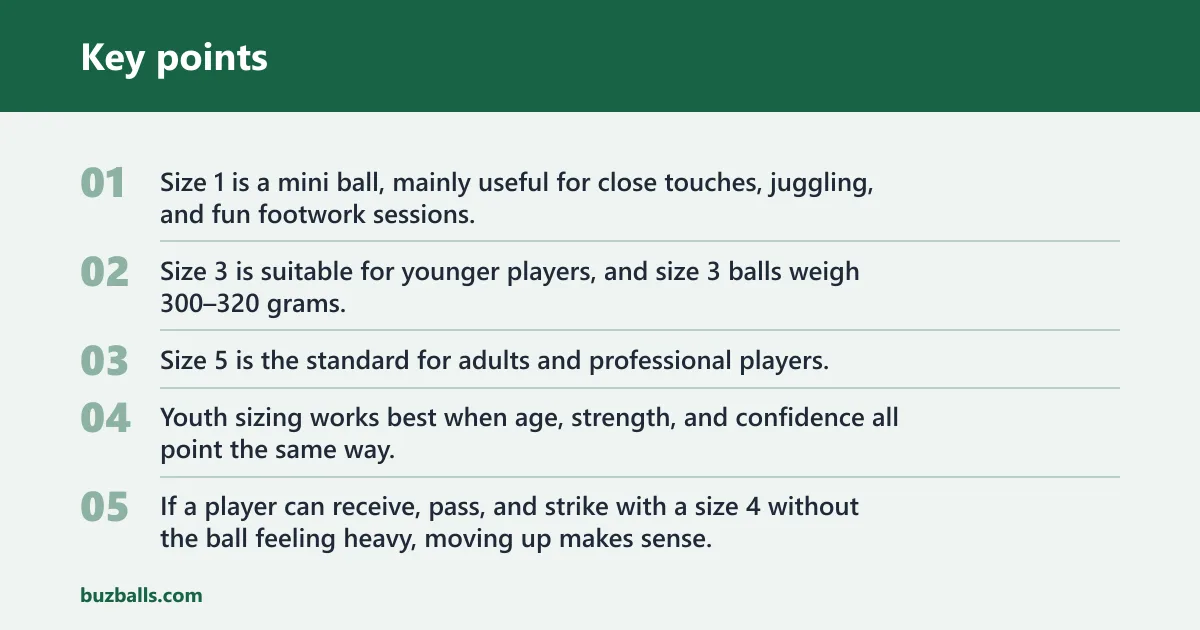
Size 1 is a mini ball, mainly useful for close touches, juggling, and fun footwork sessions. It measures 18–20 inches in circumference and weighs 195–205 grams.
Size 2 sits between mini and youth play. It can help very young players or tight-space touch work, but it is not the normal choice for team practice.
Size 3 is suitable for younger players, and size 3 balls weigh 300–320 grams. For many children, that lower weight matters as much as the smaller size because it cuts the effort needed to strike the ball cleanly.
Size 4 is the transition option. It usually suits players who have moved past size 3 control drills but still cannot drive a size 5 with proper technique.
Size 5 is the standard for adults and professional players. A regulation Size 5 ball measures 68–70 cm in circumference, or 27–28 inches, and weighs 410–450 g at the start of a match, or 14–16 oz.
When to choose size 3 or size 4 for youth practice
Youth sizing works best when age, strength, and confidence all point the same way. If a player can receive, pass, and strike with a size 4 without the ball feeling heavy, moving up makes sense. If every long pass becomes a toe poke, staying smaller usually builds better habits.
A common practice-ball mistake is choosing a cheap match-style ball with a slick cover, even though a more durable textured model would hold up better during daily drills. For a smaller player, that often produces stiff touches and awkward swings instead of cleaner technique.
When to move a player up or down a size
Move up when first touch stays close, passing form stays balanced, and the player can strike through the middle of the ball without leaning back or stabbing at it. Move down when contact gets noisy and off-center, when juggling dies after one or two touches, or when the player avoids using the weaker foot.
Parents and coaches should also check league rules before buying if the same ball may be used in organized play. Practice can be a little more flexible than match day, but team requirements still matter.
Should you buy a training ball or a match ball?
For most practice sessions, buy a training ball. It is built for repeated use, usually with a tougher cover and steadier air retention, while a match ball makes sense only if you need match-like touch or certification often enough to justify the higher cost and shorter-wearing cover.
Why training balls fit most practice sessions
Training balls are built for repetition. They are meant to survive passing grids, shooting drills, wet grass, fence rebounds, and bags of mixed equipment. That is why they are often cheaper than match balls and still the smarter buy for regular sessions.
The usual tradeoff is feel. A true match ball may come off the foot more cleanly and fly with a bit more precision, but many players gain more from a ball that keeps its shape and pressure through months of work.
When a match ball makes sense in training
A premium match ball makes sense when the session goal is match simulation: first touch at game pace, driven long passing, crossing, finishing, or pre-match adaptation to the exact ball used in competition. It can also matter when organized play requires certification.
FIFA Quality Pro is the highest FIFA quality level. FIFA testing commonly includes weight, circumference, roundness, bounce, water absorption, loss of pressure, and shape retention. That matters for elite match use, but it does not automatically make a ball the best practice buy.
Cost per session matters more than shelf appeal
A cheaper training ball is the smarter buy when it lasts meaningfully longer on the same surface. If an abrasive turf field scuffs a soft premium cover quickly, the extra spend buys less time, not more value.
Suppose two balls feel close enough in short passing, but one loses air every few days and the other holds pressure longer. The second ball saves setup time and usually keeps its touch more consistent over a season.
Which practice ball should you buy?
Buy for the session and surface first, then check the label. Backyard dribbling, club training, artificial turf, futsal, youth development, and juggling need different bounce, cover durability, and touch, and treating them as the same purchase usually leads to one of four regrets: scuffing, waterlogging, poor air retention, or a ball that never feels truly round.
Practice ball decision table
| Use case | Recommended size | Cover type | Bladder type | Ideal surface | What to avoid |
|---|---|---|---|---|---|
| Recreational backyard drills | Match the player’s normal training size | Durable synthetic leather or PVC-led recreational trainer | Butyl | Short grass, packed dirt, mixed home surfaces | Soft match covers that scuff quickly; balls that need constant topping up |
| Club practice | Game-size for the age group | Higher-grade synthetic leather or TPU training cover | Butyl or butyl-focused hybrid | Natural grass and standard outdoor training fields | Ultra-cheap balls with inconsistent roundness and hard touch |
| Turf sessions | Game-size for the age group | Scuff-resistant synthetic cover | Butyl | Artificial grass | Thin, soft premium covers that wear fast on abrasive turf |
| Futsal | Futsal size for the format being played | Smooth or lightly textured indoor cover | Low-bounce futsal build | Indoor futsal court | Standard outdoor balls that rebound too high indoors |
| Youth training | Size 3 or 4 unless the player clearly controls the next size well | Softer training cover with decent scuff resistance | Butyl | Grass, school fields, light backyard use | Jumping to size 5 too early; very hard covers that punish weak contact |
| Juggling work | Normal training size, or size 1 for touch-only work | Slightly softer textured synthetic cover | Latex for feel or butyl for convenience | Grass, court, or clean flat surface | Overinflated, slick-surface balls with harsh rebound |
Best all-around practice ball type
The safest broad recommendation is a standard outdoor training ball in the correct size, with a synthetic cover and a butyl bladder. This type suits most players who split time between team sessions, solo work, and general backyard use.
Look for a cover that does not feel paper-thin, a shape that stays true under repeated strikes, and pressure retention that does not turn every session into a pump check. Skip this route only if you mostly play on indoor courts or need a turf-specific ball because artificial grass is the main surface.
Best practice ball type for turf sessions
Turf changes the buying decision because artificial grass raises abrasion. Cover wear shows up faster, especially on softer balls built around match feel instead of repeated contact with plastic blades and infill.
A turf ball is for artificial grass, and a scuff-resistant practice ball usually makes more sense than a delicate premium cover. Put cover toughness and air retention ahead of a slightly softer touch.
Say your sessions are four nights a week on older artificial grass with visible rubber infill and rough seams near the touchlines. A ball chosen for soft grass feel can end up cosmetically worn and less consistent long before a sturdier trainer would.
Best practice ball type for futsal and indoor work
For futsal, buy a futsal ball. A futsal ball uses low-bounce construction, which keeps the ball on the floor, cuts random pop-ups, and makes sole control, quick passing, and tight-space play more realistic.
Using a standard outdoor ball indoors often makes technical work harder for the wrong reasons. The issue is not challenge, it is mismatch. If the session goal is court passing and close control, lower bounce is the feature that matters most.
Best practice ball type for youth training and backyard drills
For younger players and casual home sessions, the right ball should reward clean contact instead of punishing it. That usually means being honest about size and choosing a cover soft enough for confidence but sturdy enough for repeated wall work and missed traps.
A cheaper recreational ball is enough when the main use is light dribbling, family kicking, or short passing in the yard. Once sessions become frequent and structured, a true training ball usually pays back through better shape retention and fewer air-loss problems.
What makes a soccer ball durable for regular practice?
Durability in a practice ball comes from the parts that fail first: cover, seams, bladder, and water resistance. The best durable ball is not the hardest one. It is the one that resists scuffing, keeps a consistent shape, holds air reliably, and avoids soaking up water that changes weight and flight.
Cover material: synthetic leather versus PVC
Synthetic leather is the common sweet spot for practice. It tends to give a better touch than stiff bargain covers while still standing up to repeated use. Many training balls use synthetic leather or TPU-style covers because they balance feel and wear resistance.
PVC-led covers often favor toughness and lower cost. That can work for rough backyard use, but the touch can feel firmer, especially in cooler weather, and repeated contact may feel less forgiving for younger players.
Bladder: butyl versus latex
Butyl is the practical choice for most practice balls because it generally holds air better. If the ball is used several times a week, reliable pressure maintenance matters as much as touch.
Latex bladders are used in some pro balls because they can give a livelier feel. The tradeoff is more frequent inflation. For coaches managing multiple balls, that tradeoff is often not worth it in a training setting.
Panel construction: thermally bonded versus stitched
Thermally bonded builds usually help with water resistance and can promote a very true shape. That matters most in wet outdoor play, where lower water uptake helps the ball stay more consistent.
Hand-stitched 32-panel designs remain common because they can offer dependable flight and easy repairability at training-ball price levels. The weak point is seam wear if construction is poor. On a good ball, stitching is fine, on a bad one, it is where roundness starts to drift.
Water absorption, roundness, and air retention
Wet-weather practice exposes bad construction fast. If a ball takes on water, it can feel heavier, leave the foot differently, and stop behaving like the ball used in dry sessions. Lower water absorption matters most for outdoor grass and rain-prone schedules.
Inconsistent roundness is another common regret. It often shows up as odd bounce angles, wobble on driven passes, and a “dead spot” feel on one panel area. For practice, that is more damaging than a slightly less refined touch because it teaches bad feedback.
How should you choose by training goal and surface?
Choose the ball after naming the session goal first, then the surface. Passing and first-touch work benefit from predictable shape and moderate softness. Shooting and long-ball work need stable flight. Juggling works better with a touch-friendly surface. Turf and indoor courts then narrow the choice further by changing wear and bounce.
First touch and passing sessions
For receiving and short passing, a standard training ball with consistent roundness and a reasonably soft synthetic cover is the best fit. An overly hard recreational ball can make every trap feel harsher than it should, while a very soft match cover may wear too quickly if the ball lives in team training.
Shooting and long-ball work
Long passing and striking sessions expose shape problems fast. A ball that is slightly off-round may still feel acceptable in dribbling drills, but it will show its flaws when players drive it over distance. This is the session type where a better-grade training ball earns its keep.
Juggling and close-control drills
Texture can help, but only within limits. A lightly textured surface may improve grip sensation during juggling and close control, especially on dry surfaces. It is not magic, and it will not fix poor inflation or the wrong ball size.
Picture a player doing 15 minutes of juggling before team practice. A mildly textured, correctly inflated ball gives more readable touch than a slick ball pumped to the top of its range, even if both are the same size.
Grass, turf, and wet-weather adjustments
On natural grass, most players should start with a standard outdoor training ball. On artificial turf, move toward tougher covers because abrasion goes up. On indoor courts, choose a futsal ball or another low-bounce indoor option when the session is truly court-based.
For wet conditions, favor construction that resists water absorption. That keeps the ball closer to its normal behavior and protects against the heavy, soaked feel that can distort both passing pace and shooting feedback.
How to choose
- Name the session. Decide whether the main use is club practice, backyard dribbling, turf work, indoor futsal, youth development, or juggling. The session goal sets the right bounce, feel, and durability target before size or price enters the picture.
- Match the surface. Choose outdoor training construction for grass, a scuff-resistant ball for artificial grass, and low-bounce construction for futsal courts. Surface mismatch is one of the fastest ways to waste money on avoidable cover wear.
- Set the size honestly. Pick the largest size the player can control cleanly and strike with sound technique. If touches run long, shots look forced, or confidence drops, use the smaller training size and move up later.
- Check the build details. Favor a durable synthetic cover, butyl bladder for air retention, and solid panel construction. Then inspect the printed pressure range on the ball before inflation so the feel matches the training goal instead of fighting it.
Do you need FIFA certification or special pressure settings?
Most practice balls do not need top-level certification, and most players do not need special pressure tricks. Buy certification only when organized play or match simulation makes it relevant. For everyday training, correct size, suitable cover, good air retention, and inflation within the printed range matter more than a premium badge.
When FIFA Quality Pro matters
FIFA Quality Pro matters most for professional-level match balls, pre-match adaptation, and competitions that require certified equipment. If a team trains with the same ball used in official matches, that certification can be worth paying for in selected sessions.
When certification is unnecessary for practice
For a dedicated practice ball, certification is usually optional. A durable trainer that keeps its shape and pressure will often do more for day-to-day repetitions than a certified ball that wears faster or costs enough to limit how many balls a team can actually use.
How ball pressure changes feel, bounce, and control
Ball pressure changes touch immediately. Lower within the printed range usually feels a bit softer and calmer on first touch, while higher within the range tends to feel quicker off the foot and livelier in bounce.
The key is consistency. Check the printed pressure range on the ball before inflation and stay within it. Overinflation can make juggling and close control harsher, while underinflation can distort shape and change flight.
Frequently asked questions
Should I buy a match ball or training ball for practice?
For most buyers, a training ball is the better practice purchase because it is built for regular use, durability, and value. A match ball makes sense when the session is meant to copy competition feel or when organized play requires a certified ball.
What materials make a soccer ball durable for regular practice?
Look for a durable synthetic cover, dependable seam construction, good resistance to water absorption, and a butyl bladder for better air retention. Those features matter more for practice life than marketing terms because they reduce scuffing, air loss, shape drift, and wet-weather inconsistency.
Do I need FIFA certification for a practice soccer ball?
Usually no. Certification matters most for professional-level match use or when a league or tournament requires it. For ordinary training, the better choice is often a ball that fits the surface, holds pressure, keeps a true shape, and survives repeated sessions without rapid cover wear.
How does turf change which soccer ball I should buy?
Turf increases abrasion, so softer premium covers often become poor value there. A scuff-resistant practice ball with reliable air retention is usually the smarter turf choice because it holds up better to artificial grass and keeps its feel more consistent over repeated sessions.
What ball pressure should I use for training?
Use the printed pressure range on the ball and stay consistent from session to session. Pressure near the lower part of that range can feel softer for control work, while the higher part feels livelier for striking. Avoid going outside the stated range because feel and shape can both suffer.