What Makes a Good Soccer Ball for Practice Sessions?

Good practice soccer balls match the player’s size, hold their shape well, and use a tough cover with steady bounce and flight; for most training, size 5 is the default for older players, size 4 for younger ones. A poor ball adds bad bounce, a scuffed touch, and uneven passing that hides technique problems. This guide covers how to judge touch, flight, durability, size, and surface fit before you buy.
What you’ll need
- A tape measure or the ball’s spec label
- A flat wall, floor, or rebound board
- The surface you train on most
- A pump with a pressure gauge
- A cloth for checking wet-grip feel
What makes a good practice ball?
A good practice ball gives repeatable touch, steady flight, and low-friction repetition. It should help you spot clean mistakes in passing, first touch, dribbling, shooting, and juggling instead of adding wobble, odd bounce, or dead contact that hides technique problems.
Start with the session goal
A practice plan should have one main idea, because the ball should support that goal rather than fight it. For technical work, choose a ball with reliable shape and touch. For heavy shooting, prioritize steady flight and a cover that stands up to repeated strikes.
What to look for in flight and touch
The best ball for passing and first touch feels predictable off the foot and off the wall. It should not drift badly on driven passes, flatten at the seams, or rebound in a way that changes every few touches.
Suppose a size 5 ball feels fine on grass but starts wobbling on firm turf. That usually points to shape retention or panel quality, not your technique. A ball that stays round and returns the same bounce helps you judge your own contact more cleanly.
Choose the right size
Size matters because the wrong circumference changes contact pattern, control, and shooting mechanics. A proper training ball should match the player’s age and the work being done. Use the ball that fits the session, not the one that simply looks closest to a match ball.
Size 3, size 4, and size 5
Size 3 is commonly used for younger players and smaller training needs. Size 4 fits many youth sessions. Size 5 is commonly the standard training size for older youth and adults. The usual size 5 standard is 68-70 cm in circumference and 410-450 g in weight; size 4 is commonly 63.5-66 cm and 350-390 g; size 3 is commonly 58.5-61 cm and 300-320 g.
| Size | Common fit | Circumference | Weight | Best for |
|---|---|---|---|---|
| 3 | Younger players | 58.5-61 cm | 300-320 g | Early skill work, close control |
| 4 | Many youth sessions | 63.5-66 cm | 350-390 g | Passing, dribbling, shooting drills |
| 5 | Older youth and adults | 68-70 cm | 410-450 g | Match-like training and full-field work |
How should the ball feel in play?
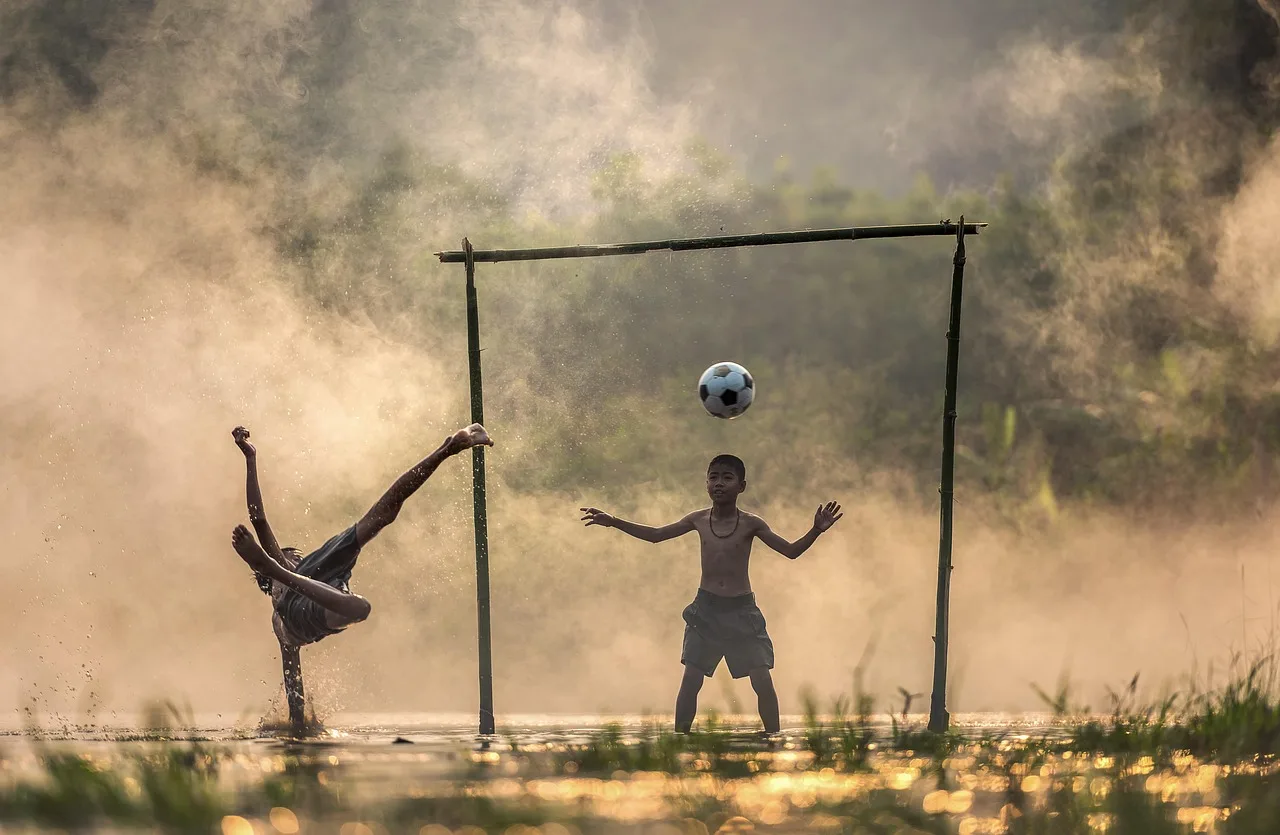
The ball should feel light enough for repeated reps, but not so light that it floats or dies on contact. You want steady flight, clean rebound, and first-touch realism. A ball that feels too lively or too muted can change timing and hide errors.
Weight and flight balance
Ball weight affects how quickly it moves off the foot and how much feedback you get on impact. For practice, the useful range is the standard range for the size you are using. Too light often means less match-like feedback. Too heavy can add unnecessary impact on repeated shooting.
Toe-poke comfort and control
Toe-pokes, short passes, and quick touches expose a ball’s balance fast. The ball should return straight enough that the contact point matters more than the cover. If it jumps sideways, the surface, bladder, or panel shape may be working against you.
A common first-timer mistake is buying a ball for hard shooting on rough turf and expecting the same feel for juggling on indoor courts. Those are different jobs. A firmer, more abrasion-resistant ball can be right for one and wrong for the other.
Ball material and build
Cover material, panel construction, and bladder choice determine how the ball wears, holds air, and responds to touch. The best practice ball is not the fanciest one on paper. It is the one that holds its shape and gives the right amount of feedback for your surface and training load.
PU, PVC, and hybrid covers
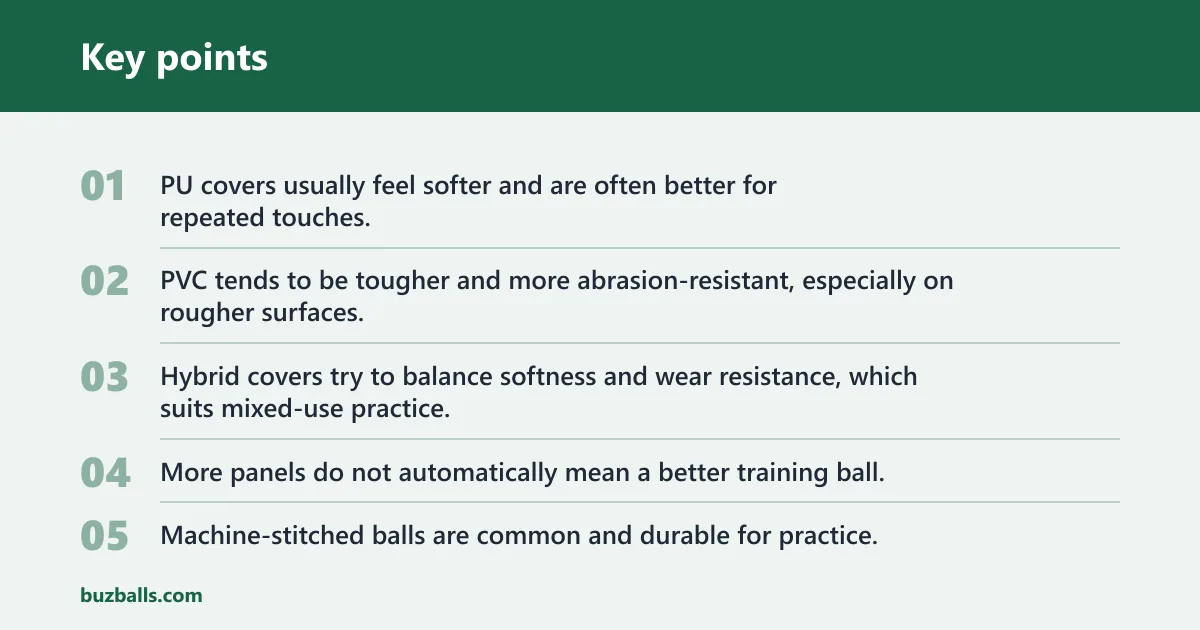
PU covers usually feel softer and are often better for repeated touches. PVC tends to be tougher and more abrasion-resistant, especially on rougher surfaces, though it can feel firmer. Hybrid covers try to balance softness and wear resistance, which suits mixed-use practice.
Panel count and seam quality
More panels do not automatically mean a better training ball, but shape retention and seam quality matter. Machine-stitched balls are common and durable for practice. Thermal-bonded balls can reduce seam prominence and may keep a cleaner shape, though surface wear still matters.
Latex or butyl bladder choices
Latex bladders usually give a softer, more responsive feel but can lose air faster. Butyl bladders hold air longer and are easier to keep consistent from session to session. For practice use, butyl often wins if you want fewer pressure adjustments and steadier feel.
Surface fit and bounce
Surface compatibility changes how a ball wears and how it rebounds. Grass, turf, and indoor floors all interact differently with the cover. A practice ball should match the surface you use most, or at least not get worn down by it.
Grass versus turf
Natural grass is gentler on the cover and often rewards a softer ball with cleaner touch. Turf increases abrasion, so a tougher cover and stronger seam quality matter more. On turf, a ball that looks great but sheds feel quickly is a weak training choice.
Indoor use
Indoor floors need predictable, usually lower and cleaner rebound. A ball with excessive bounce can make control work noisy and frustrating. If you train indoors often, pick a ball that stays true in a tighter rebound window rather than one designed for outdoor speed only.
Predictable rebound over raw bounce
Good practice balls do not need dramatic bounce. They need repeatable bounce. That matters for wall work, rondos, and finishing drills, where a clean second touch tells you more than a high rebound ever will.
Practice ball checklist
Use this pass/fail check before buying or after the ball arrives. Each item is a training-quality filter. If the ball fails several of them, it will likely add noise to your sessions.
| Check | Pass | Fail |
|---|---|---|
| Size | Matches the player and session goal | Too large or too small for the user |
| Weight feel | Feels close to standard for the size | Feels unusually light, heavy, or sluggish |
| Air retention after 24 hours | Pressure still feels usable | Clearly soft or low the next day |
| Rebound consistency | Wall or floor bounce repeats cleanly | Bounce changes from touch to touch |
| Seam quality | Seams look even and tidy | Uneven joins, gaps, or visible distortion |
| Grip in wet conditions | Still controllable with damp hands or grass | Slips too much when wet |
| Surface fit | Matches grass, turf, or indoor use | Wrong cover for the main surface |
| Toe-poke comfort | Short strikes feel controlled | Harsh, unstable, or off-center on contact |
| First-touch realism | Deadens and releases like a training ball should | Feels dead or unnaturally springy |
| Durability expectations by surface | Cover matches expected wear on that surface | Likely to scuff or split early |
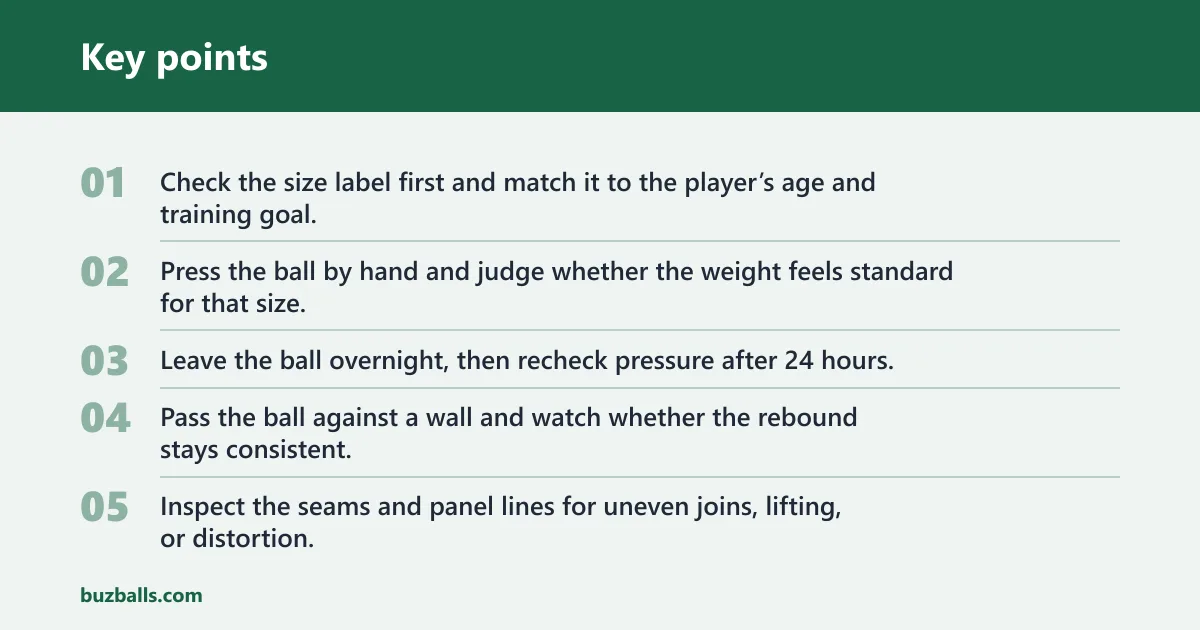
- Check the size label first and match it to the player’s age and training goal.
- Press the ball by hand and judge whether the weight feels standard for that size.
- Leave the ball overnight, then recheck pressure after 24 hours.
- Pass the ball against a wall and watch whether the rebound stays consistent.
- Inspect the seams and panel lines for uneven joins, lifting, or distortion.
- Test the surface feel with a damp cloth if you train in wet grass or rain.
- Strike a few toe-pokes and short passes to judge control and comfort.
- Reject the ball if it fails more than one or two checks; buy for the surface you use most.
Common mistakes
Buying by price alone is the fastest way to miss the real problem. A cheaper ball may work for a while, but if it loses air, wobbles, or feels dead, it reduces the quality of every rep.
Choosing the wrong size is another common error. A size 5 can be too much for younger players, while a size 3 can make older players over-adapt to a smaller target. Surface wear also matters. A ball for indoor technical work is not the same as a ball for rough turf shooting.
If a ball starts to feel soft after a day, first check the valve and bladder pressure. If the shape looks uneven or the rebound stays erratic after reinflation, replace it rather than trying to coach through the noise.
Frequently asked questions
What makes a good soccer ball for practice sessions?
A good practice ball gives repeatable touch, predictable flight, and durability that fits the surface you use most. It should match the player’s size and the training goal. For older players, size 5 is usually the default; size 4 is common for younger sessions.
Should a practice soccer ball feel the same as a match ball?
It should feel close enough to support passing, first touch, and shooting work, but it does not need the exact same premium feel. For training, consistency matters more than match-day polish. A slightly tougher cover can be the better choice for repeated use.
What size soccer ball is best for training?
Use size 3 for younger players, size 4 for many youth sessions, and size 5 for older youth and adults. The right size keeps contact more natural and makes technique work more useful. If the player is between sizes, choose the one used in their main training environment.
How important is ball weight for practice?
Weight matters because it shapes flight, rebound, and impact feedback. A ball should stay within the normal range for its size so it does not feel dead or too lively. If the weight feels off, passing and shooting reps become less useful.
What material is best for a practice soccer ball?
PU is a strong choice when softer touch matters, PVC suits heavy wear and rougher surfaces, and hybrid covers sit between the two. The best material depends on where you train most. For indoor or technical work, softer feel often helps more than maximum abrasion resistance.
Do I need a different ball for indoor practice?
Yes, if indoor sessions are common. Indoor floors reward a ball with controlled rebound and a cover that does not skid too much. A ball built for rough turf can bounce too sharply or feel less controllable on hard indoor surfaces.
How durable should a practice soccer ball be?
Durability should match the surface and volume of use. For regular turf or heavy shooting work, look for strong seams, steady shape, and a cover that resists abrasion. A ball that lasts but goes flat quickly is still a poor practice tool.
What features matter most for kids’ practice balls?
Size fit comes first, then weight and touch. Younger players usually benefit from size 3 or size 4 balls that feel controllable and do not punish contact. A softer cover and predictable bounce help kids repeat passing, dribbling, and juggling with less frustration.