What Size Basketball Should a 5 Year Old Use?

For many 5-year-olds, a size 4 basketball is a common starting point. It is easier to control, and it usually gives better dribbling and shooting form before you move up to size 5. A ball that is too large can slow skill growth and make practice frustrating. Here’s a simple size 4 vs. size 5 rule for picking the right ball.
Choosing the right ball size for beginners
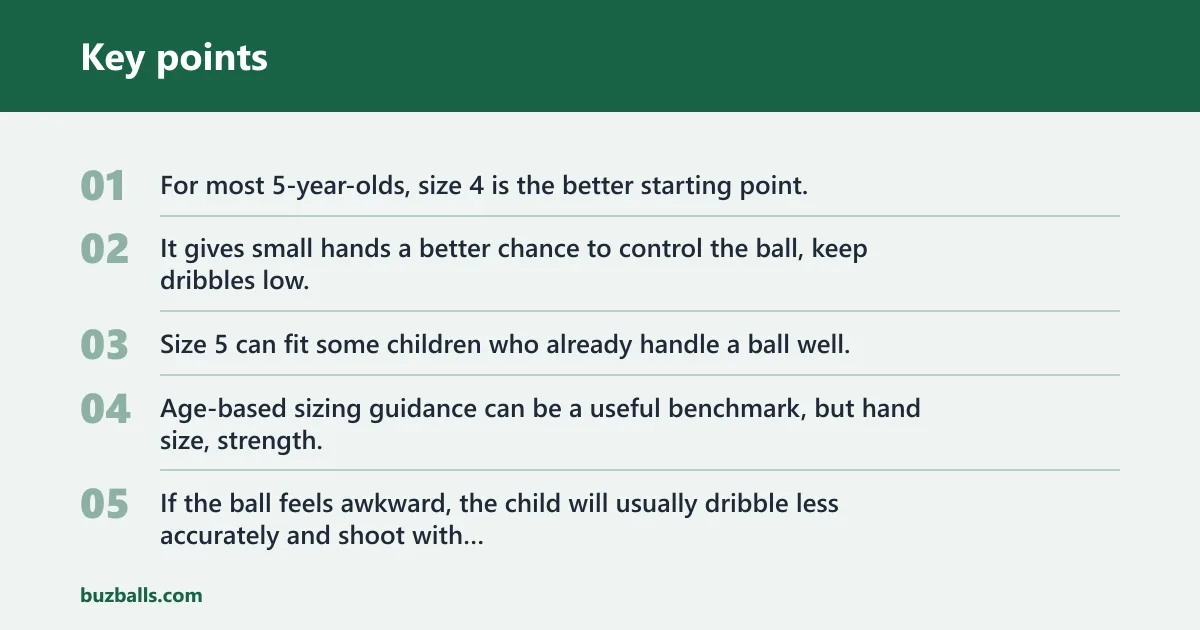
For most 5-year-olds, size 4 is the better starting point. It gives small hands a better chance to control the ball, keep dribbles low, and learn shooting form without fighting the ball. Size 5 can fit some children who already handle a ball well, but it is usually the next step, not the default.
The age range is only a general guide. Age-based sizing guidance can be a useful benchmark, but hand size, strength, coordination, and confidence also matter. If the ball feels awkward, the child will usually dribble less accurately and shoot with poorer form.
The short answer for most families
Pick size 4 first if the child is just starting out. It is listed at 25.5 inches in circumference and 14 oz, and it is recommended for ages 4-6. That size gives a 5-year-old a better chance at first dribbling and cleaner two-hand shooting mechanics.
When size 4 is the better fit
Size 4 works best when the child is still building basic ball control. If the ball slips often, bounces too high, or takes both hands to steady, size 4 is usually the better match. It is also the safer choice for preschool programs, indoor practice, and younger kids using a starter hoop.
When size 5 can work
Size 5 makes sense when a 5-year-old already dribbles with control, catches cleanly, and can shoot without the ball feeling oversized. It measures 27.5 inches in circumference and 17 oz, and it is recommended for ages 7-8. For a strong beginner, it can be a useful step-up ball.
Why size 4 fits most 5-year-olds
Size 4 usually fits better because it matches the grip strength and hand span most 5-year-olds have. The ball is smaller and lighter, so the child can keep dribbles under control and release shots without compensating for a ball that feels too big. That matters more than age alone.
Hand control and grip
Small hands do better with a ball they can cover and steady. A size 4 helps the child place the fingers on the ball, push it down with cleaner force, and recover it more easily on the rebound. That supports learning, even if the child cannot palm the ball.
Dribbling and first shooting reps
Dribbling is easier when the ball comes back under control instead of bouncing away from the body. Shooting is easier when the child can guide the ball without muscling it. The right ball size helps build good form and skills right off the bat, while an oversized ball makes dribbling and shooting harder.
Why oversizing slows progress
If the ball is too large, a child may compensate by pushing it with two hands, slapping at it, or leaning back on shots. That can create bad habits. A ball that fits little hands helps build proper form and techniques, which is the point of the early years.
Say your child is practicing in a hallway with a low indoor hoop and a size 5 keeps bouncing off-line. Switching to size 4 often improves control immediately, because the child can dribble lower and shoot with less strain on the wrists and shoulders.
Size 4 or size 5 for a 5-year-old?
Use this one-page rule: choose size 4 if the goal is control, first dribbling, and better form. Choose size 5 only if the child already handles a ball confidently and size 4 feels too easy. For most 5-year-olds, size 4 is the safer starting point and size 5 is the later step.
| Decision point | Size 4 basketball | Size 5 basketball | Recommended choice |
|---|---|---|---|
| Hand control | Better for tiny hands and first dribbling | Can feel large for beginners | Size 4 |
| Dribbling success | Usually easier to keep under control | More likely to bounce wide or high | Size 4 |
| Shooting form | Helps cleaner release and better mechanics | Can trigger two-hand pushing or bad form | Size 4 |
| Indoor vs outdoor use | Good for indoor practice and early play | Fine outdoors once skills are ready | Size 4 for beginner indoor play |
| Best fit for a typical 5-year-old | Matches age 4-6 guidance and early skill work | Better as a step-up ball | Size 4 first, size 5 later |
What the table shows at a glance
The table is simple on purpose. If the child needs more control, size 4 wins. If the child already manages dribbling and shooting without strain, size 5 can be the next step. The goal is not to buy for age alone. It is to buy for the way the child actually handles the ball.
Quick parent checklist
- Can the child dribble the ball without chasing it after every bounce?
- Can the child shoot without pushing the ball awkwardly with both hands?
- Does the ball feel manageable in small hands, or does it seem too big?
If you answer “no” to the first two questions, size 4 is usually the better choice. If you answer “yes” to all three, size 5 may work as a step-up ball.
When size 5 makes sense
Size 5 makes sense when the child is no longer struggling with the basics. It is the next step after a mini ball or size 4, and it fits youth players who already show better control, stronger hands, and more confidence. For a 5-year-old, that is the exception, not the rule.
Signs your child is ready to step up
Look for steady dribbling with one hand, a cleaner shooting motion, and less frustration during practice. If the child can move, stop, and shoot with the ball staying close to the body, size 5 may be reasonable. If not, size 4 is still the better fit.
What if size 5 feels too big?
Go back to size 4. A ball that feels too large can make the child avoid practice, use poor shooting mechanics, or lose rhythm when dribbling. That is not a small issue. It can slow progress and make the sport feel harder than it needs to be.
Suppose a child can dribble a size 5 for a few bounces but starts fumbling on turns and layup steps. That is a good sign to stay with size 4 for now. The smaller ball will usually improve control without changing the practice routine much at all.
How to avoid bad form
Do not move up just because the child is nearing a certain age. Move up when control improves. That keeps the focus on sound mechanics instead of forcing the child to adapt to a ball that is too large for the current stage.
How do you check fit in under a minute?
Use a fast fit check before you buy. The ball should feel manageable in the child’s hands, dribbling should stay under control, and shooting should not turn into a push. If one of those checks fails, size 4 is usually the safer choice for a 5-year-old.
Three-question buying check
- Can your child hold the ball comfortably without the grip looking strained?
- Can your child dribble with the ball staying close and predictable?
- Can your child shoot without the ball feeling heavy or awkward?
Dribble test
Ask the child to dribble in place for a short stretch. If the ball keeps wandering, looks hard to control, or bounces too high for clean repeats, size 4 is the safer option. A 5-year-old does not need perfect dribbling, but the ball should be easy enough to practice with.
Shooting comfort test
Have the child take a few gentle shots at a beginner hoop. The motion should look natural, not forced. If the child has to heave the ball or use both hands just to get it up, the ball is too large for the current stage.
Beginner hoops and ball options
For home play, toddler and beginner hoops can help because they usually have adjustable height, and soft balls are often included. That setup is useful for indoor or early play, especially when a child is learning how to dribble, aim, and shoot without the pressure of a full-size setup.
Can a 5-year-old use a mini basketball instead?
Yes. A mini basketball can be a useful smaller practice option for very young children or for kids who still struggle with a size 4. It helps with ball-handling fundamentals, but it is usually a practice tool rather than the long-term target for everyday play.
Indoor vs outdoor use
Indoor play often rewards the lighter, smaller feel of a size 4 because it is easier to control in tighter spaces. Outdoor play on rough pavement can make any ball harder to handle, so the smaller size often helps beginners keep better control. Size 5 can come later once the child is ready for more challenge.
What size basketball does a 5 year old use?
Most 5-year-olds should use a size 4 basketball. That is the better fit for first dribbling, cleaner shooting form, and less frustration during practice. Size 5 is the next step only when the child already handles the ball confidently and size 4 starts to feel too easy.
What size basketball should a 5 year old boy use?
A 5-year-old boy should usually use the same size as any other 5-year-old: size 4 first, then size 5 later if skills and hand control are ready. Ball size should follow control and confidence, not gender. The best choice depends on how the child handles dribbling, catching, and shooting.
What size basketball should a 5 year old girl use?
A 5-year-old girl should usually use size 4 first, just like a boy of the same age. Hand size, strength, and coordination matter more than gender. If the ball is too large, it can make dribbling harder and can lead to awkward shooting mechanics that are harder to unlearn later.
What size basketball do 4-5 year olds use?
For 4-5-year-olds, size 4 is a common starting point, and mini basketballs can also work for very young beginners. That range is meant as a general guide, not a hard rule. If the child has better control than expected, size 5 may be fine later, but size 4 is usually the safer buy.
What size basketball for 5 year olds?
For 5 year olds, size 4 is the best general pick. It is listed for ages 4-6 and gives children more control for dribbling and shooting. Size 5 is the youth step-up ball and can wait until the child’s coordination and confidence are strong enough to handle it well.
Frequently asked questions
What size basketball should a 5 year old use?
Most 5-year-olds should start with a size 4 basketball. It is smaller, lighter, and easier to control for first dribbling and shooting. Size 5 is the next step, but it usually works best after a child already shows solid control and less frustration during practice.
What if my 5-year-old finds a size 5 too big?
Move down to size 4. If size 5 feels bulky, the child may start pushing the ball instead of controlling it, which can hurt form and confidence. The right ball should make practice easier, not harder, so a smaller size is the smarter call.
How do I choose between size 4 and size 5 for my child?
Choose size 4 if the child still needs help with control, dribbling, or shooting form. Choose size 5 only if the child already handles those basics comfortably. Age gives you a starting point, but hand size, strength, coordination, and confidence should make the final call.
What basketball size should an 8 year old use next?
An 8-year-old is typically ready for size 5, which is recommended for ages 7-8. That makes it the usual next step after size 4 or a mini ball. If the child is still struggling with control, staying down a size briefly is better than moving up too soon.