How to Clean Muddy Soccer Cleats Without Damaging Them

Check the brand care label or manufacturer instructions first, because material and finish care can vary. Let mud firm up before cleaning soccer cleats, then brush off clumps, wipe with a damp cloth, and air-dry with paper inside. Skip soaking, hard scrubbers, and direct heat. Done badly, you can loosen glue, fray stitching, stain uppers, and shorten stud life. This guide covers a material-safe cleaning workflow for leather, synthetic, and mesh soccer cleats after wet, grass-heavy matches.
Why careful cleaning matters
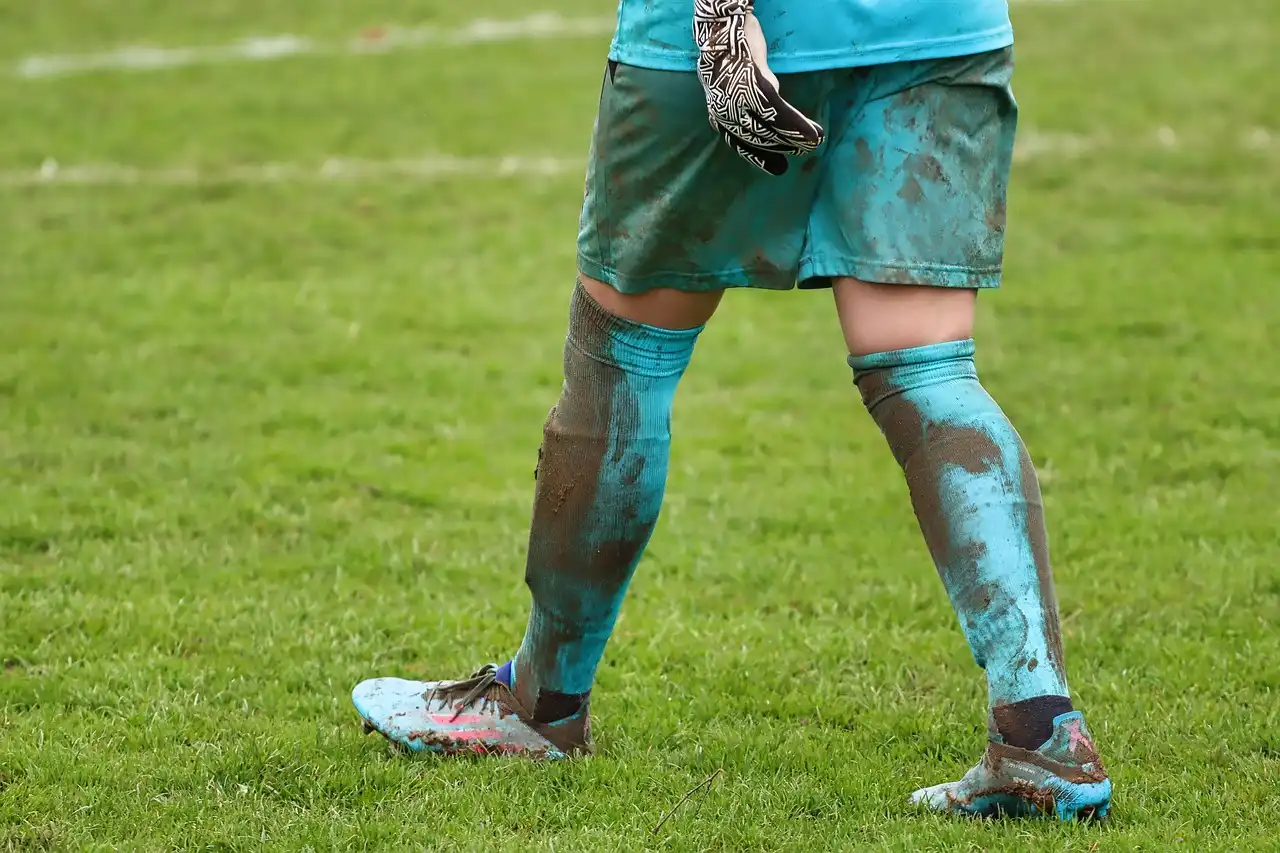
Mud does more than dirty the outside. It packs into studs, creeps along seams, and holds moisture against glue lines and padding. If you scrub too hard or saturate the boot, you can push grit deeper into stitching and soften adhesives that keep the upper, midsole, and outsole together.
Quick cleaning is enough when the mud is mostly on the surface, the studs still flex normally, and the inside feels dry. Deeper cleaning is needed when dirt is packed into the traction pattern, the insole smells damp, or the upper has a visible film that a damp cloth will not lift.
What you’ll need
- Microfiber cloth, used damp, not soaking wet
- Soft-bristled toothbrush
- A few drops of mild soap in warm water
- 70% isopropyl alcohol
- Dry paper or a towel for shape support
- Dry cloth or cotton swabs for seams and tight spots
- A sink, tub, or work surface that can catch falling mud
How do you clean muddy soccer cleats without ruining them?
Start by letting the mud firm up, then remove the loose clumps before any wet cleaning. Take out the laces and insoles, wipe the upper with a damp microfiber cloth, and use a soft toothbrush on seams, toe stitching, and the tight line where the upper meets the sole. Finish by drying the cleats slowly with air only.
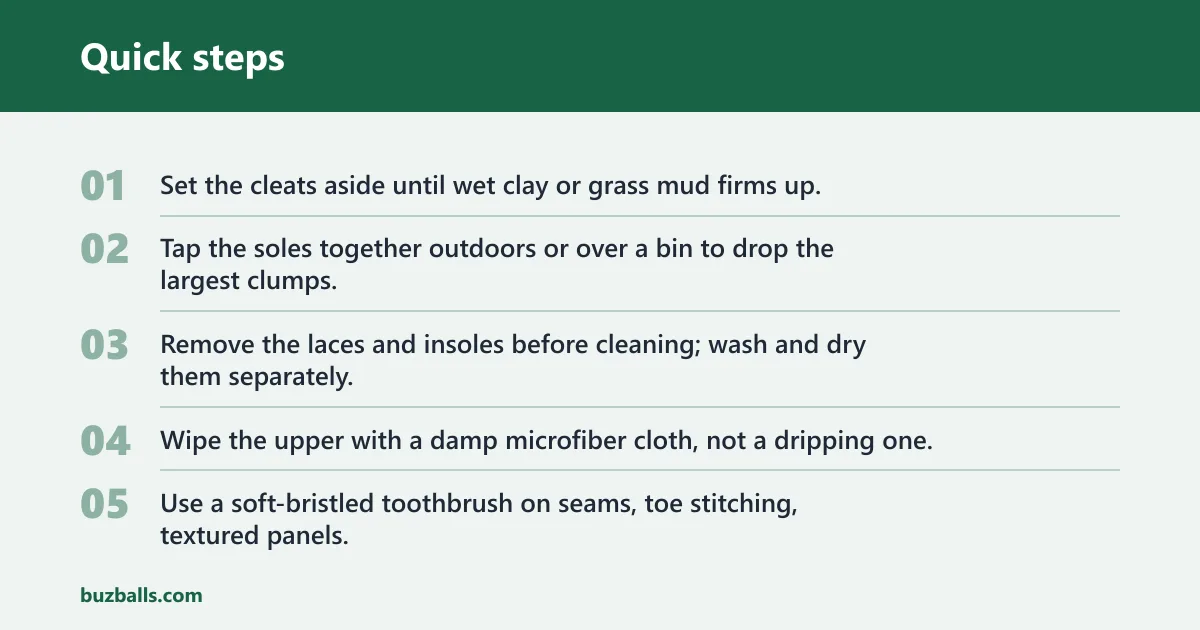
- Set the cleats aside until wet clay or grass mud firms up.
- Tap the soles together outdoors or over a bin to drop the largest clumps.
- Remove the laces and insoles before cleaning; wash and dry them separately.
- Wipe the upper with a damp microfiber cloth, not a dripping one.
- Use a soft-bristled toothbrush on seams, toe stitching, textured panels, and around the studs.
- For stubborn residue, put a little 70% isopropyl alcohol on a cloth or cotton swab, then dab the spot.
- Hold the boot at a 90-degree angle so excess liquid runs away from seams and padding.
- Stuff the toe with paper or a towel, then air-dry the cleats away from radiators, dryers, or direct sun.
Say your child’s size 4 cleats come back from a wet field with mud packed under the forefoot studs. Brush the outsole first, then clear the grooves with a toothbrush before touching the upper. That order keeps grit from being dragged across the stitching.
A common first-timer mistake is wiping the whole boot with a soaking cloth and then putting it straight in a gear bag. The outside may look clean, but the lining can stay damp for hours, which is when odor and glue stress start.
How does the cleaning change by material?
Leather, synthetic, and mesh uppers can all be cleaned with the same basic workflow, but the pressure, moisture, and cleaner choice should change. Leather needs the gentlest wipe-down. Synthetic uppers tolerate a little more surface cleaning. Mesh and knit uppers need extra care so water does not sit in the fabric.
Leather uppers
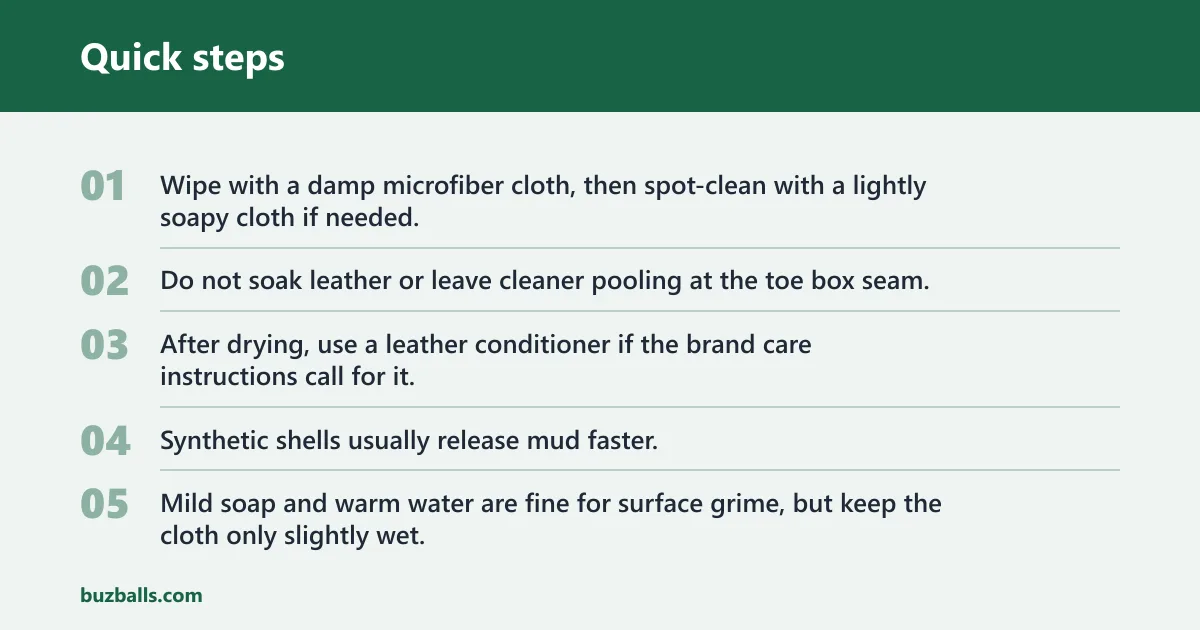
Use the least water possible. Wipe with a damp microfiber cloth, then spot-clean with a lightly soapy cloth if needed. Do not soak leather or leave cleaner pooling at the toe box seam, where stitching and glue lines can loosen. After drying, use a leather conditioner if the brand care instructions call for it.
Synthetic uppers
Synthetic shells usually release mud faster, so a soft brush and damp cloth often handle most of the cleaning. Mild soap and warm water are fine for surface grime, but keep the cloth only slightly wet. Avoid abrasive pads that can haze the finish.
Mesh or knit uppers
Mesh traps dirt in the weave, so work gently in short passes. Use a soft toothbrush for the surface and a swab for the seams. Do not flood the fabric, because water can move through the upper and stay trapped against foam padding.
Foams, glue lines, and stitched areas
Foam padding and bonded edges are the parts most likely to suffer from heavy wet cleaning. Use alcohol sparingly on stubborn marks, and keep it on a cloth or swab rather than spraying it. Alcohol can damage foam materials, so do not soak those zones.
Can you put muddy soccer cleats in the washing machine?
Machine washing is commonly considered risky for soccer cleats because it can drive water into foam, loosen adhesives, and bend studs or toe structure. A washer may also beat mud deeper into seams. Hand cleaning is the safer default, especially for leather, glued midsoles, and stitched toe boxes.
- Skip the washer unless the manufacturer specifically allows it.
- Remove loose mud by hand first so dirt does not spread through the machine.
- Use a damp cloth, soft brush, and mild soap for the shell instead of a cycle.
- If residue remains, use a cloth with 70% isopropyl alcohol on the spot only.
- Let the cleats air-dry fully before the next use.
Suppose a parent is trying to clean two pairs after a rainy tournament. The better workflow is to shake mud off outside, clean the cleats by hand on a towel, then move uniforms and towels straight to the laundry. That keeps grit out of the washer drum and off the kit bag.
Muddy soccer cleat cleaning matrix
| Upper type | Safe cleaner | Brush type | Soak risk | Drying time range | Do not use |
|---|---|---|---|---|---|
| Leather | Damp microfiber cloth; mild soap and warm water on the cloth; 70% isopropyl alcohol on a swab for spots | Soft-bristled toothbrush | High if saturated; keep moisture light | Overnight to 24 hours, depending on lining dampness | Submersion, machine washing, direct heat, bleach, acetone |
| Synthetic | Damp cloth; mild soap and warm water; alcohol on a cloth for stubborn residue | Soft-bristled toothbrush | Moderate; avoid soaking seams and padding | Several hours to overnight | Abrasive pads, harsh detergents, direct spray of alcohol |
| Mesh or knit | Damp cloth; mild soap used sparingly; alcohol only on a swab for tight spots | Soft-bristled toothbrush with light pressure | Moderate to high; fabric can hold moisture | Overnight or longer if the inside stays damp | Soaking, machine washing, strong bleach, direct heat |
How do you get dried mud out of soccer cleat studs?
Dried mud usually clears by combining a soft brush, a careful edge-clean, and a final check around each stud. If dirt is packed deep into the traction pattern, work from the outside of the groove inward. Do not pry with metal tools, which can nick the outsole or stud edge.
- Hold the cleat upside down and tap the outsole so loose bits fall away.
- Brush along the stud edges with a soft toothbrush.
- Use a cotton swab with a little water or alcohol for the narrow channels between studs.
- Check each stud for cracks, tearing, or wobble before storing the cleats.
If a stud has a split base, feels loose, or the outsole edge is peeling away, stop cleaning and treat it as a repair or replacement issue. More scrubbing will not fix structural damage.
Common mistakes
Scrubbing too hard: Aggressive brushing can rough up synthetic finishes and fray stitching. Use light pressure and let the bristles do the work.
Using too much water: Soaking pushes moisture into padding and glue lines. A damp microfiber cloth is the safer move.
Forgetting the studs: Mud in the traction pattern keeps moisture trapped at the outsole. Clean the edges and grooves every time.
Putting them back together too soon: Reinsert laces and insoles only after both are fully dry. Otherwise, the interior stays damp longer.
Using heat to speed drying: Radiators, hair dryers, and dryer cycles can warp materials and weaken bonds. Air-dry only.
Frequently asked questions
How do you clean white soccer cleats without damaging them?
Use a damp microfiber cloth with mild soap and warm water, then switch to a soft toothbrush for seams and textured areas. For scuffs that stay behind, put 70% isopropyl alcohol on a cloth or swab, not directly on the boot, and keep the cleaning light.
Should you remove the insoles and laces before cleaning cleats?
Yes. Remove both before cleaning so mud and moisture do not get trapped inside the shoe. Wash laces separately, let insoles dry fully, and only put them back once the interior feels dry to the touch and no cool spots remain.
What should you use to scrub mud off soccer cleats?
A soft-bristled toothbrush is the safest scrub tool for most mud, especially around seams, textured panels, and stud edges. Pair it with a damp microfiber cloth for flat surfaces. Avoid abrasive pads and stiff brushes that can scratch finishes or damage stitching.
What cleaners are safe for soccer cleats?
Mild soap and warm water are suitable for light cleaning when used sparingly. For stubborn residue, 70% isopropyl alcohol works best on a cloth or swab. Keep both off the boot as direct sprays, and avoid bleach, acetone, and strong detergents.
How do you dry soccer cleats after washing them?
Air-dry only, away from direct heat. Depending on room temperature, airflow, and how wet the lining is, drying can take several hours to overnight. Stuffing the cleats with paper or a towel helps them hold shape and speeds moisture removal inside the toe box. If the outside is dry but the lining still feels damp, leave them open longer before storage.
How do you clean leather soccer cleats after mud?
Use the gentlest route: remove loose dirt, wipe with a damp cloth, and spot-clean with a little mild soap if needed. Keep water off the leather as much as possible, and never soak the boot. Leather is more sensitive to excess moisture than synthetic uppers.