What Type of Ball Is Used to Play Pickleball and Why?

Pickleball uses a perforated plastic ball. Outdoor balls usually have 40 holes, indoor balls usually have 26, and that hole pattern changes speed, bounce, and how much the wind moves the ball. Pick the wrong ball and rallies break up, serves drift, and control gets harder. This guide shows which ball fits your court, weather, and skill level.
Choosing the right ball for indoor and outdoor play
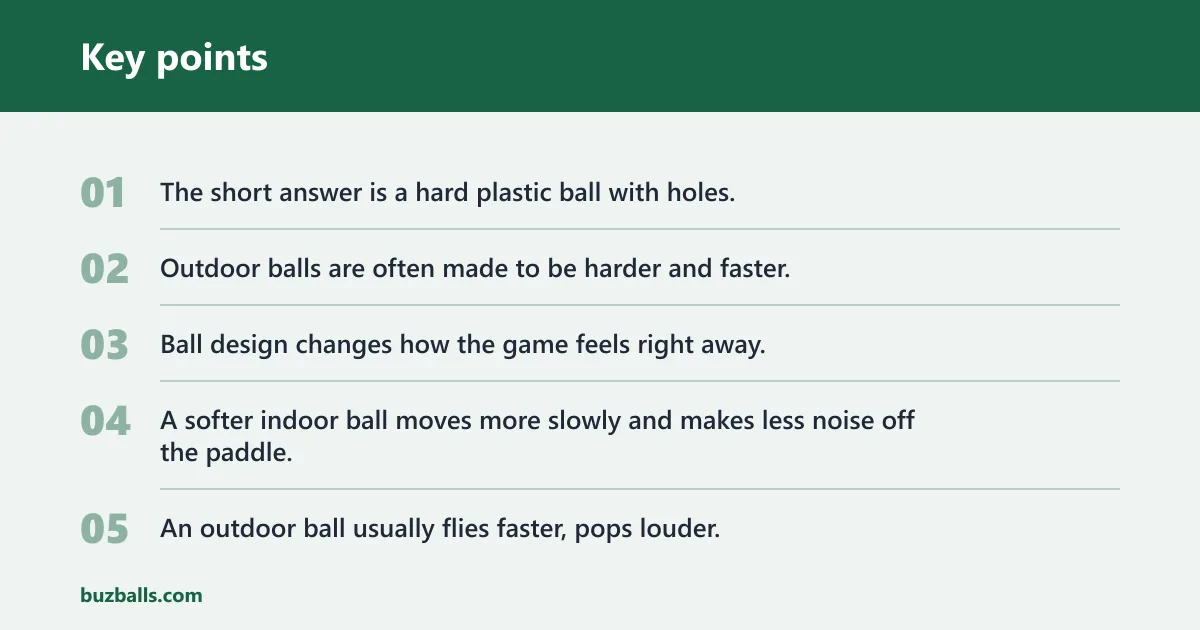
The short answer is a hard plastic ball with holes, but the right version depends on where you play. Indoor balls are usually softer and slower. Outdoor balls are often made to be harder and faster, and they are commonly reported to hold their line better in wind on rougher surfaces.
Why the ball matters for bounce, control, and noise
Ball design changes how the game feels right away. A softer indoor ball moves more slowly and makes less noise off the paddle, which helps on smooth gym floors and can make longer rallies easier for newer players. An outdoor ball usually flies faster, pops louder, and handles wind better on asphalt or concrete.
That difference is real, not cosmetic. A ball with the wrong hole pattern or shell stiffness can change serve depth, return control, and how fast points end.
When the right ball depends on your court
If you play indoors, choose an indoor ball. If you play on an outdoor hard court, choose an outdoor ball. If you want tournament play, start with the approved-ball list instead of guessing from the packaging.
What is the difference between indoor and outdoor pickleball balls?
Indoor and outdoor balls are built for different conditions. Indoor balls commonly have 26 larger holes, a softer feel, slower flight, and less noise. Outdoor balls commonly have 40 smaller holes, a harder shell, faster flight, stronger wind resistance, and a louder pop.
Hole count and flight pattern
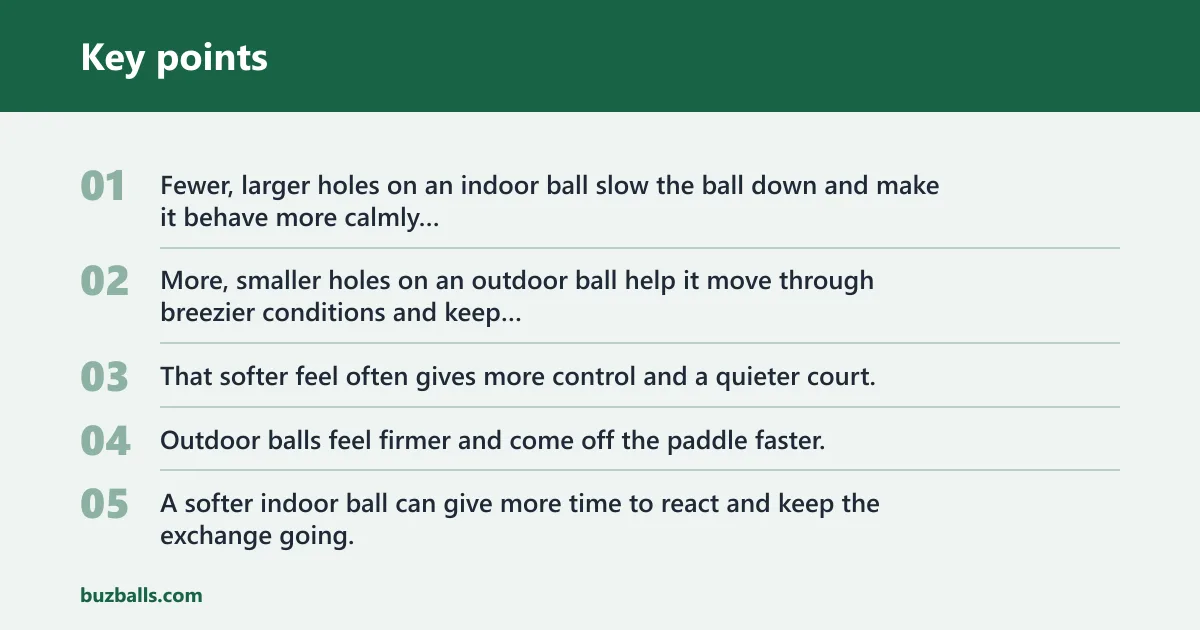
Hole count changes drag and stability. Fewer, larger holes on an indoor ball slow the ball down and make it behave more calmly on smooth surfaces. More, smaller holes on an outdoor ball help it move through breezier conditions and keep the ball from getting pushed around as much.
Feel, sound, and speed differences
Indoor balls usually feel softer at contact. That softer feel often gives more control and a quieter court. Outdoor balls feel firmer and come off the paddle faster, which can make them better on rougher outdoor courts where a slower ball might die too quickly.
Picture a beginner rally on a gym floor. A softer indoor ball can give more time to react and keep the exchange going. Move that same ball to a windy parking-lot court, and it can drift enough to make serves and third shots less predictable.
Where each type belongs
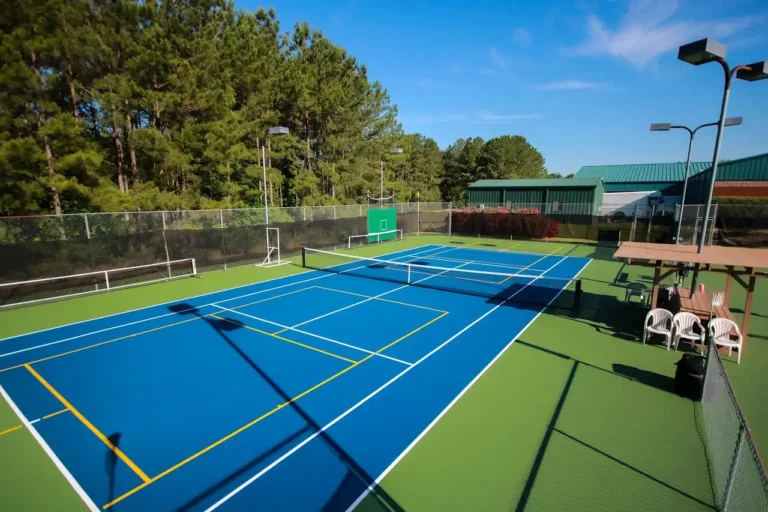
Indoor balls belong in gyms and indoor courts. Outdoor balls belong on asphalt or concrete, where the shell has to handle more abrasion and the flight has to stay steadier in moving air. Using the wrong type can cut rallies short and make basic shot control harder.
Pickleball ball specs
Approved pickleball balls must stay within size, weight, and bounce limits. The ball diameter must be between 2.87 and 2.97 inches, and the weight must be between 0.78 and 0.935 ounces. Those limits help keep play consistent across brands and surfaces.
Diameter and weight limits
The diameter and weight range help set the ball’s pace and response. A ball outside those limits may feel too heavy, too light, too large, or too small for standard play. That can affect control at the net, return depth, and how the ball reacts off the paddle face.
Bounce test requirements
The official bounce test drops the ball from 78 inches onto a flat stone surface at room temperature. Approved balls must rebound 30 to 34 inches. That test checks whether the ball has the rebound behavior expected for sanctioned play.
Room temperature matters because extreme heat or cold can change the way a plastic ball rebounds. A ball that looks fine in a warm store may not behave the same way on a cold court.
Plastic materials and construction
Pickleball balls are made of plastic. Common materials include polyethylene, polypropylene, and PVC. Construction can be rotational molded or injection molded, and balls may be seamless or seamed. Rotational molding is often preferred for competition-level balls because it can support more consistent shell construction.
The material and construction affect durability, feel, and how the seams wear. A seamed ball may split differently than a seamless one, especially after repeated outdoor use on rough pavement.
What do tournaments require?
Tournaments require a USA Pickleball approved ball. Approval covers size, weight, bounce, and hardness, and the official approved list determines whether a ball is legal for sanctioned play. A ball that works fine for recreation may still be illegal in competition.
Why approved balls matter for official play
Official play needs a standard that travels the same way from one court to another. That is why approved balls must pass specific testing and match the listed requirements. If you compete, check the approved list before you buy, not after you open the package.
How to check legality before you buy
- Decide whether the ball is for indoor play, outdoor play, or tournaments.
- Check that the packaging says USA Pickleball approved if you need sanctioned play.
- Match the ball type to your court surface.
- Look for the hole pattern and construction that fit your conditions.
- Confirm the ball is sold for the temperature and wind you expect.
A common first-timer mistake is buying an outdoor ball for a quiet gym. The harder shell and louder pop can feel harsh on indoor courts, and the bounce may be faster than expected on a smooth floor.
Pickleball ball chooser
| court surface | weather | player level | recommended ball type |
|---|---|---|---|
| Gym or indoor court | Calm, controlled environment | Beginner to advanced | Indoor ball with about 26 larger holes |
| Asphalt or concrete | Light to moderate wind | Beginner to advanced | Outdoor ball with about 40 smaller holes |
| Any hard court | Windy | Intermediate or advanced | Outdoor ball; choose one on the USA Pickleball approved list for tournament play |
| Hard court | Cold | Any level | Outdoor ball, but inspect for cracking and replace more often |
| Indoor court | Wind not a factor | Beginner | Indoor ball for slower flight, softer feel, and less noise |
| Recreational mixed play | Variable | Any level | Choose the ball that matches the court first, then confirm approved status if needed |
| Common mistakes | Indoor ball in wind, outdoor ball on quiet gym floors, ignoring cold weather, assuming all balls are tournament legal | All levels | Wrong ball for the setting leads to drift, louder play, faster wear, and poor legality |
Yes/no rules for indoor, outdoor, wind, and cold conditions
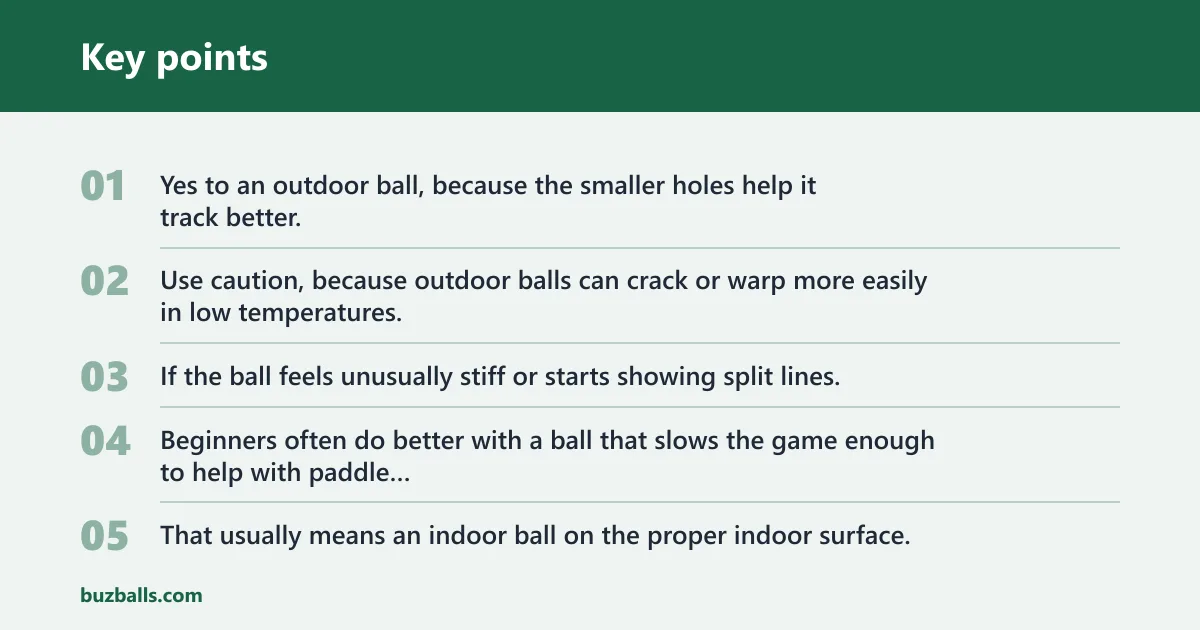
Indoor court? Yes to an indoor ball. Outdoor hard court? Yes to an outdoor ball. Windy day? Yes to an outdoor ball, because the smaller holes help it track better. Cold weather? Use caution, because outdoor balls can crack or warp more easily in low temperatures.
Cold can be hard on plastic shells. If the ball feels unusually stiff or starts showing split lines, replace it before it fails in play.
How ball choice affects beginners
Beginners often do better with a ball that slows the game enough to help with paddle placement and shot timing. That usually means an indoor ball on the proper indoor surface. On outdoor courts, though, the outdoor ball is still the right choice because it keeps the game predictable enough to learn from.
Say your group is new and playing on a smooth indoor court. An indoor ball can help keep rallies alive longer, which gives more chances to work on serves, returns, and dinks without the ball racing away.
Can you use an indoor ball outside?
Yes, but only in limited situations. An indoor ball can be used outside on a calm day, but it wears faster on asphalt or concrete and can drift more in wind. For regular outdoor play, an outdoor ball is the better choice.
What happens on asphalt or concrete
Outdoor courts are harder on the shell. An indoor ball, built for smooth indoor floors, can scuff, split, or wear down more quickly on rougher outdoor surfaces. The result is a shorter lifespan and less predictable bounce.
Wind drift and wear tradeoffs
Wind is the major drawback. Indoor balls are easier to push off line because their hole pattern is not built for outdoor air movement. If you are just hitting casually on a very calm day, the ball may be usable. For regular outdoor sessions, it is the wrong tool.
Frequently asked questions
What type of ball is used to play pickleball and why?
Pickleball uses a hard plastic ball with holes. The exact type depends on where you play: indoor balls are softer and slower, while outdoor balls are harder and built to resist wind better. The hole pattern changes bounce, speed, sound, and control.
How many holes does a pickleball ball have?
There is no single universal count, but the common patterns are 26 holes for indoor balls and 40 holes for outdoor balls. The hole count helps control drag, stability, and speed. That is why the right ball depends on where you play, not just the color or brand.
What size and weight is a pickleball ball?
A pickleball ball’s diameter must be between 2.87 and 2.97 inches, and its weight must be between 0.78 and 0.935 ounces. Those limits help keep the ball’s flight and bounce within the standards used for regular and sanctioned play.
Can you use an indoor pickleball ball outside?
Yes, but it is usually a short-term choice. Indoor balls can wear faster on rough outdoor courts and can drift more in wind. For regular outdoor play, especially on asphalt or concrete, an outdoor ball is the safer bet for consistency and durability.
What ball do tournaments use in pickleball?
Tournaments use USA Pickleball approved balls. Approval means the ball has been tested for size, weight, bounce, and hardness, and it appears on the approved list. If you plan to compete, check that list before buying so you do not end up with a ball that is legal for practice but not for matches.
Is a pickleball ball the same as a wiffle ball?
No. A pickleball ball may look similar because both are perforated plastic balls, but pickleball balls are made to specific size, weight, and bounce standards for the sport. A wiffle ball is not the same thing, and it should not be treated as a legal substitute for standard play.