Best Basketball for Outdoor: Top Picks That Last

For outdoor play, the best basketball is a deep-channel rubber or composite-leather model with a durable cover; choose rubber for rough asphalt and composite for smoother concrete if you want better feel. Pick the wrong cover, and the surface can slick over fast, grip drops off, and replacement comes sooner. This guide gives you ranked outdoor picks plus a short buying guide on cover material, channel depth, and inflation.
The top overall pick here is the Wilson NCAA Legend Outdoor because it gives you outdoor-ready cover durability with a friendlier hand feel than many hard rubber balls. It is not the longest-lasting option on rough blacktop, that job still belongs to a tougher rubber ball. But for most buyers on mixed outdoor courts, its mix of durability and feel makes it the smartest first choice.
Quick picks
- Best overall: Wilson NCAA Legend Outdoor — strong grip, useful channel depth, and outdoor wear resistance for mixed courts.
- Best for rough concrete: Spalding Street Outdoor — hard rubber cover that tolerates concrete and coarse asphalt better than composite covers.
- Best for grip and control: Spalding Zi/O Excel, composite-style cover with softer hand feel and easier break-in for competitive pickup.
- Best budget buy: Nike Everyday Playground 8P, simple rubber outdoor ball with solid value when replacement cost matters more than touch.
Best overall outdoor basketball
The Wilson NCAA Legend Outdoor stands out because it hits a useful middle ground: easier on the hands than many brick-hard rubber balls, yet tougher outdoors than indoor-only synthetic leather. If your courts shift between smoother concrete and average asphalt, that balance matters more than logo or review count.
Why it stands out outdoors
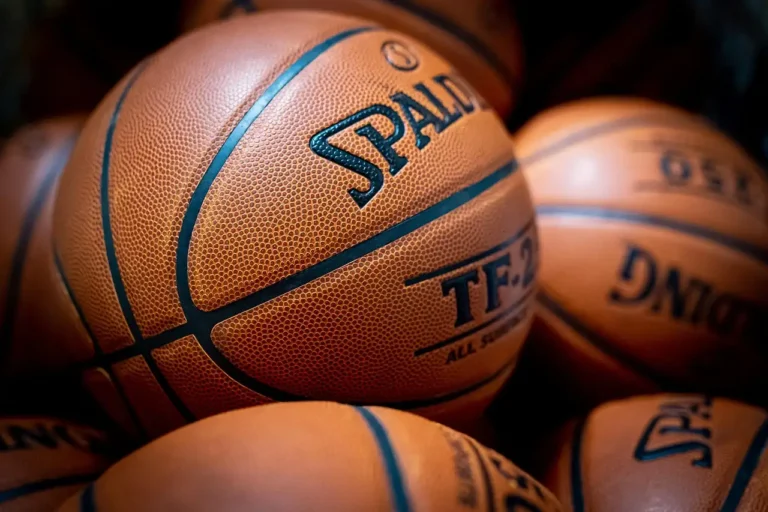
This type of ball usually has a composite or composite-like cover, moderately deep channels, and pebbling with enough bite for dusty pickup runs without feeling abrasive. Compared with many basic rubber balls, control on crossovers and one-hand catches is better once the cover settles in.
Break-in time is also shorter than on hard rubber. That helps if you want an outdoor ball that does not feel oversized or overly stiff during the first few weeks of use.
Where it wears fastest
Composite-style covers usually fail before rubber on harsh surfaces. The first signs are often pebbling loss on high-contact panels, a smoother feel at the fingertips, and channels that collect dust but offer less bite. On rough concrete, expect visible abrasion earlier than on smoother asphalt.
Light moisture is another weak point. Once a composite cover gets repeated wet exposure, grip consistency usually drops faster than on a simple molded rubber ball.
Who should buy it?
Buy this type if most games are competitive pickup, your court is not shredded blacktop, and hand feel matters almost as much as lifespan. It also fits players moving between outdoor play and indoor-style handling habits.
Best outdoor basketball for rough concrete
The best choice for rough concrete is a hard rubber outdoor ball such as the Spalding Street Outdoor. It gives up some touch, but its cover resists abrasion better than composite and synthetic-leather options, which lose pebbling and surface grip faster on punishing courts.
Why rubber still wins on harsh courts
Rough concrete acts like sandpaper. A molded rubber cover handles that scraping better because the grip pattern is part of the cover itself, not a softer finish that wears smooth quickly. If your court has exposed aggregate, edge chips, or coarse texture, rubber is the safer material pick.
Rubber also tolerates casual storage and irregular use better. Leave a rubber outdoor ball in a trunk for a weekend and the bigger issue is usually air pressure, not sudden surface damage.
Grip tradeoffs on dusty blacktop
Rubber is not automatically better in dust. Some hard rubber balls keep traction because they have deeper pebbling and wider channels, while cheap smooth-surfaced rubber balls can feel slippery once dust fills the texture. Look for pronounced pebbling, not merely a rubber label.
On blacktop with loose dust, a deeper pebble can help with sweaty hands, but that same raised texture may feel harsher on fingertip control than a softer composite cover.
Who should skip this type?
Skip a hard rubber ball if your court is relatively smooth and you care about touch on jumpers, floaters, and quick gathers. Competitive players who want a feel closer to an NBA regulation basketball usually prefer an indoor/outdoor composite in size 7, even if they replace it sooner.
Best outdoor basketball for grip and control
The best grip-and-control option is a quality composite outdoor ball such as the Spalding Zi/O Excel. It offers a softer hand feel, easier break-in, and better fingertip response than hard rubber, but it wears faster on rough concrete and should be matched to smoother outdoor surfaces.
How pebbling changes hand feel
Pebbling is the raised surface pattern on the cover. Deeper, sharper pebbling usually gives more initial bite in dusty or sweaty conditions, while finer pebbling tends to feel closer to an indoor ball. The tradeoff is wear: aggressive pebbling can flatten over time, especially on abrasive concrete.
Channel depth matters too. Deeper channels can make a ball easier to control with one hand outdoors, especially when dust reduces the friction of the panels themselves.
Composite cover tradeoffs outdoors
Composite covers usually start softer and need less break-in than rubber. That is the upside. The downside is faster cosmetic and functional wear on coarse courts, with the most common failure pattern being smoother panels, less distinct pebbling, and a less predictable release feel.
Seam condition is worth watching. As outdoor abrasion works on the panel edges, some balls begin to show seam splitting or raised seam wear long before the bladder fails.
Best fit for competitive pickup
This category fits players who run regular pickup on school blacktop, park asphalt, or sealed concrete that is not extremely rough. It also fits shooters who dislike the dead, rigid touch common on low-cost rubber balls.
Suppose your court is a smoother city park slab and games run four nights a week. A composite ball gives better handling and shot feel there than a bargain rubber ball, but it becomes the wrong tool if that court surface turns out to be coarse, chipped concrete.
Best budget outdoor basketball
The best budget buy is usually a plain rubber outdoor ball such as the Nike Everyday Playground 8P or a similar molded-rubber model from Wilson or Spalding. The logic is simple: lower replacement cost per season often beats a softer-feeling ball that needs replacing much sooner.
Lowest replacement-cost logic
Outdoor value is not the sticker price alone. It is the combination of purchase price, how often you play, and how quickly the cover loses usable grip on your court surface. A cheaper rubber ball that stays playable longer on rough asphalt can be the better value than a softer composite ball bought twice as often.
What budget models usually give up
Budget outdoor balls often trade away feel, shape retention consistency, and refined channel edges. They may also arrive with shallower pebbling, which is fine for casual shooting but less helpful in dust or sweat.
The failure pattern on budget balls can include soft spots in the carcass, slightly inconsistent bounce panel to panel, and faster smoothing of the high-contact areas.
Best fit for casual play and training
If the ball is mostly for driveway shooting, youth drills, school recess, or casual pickup, a budget rubber model makes sense. It is also a smart second ball for outdoor conditioning sessions that would grind down a nicer composite cover.
Outdoor basketball decision matrix
Surface and use matrix
| Court surface | Play frequency | Hand-feel preference | Budget | Best cover material | Best size | Why this match works |
|---|---|---|---|---|---|---|
| Rough concrete | 3 or more times weekly | Firm, durable grip | Low to medium | Rubber | Size 7 for most adults; size 6 for many women and youth | Best abrasion resistance where the court acts like coarse sandpaper. |
| Rough concrete | 1 to 2 times weekly | Softer touch wanted | Medium | Rubber, not composite | Match player standard size | Composite feel is tempting, but rough concrete shortens usable life too much. |
| Average asphalt | 2 to 4 times weekly | Balanced grip and feel | Medium | Composite outdoor or tough rubber | Size 7 adult baseline | Asphalt varies; smoother mixes can support composite, coarse mixes still favor rubber. |
| Smoother asphalt or sealed blacktop | 2 to 5 times weekly | Closer to indoor feel | Medium to high | Composite | Size 7 or size 6 | Better control and shorter break-in without the worst concrete abrasion. |
| School blacktop with dust | Casual pickup | Extra grip needed | Low to medium | Deep-pebble rubber | Match player standard size | Dust rewards deeper texture and channels more than softer cover feel. |
| Driveway or mixed outdoor courts | Training and recreation | All-around use | Low | Rubber | Size 6 for many training setups; size 5 for youth development | Lower cost and better survival across uneven surfaces. |
Basketball table
| Cover type | Fails fastest when | What you notice first | What it means |
|---|---|---|---|
| Rubber | Cheap cover, heat exposure, frequent high-pressure storage | Slick high spots, harder feel, occasional soft spots | Grip pattern is wearing smooth or carcass shape is degrading. |
| Composite | Rough concrete, daily blacktop use, repeated wet sessions | Pebbling loss, smoother release, seam wear | Surface texture is being abraded away faster than on rubber. |
| Synthetic leather | Outdoor use on asphalt or concrete | Quick scuffing, cover drying, reduced tack | Indoor-oriented finish is wearing beyond its intended surface. |
| Indoor-only leather or composite leather | Any regular outdoor play | Rapid scuffs, fuzzy or slick feel, uneven bounce over time | The cover is not meant for pavement abrasion. |
Replacement thinking
Think in replacement cycles, not hype. A ball that costs less but survives coarse concrete for much longer can be the better buy for casual pickup. A softer ball can still be the right call for competitive outdoor play if the court is smoother and touch directly affects how you play.
Picture a size 7 ball used on a rough apartment-court slab five evenings a week. Even if a composite model feels better on day one, the math usually shifts toward rubber once the pebbling starts to flatten and the cover loses its bite.
Is rubber or composite better for outdoor basketball?
Rubber is commonly better for outdoor durability, especially on rough concrete and coarse asphalt. Composite is better for control, softer hand feel, and shorter break-in on smoother courts. For most harsh-surface buyers, rubber wins. For competitive pickup on less abrasive courts, composite can be worth the shorter wear life.
Rubber for maximum abrasion resistance
Rubber is the safer default when the court is rough, the budget is tight, or the ball will be shared in recreation settings. It shrugs off scraping better and usually keeps a usable shape longer through casual neglect.
Its downside is feel. Hard rubber can feel rigid at first, and some budget models have shallow pebbling that does little once dust settles into the surface.
Composite for better control and shorter break-in
Composite outdoor covers usually feel more natural right away. They help on ball handling, pull-up shooting, and one-hand control because the panel surface has more give. That matters more to skilled pickup players than to casual driveway use.
But the wear tradeoff is real. On concrete, the grip can fade before the ball is structurally done.
Synthetic leather and indoor-outdoor hybrids
Synthetic leather is a broad category, so the label alone is not enough. Some indoor/outdoor hybrids are genuinely usable outside on smoother courts. Indoor-only synthetic leather is a poor outdoor buy and often fails by fast scuffing, tack loss, and panel wear.
What size basketball should you buy for outdoor play?
Buy the same size outdoors that fits the player and game format indoors. Size 7 basketballs are commonly about 29.5 inches around and are often used as the standard men’s size and a common adult baseline. Size 6 basketballs are commonly about 28.5 inches around and are often used for women and many youth players. Size 5 basketballs are commonly about 27.5 inches around and are often used for youth development.
Size 7: the adult baseline
Size 7 is commonly used for most adult men’s play and matches the NBA regulation basketball size, which is about 29.5 inches around. If you want outdoor handling that resembles regulation men’s play, start here.
Size 6: common for women and training
Size 6 has a 28.5-inch circumference. It is the women’s standard and a common youth size, but it is also a practical outdoor training option for many players who want easier control without dropping all the way to a youth ball.
Size 5: youth and developmental use
Size 5 measures 27.5 inches around and suits younger players learning passing, dribbling, and shooting mechanics outdoors. For developmental use on driveways and school courts, the right size matters more than buying an adult ball too early.
Can you use an indoor basketball outside?
Indoor basketballs can be used outside for short, occasional sessions, but regular outdoor use wears them down quickly. Asphalt and concrete strip surface tack, flatten pebbling, and scuff panel edges. If outside play is routine, an indoor-outdoor model or true outdoor rubber ball is the safer choice.
Why indoor covers wear down fast on asphalt
Indoor covers are tuned for hardwood, not pavement. The fibers, finishes, or softer composite surfaces that feel great inside face far more abrasion outdoors. The result is quicker cosmetic damage and, more important, faster loss of usable grip.
When an indoor-outdoor ball makes sense
An indoor-outdoor ball makes sense if play is split between gyms and smoother outdoor courts, or if touch matters enough that a plain rubber ball will feel too crude. It is still a compromise; pavement will always shorten its useful outdoor life.
Failure signs that mean it is time to retire the ball
Watch for pebbling loss, raised or splitting seams, dead-feeling spots in the carcass, inconsistent bounce, and any sign the cover is absorbing water or staying slick after drying. Those signs matter more than whether the logo still looks good.
How to choose an outdoor basketball
Start with the court surface, then your weekly play volume, then the hand feel you want. Brand and price come after that. The right choice on rough concrete is often wrong on smoother asphalt, and the wrong cover type can wipe out any small savings at checkout.
Match the cover to the court
- Check the surface first. Look at the court you use most: rough concrete, average asphalt, smoother blacktop, or a mix. Rougher texture pushes the choice toward rubber because abrasion removes pebbling and grip from softer covers faster.
- Count weekly sessions. Estimate whether the ball will be used once a week, a few times weekly, or nearly every day. Higher use on rough surfaces makes replacement cost a bigger factor than first-touch feel.
- Choose the feel target. Pick hard rubber if durability matters most, or composite if you want quicker break-in and better control. If your answer is “both,” use the surface as the tie-breaker.
- Buy the right size. Use size 7 for most adult men, size 6 for women and many youth players, and size 5 for younger developmental players. A wrong-size ball can make a good cover choice feel bad.
Check grip in dust, sweat, and heat
Outdoor grip changes with conditions. Dust favors deeper pebbling and clearer channels. Sweat favors texture that still has bite when the top layer gets slick. Heat can make some covers feel harder and less forgiving, especially low-cost rubber left in direct sun.
A common first-timer mistake is buying the softest-feeling composite ball for a dusty school blacktop. The ball can feel great in a clean store or fresh out of the box, then lose practical grip outdoors once surface dust packs into shallow pebbling.
Set the right PSI for consistent bounce
- Read the printed range. Most basketball manufacturers print an inflation range on the ball, commonly 7.5 to 8.5 PSI. Use the printed range on your ball as the final authority because construction differs by model.
- Inflate in small steps. Add air gradually and check bounce after each short burst. Small adjustments matter because outdoor temperature swings can change pressure enough to affect dribble height and feel.
- Avoid overinflation. Going above the printed range can stress seams, harden the feel, and increase the chance of shape problems or carcass damage. A ball that feels “extra lively” at first may wear worse if it lives overinflated.
- Recheck before play. Check pressure before games or long training sessions, especially if the ball sat in a hot car or cool garage. Bounce consistency depends on pressure as much as on cover material.
Judge value by replacement cost
A low purchase price can be expensive if the ball loses outdoor grip too fast for your court and schedule. A mid-priced rubber ball used on rough concrete may give lower replacement cost over time than a nicer composite ball that reaches the slick stage much sooner.
Frequently asked questions
What is the best basketball for outdoor use?
The best outdoor basketball for most buyers is the Wilson NCAA Legend Outdoor because it balances durability and feel better than many rivals. On the roughest concrete, though, a harder rubber ball is the better pick because it resists abrasion and pebbling loss longer.
What basketball lasts longest on concrete?
A hard rubber outdoor ball usually lasts longest on concrete. Models such as the Spalding Street Outdoor or similar molded-rubber options from Wilson and Nike generally outlast composite covers on coarse pavement because the surface texture is less vulnerable to fast abrasion.
How do I choose a basketball with good grip for outdoors?
Look for deeper pebbling, clear channel depth, and a cover matched to your court. Dusty blacktop rewards stronger texture, while smoother asphalt lets a composite cover work better. Grip should be judged alongside surface abuse, sweat, and inflation, not by softness alone.
What PSI should an outdoor basketball have?
Most basketballs list a printed inflation range of 7.5 to 8.5 PSI, and that printed range should guide setup. Staying within it helps bounce stay consistent and reduces the risk of overinflation, which can harden feel, stress seams, and shorten usable life.
What are the best outdoor basketball brands?
Wilson, Spalding, and Nike are commonly strong outdoor choices because they offer dependable rubber options, several indoor-outdoor composites, and broad size availability in size 7, size 6, and size 5. Brand alone should never decide it; cover material and court surface matter more.