What Kind of Basketball Is Best for Outdoors and Why

For asphalt, concrete, and rough park courts, choose a composite or rubber outdoor basketball in official size 7 for adults; use size 6 for youth, and pick the grippiest model you can still palm comfortably. A soft indoor ball will scuff fast, lose grip, and wear sooner on hard outdoor surfaces. This guide explains which material, size, and tread pattern fits each court surface and how to trade feel against durability.
Choosing the right ball by surface and use
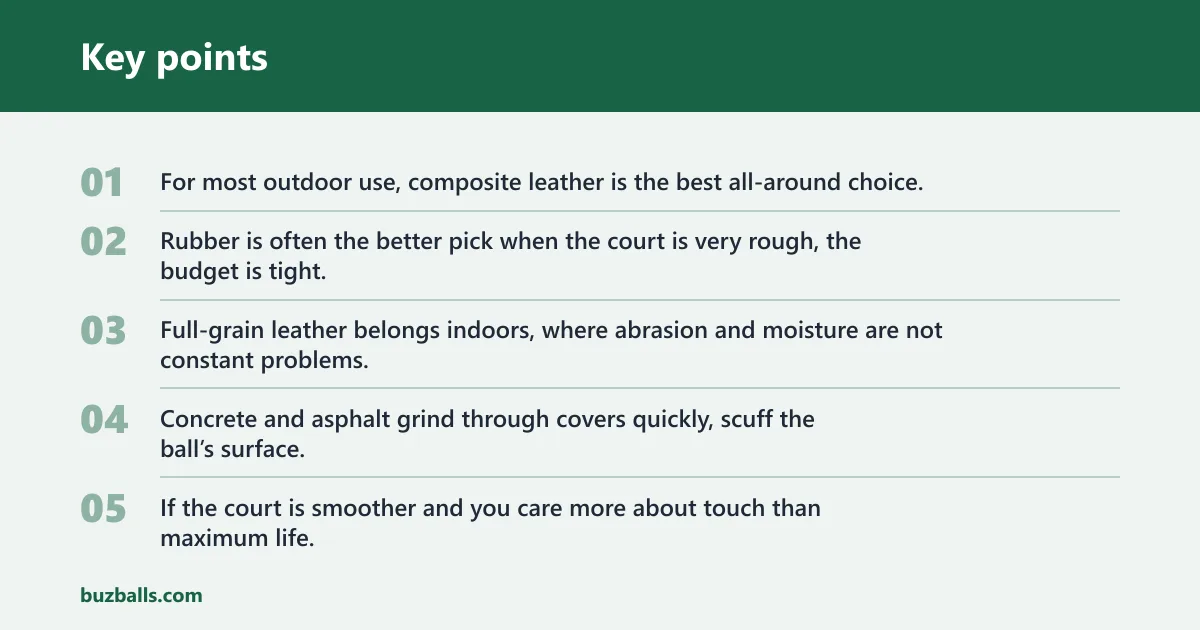
For most outdoor use, composite leather is the best all-around choice. Rubber is often the better pick when the court is very rough, the budget is tight, or the ball will stay outside most of the time. Full-grain leather belongs indoors, where abrasion and moisture are not constant problems.
The short version is surface first. Concrete and asphalt grind through covers quickly, scuff the ball’s surface, and can make the ball feel flatter over time. If the court is smoother and you care more about touch than maximum life, composite is usually the smarter buy.
How often you play changes the pick
If you play a few times a week on a driveway or park court, composite gives a better mix of grip and control. If the ball will be used daily on a rough surface, rubber usually lasts longer and costs less to replace. That shift matters because heavy use changes the failure mode from “looks worn” to “loses grip and shape faster.”
Say your court is cracked asphalt and the ball gets used after school every day. A rubber ball is the safer buy because scuffing and abrasion will hit a premium cover fast. Say the surface is still outdoors, but smoother concrete with occasional play. Composite is usually the better feel choice.
What feel you should expect
An outdoor ball should feel tacky enough to control without sliding in the hand, with deep pebbling and clear channel lines that are commonly reported to help grip on dusty, humid, or slick courts. Outdoor balls also need enough firmness to hold shape and rebound consistently, even after repeated contact with rough ground.
That does not mean the ball should feel hard and dead. It should feel controlled, with enough texture to stay secure when your palms are dry or the court has dust on it. If a ball feels slick in the store, it usually feels worse after the first few weeks outside.
Rubber vs composite: which should you buy?
Rubber is the durability-first choice. Composite is the control-first choice that still holds up well outdoors. If you want one ball for mixed outdoor play, composite usually gives the better daily experience; if you want the cheapest option that can survive harsh courts, rubber is the more practical answer.
Rubber basketball cover
Rubber basketball covers are built for maximum durability and budget use. They handle weather better than most other covers and are the usual recommendation for rough outdoor courts, especially where concrete and asphalt chew through softer materials. The trade-off is a firmer feel and less tack than composite.
That firmer feel matters on ball handling. Rubber can feel less refined in the hands, especially for players who want more touch on crossovers, catches, and one-hand control. Still, for harsh surfaces or a ball that will sit outside often, rubber makes sense.
Composite leather basketball cover
Composite leather basketballs are usually made with microfiber or synthetic leather and are the best all-around outdoor choice. They tend to have a pebbled texture, deeper channels, and better grip and control than rubber, while still standing up well enough for regular outdoor play.
This is the strongest choice for most recreational players. It gives more control, better handling, and a softer catch, while still coping with outdoor wear better than full-grain leather. For light to moderate use on park courts, it is often the best balance.
Best choice by budget and court roughness
Use the roughness of the court and the amount you play to narrow the choice. Rubber is best when the surface is harsh and the budget is low. Composite is best when you want better grip and control and are willing to pay a little more for feel.
- Rough concrete, frequent play, low budget: choose rubber for durability and weather resistance.
- Asphalt, regular play, mid budget: choose composite for better grip and control.
- Smoother outdoor court, occasional play: choose composite if feel matters more than maximum life.
Why leather is a bad outdoor pick?
Full-grain leather basketballs are indoor only. Outdoors, they wear down fast on abrasive surfaces and can take on moisture, which hurts feel and can shorten useful life. If you are buying for concrete or asphalt, leather is the wrong cover.
Full-grain leather basketball
Full-grain leather gives elite indoor feel, but that is exactly why it is a poor outdoor choice. It is not meant for the abrasion of concrete or asphalt, and repeated outdoor use can damage the cover far faster than most players expect.
Moisture is another problem. Outdoor conditions add dust, humidity, and sometimes wet courts, all of which work against leather. A leather ball may feel great inside, but outdoors it becomes a fast-wearing option rather than a durable one.
Moisture and abrasion outdoors
Outdoor surfaces create two problems at once: abrasion and moisture exposure. Asphalt and concrete scrape the cover, and damp conditions can make the surface feel less secure in the hand. Over time, that leads to grip loss, scuffing, and a ball that feels less consistent.
A common first-timer mistake is buying an indoor ball because it feels excellent in the store. On a rough driveway, that same ball can lose its clean surface and touch much faster than a purpose-built outdoor model.
Where leather does belong
Leather belongs on indoor courts where the floor is smoother and the ball is not exposed to the same wear. If the question is outdoor play on asphalt or concrete, the answer is simple: skip leather and move to composite or rubber.
Outdoor basketball decision matrix
This table gives a surface-first decision rule. Match the ball cover to the roughness of the court, then narrow by how often you play, how much you want to spend, and how much feel you want in the hand.
| Surface and use case | Play frequency | Budget | Best material | Best size | Short reason | Do not buy |
|---|---|---|---|---|---|---|
| Smoother driveway or park court | 1 to 3 times per week | Mid | Composite leather | Size 7 for adults; Size 6 for youth | Better grip and control, with enough durability for regular outdoor play | Do not buy full-grain leather; it is indoor only and wears fast outside |
| Cracked asphalt court | Daily or near-daily | Low | Rubber | Size 7 for adults; Size 6 for youth | Maximum durability and weather resistance for a harsh surface | Do not buy a soft indoor ball; it will scuff and lose grip quickly |
| Rough concrete court | Frequent weekend runs | Low to mid | Rubber | Size 7 for adults; Size 6 for youth | Best for abrasion resistance when the surface is hard on covers | Do not buy full-grain leather; abrasion and moisture will shorten life fast |
| Light outdoor play, smoother surface | Occasional | Mid to higher | Composite leather | Size 7 for adults; Size 6 for youth | Best blend of feel, grip, and outdoor durability | Do not buy a cheap indoor ball; it can lose shape and grip outdoors |
| Youth starter ball for park or driveway | Occasional to regular | Low to mid | Rubber or composite | Size 5 for kids | Smaller ball is easier for younger hands, with outdoor durability still intact | Do not buy a full-size adult ball if the player cannot control it comfortably |
What size basketball should you buy?
Match the size to the player first, then to the court; full-size men’s play typically uses size 7. Size 7 is the official full-size men’s ball, size 6 is the common women’s and youth game size, and size 5 fits kids. If the size is wrong, grip and control suffer no matter how good the cover is.
Size 7 basketball
Size 7 basketballs are 29.5 inches and are used for men and teens. This is the standard full-size ball, so most adult recreational players should start here unless they need a different size for a specific league or age group.
On outdoor courts, size 7 gives the familiar game feel for adults and older teens. If the player has smaller hands or is still developing control, a different size can feel easier to manage, but size 7 remains the default for adult play.
Size 6 basketball
Size 6 basketballs are 28.5 inches and are the women’s and youth size. This is the right choice when the official size for the player’s group is smaller than the men’s full-size ball, or when a youth player needs a ball that is easier to handle outdoors.
Size 5 basketball
Size 5 basketballs are 27.5 inches and are the kids’ size. For younger players, the smaller ball improves control and helps make outdoor play less frustrating on rough surfaces where grip is already harder to maintain.
What makes an outdoor ball last longer?
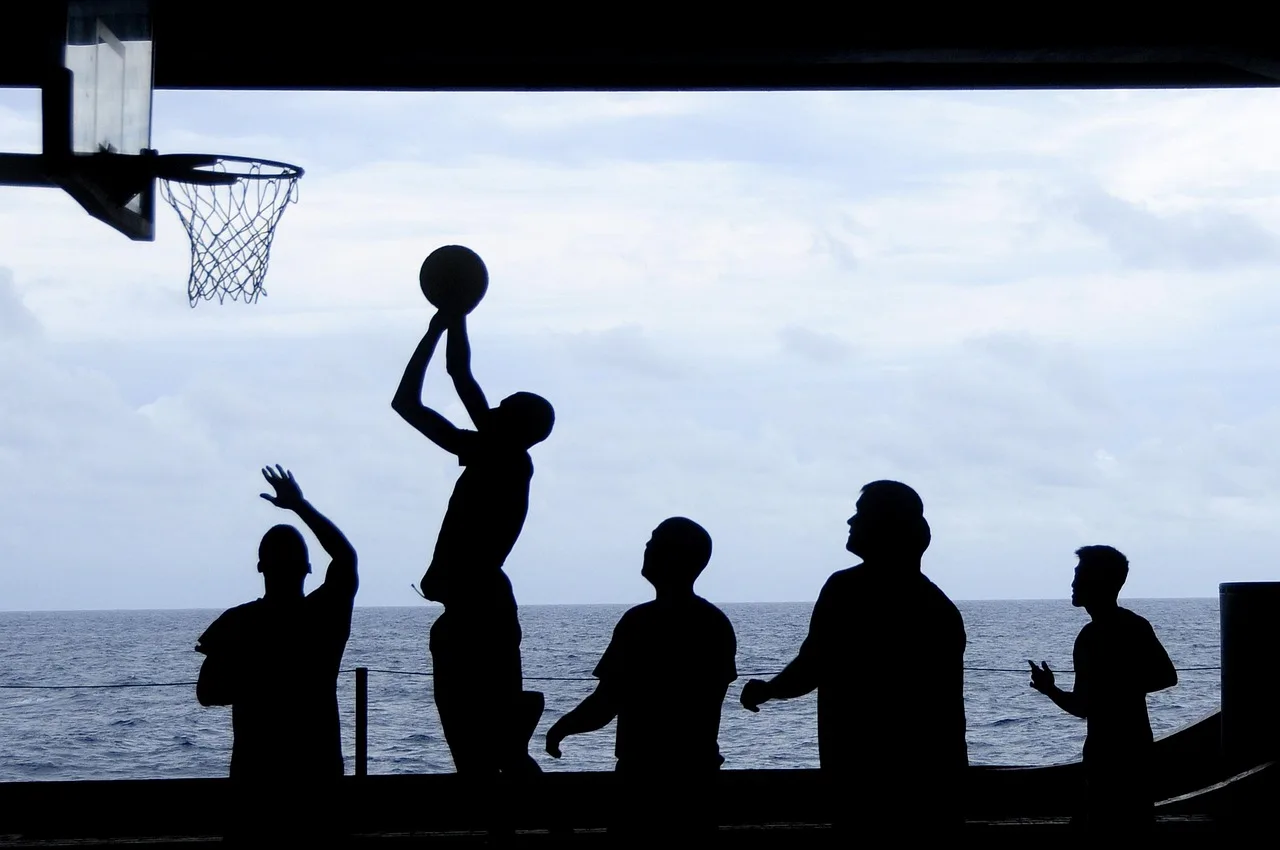
Durability outdoors comes from cover material, pebbling, channel design, and bladder quality. A thicker, abrasion-resistant cover with good grip features holds up better on concrete and asphalt. A butyl bladder also helps keep bounce more consistent by improving air retention.
Deep pebbling and channel design
Deep pebbling and strong channel design improve grip and control outdoors, especially on dusty, humid, or slick courts. Those features help the ball stay in the hand instead of slipping during catches, dribbles, and shot setup.
They also help slow the feeling of wear. As a cover gets scuffed, shallow texture disappears fast. A deeper pattern gives the ball a better chance of staying usable even after the surface starts to show abrasion.
Butyl bladder and air retention
A butyl rubber bladder is a common recommendation for outdoor balls because it improves air retention. That matters outdoors, where a ball that loses air too fast can feel soft, bounce inconsistently, and need more top-offs.
Do outdoor basketballs lose air faster? They can, especially with heat changes, rough use, and older valves. A butyl bladder does not remove the need to check pressure, but it usually helps the ball stay in a steadier range.
Signs of a tough outdoor cover
Look for a cover designed to resist abrasion, not just one that feels good out of the box. A tough outdoor ball usually has a thicker cover, visible pebbling, pronounced channels, and a material meant to survive repeated contact with concrete or asphalt.
Picture a player on a rough driveway with a ball that has shallow channels and a slick cover. The first problem is not just wear; it is control. The ball slips sooner, needs more hand pressure, and starts to feel inconsistent well before the outer surface looks ruined.
- Check the court first: concrete and asphalt call for the toughest cover.
- Choose rubber if durability and price matter most.
- Choose composite if you want better grip, softer feel, and better control.
- Skip full-grain leather for outdoor use.
- Match the size to the player: 7 for men and teens, 6 for women and youth, 5 for kids.
- Look for deep pebbling, clear channels, and a butyl bladder for steadier bounce.
Frequently asked questions
What kind of basketball is best for outdoors?
For most outdoor players, composite leather is the best all-round choice because it balances grip, control, and durability. Rubber is better if the court is very rough or the ball needs maximum durability at the lowest price. Full-grain leather is not a good outdoor pick.
Should I get rubber or composite for outdoor basketball?
Choose rubber if you want the toughest, cheapest option for harsh courts and frequent outdoor use. Choose composite if you want better touch, better grip, and a softer feel without giving up outdoor durability. On most park and driveway courts, composite is the better everyday choice.
Is leather basketball good for outdoor use?
No. Full-grain leather basketballs are indoor only and wear quickly outdoors on concrete or asphalt. They also face moisture damage risk, which can hurt feel and shorten life. If the ball will be used outside, composite or rubber is the safer choice.
What size basketball is best for outdoor play?
Size 7 is the official full-size men’s ball at 29.5 inches, size 6 is 28.5 inches for women and youth, and size 5 is 27.5 inches for kids. The best outdoor size is the one that matches the player first, then the court.
What makes an outdoor basketball durable?
Durability comes from an abrasion-resistant cover, deep pebbling, strong channels, and a butyl bladder for better air retention. Outdoor balls need to hold grip and shape even after repeated use on concrete and asphalt, which wear down softer covers quickly.
Is an indoor outdoor basketball good enough for rough courts?
It can work for light outdoor use, especially on smoother surfaces, but rough courts shorten its life quickly. If the surface is asphalt or coarse concrete and the ball will be used often, a true outdoor composite or rubber ball is the better fit.