How to Clean a Pickleball Paddle Face Safely

Start with a dry microfiber cloth on the paddle face, then use a barely damp cloth with a drop of mild dish soap if residue remains; avoid abrasives, solvents, and soaking. Hard cleaning can flatten grit, stain the face, and cut spin. This guide shows safe cleaning steps by paddle material, plus the tools and mistakes to avoid.
Why paddle face care matters
Pickleball paddle faces wear differently, so cleaning should match the surface. Raw carbon fiber may grab ball fuzz and residue more readily than smoother graphite, while fiberglass and composite faces can often handle a damp wipe more readily. Clean the surface gently, and you keep texture, control, and finish intact longer.
Cleaning is also a warranty issue. If a face is scrubbed hard, soaked, or exposed to harsh chemicals, it becomes harder to separate normal wear from damage. A conservative method is the safest starting point.
What you’ll need
- Microfiber cloth, lint-free, for dry wiping and barely damp wiping
- Warm water, used damp rather than wet
- Mild dish soap, used in tiny amounts with warm water for grime that water alone will not remove
- Soft toothbrush for edge guard seams, handle creases, and tight spots
- Paddle eraser or carbon fiber cleaning block for textured faces and ball residue
- Clean, dry towel for final drying
Pickleball paddle face cleaning matrix
| Paddle face material | Safe cleaner | Safe motion/pressure | Red-flag cleaners to avoid |
|---|---|---|---|
| Raw carbon fiber face | Dry microfiber cloth; paddle eraser; barely damp microfiber with warm water | Light straight passes, then lift residue; no hard scrubbing | Magic Eraser, abrasive pads, polish, solvents, soaking |
| Graphite face | Dry microfiber cloth; barely damp cloth with a drop of mild dish soap if needed | Gentle wipe only; keep pressure low because the finish is usually smoother and more scratch-prone | Rough pads, melamine sponges, citrus cleaners, heavy pressure |
| Fiberglass/composite face | Microfiber cloth with warm water; tiny amount of mild dish soap for court grime | Soft wipe, then immediate dry wipe; do not soak | Abrasive scrubbing, bleach, solvents, dripping cloths |
| Textured grit or spin surface | Paddle eraser or very gentle microfiber wipe | Light pressure only; stop if the texture looks flatter or shinier | Scrub pads, stiff brushes, abrasive creams, polishing compounds |
How do you clean the face without flattening texture?
Start dry, move to barely damp, and stop before the finish changes. A lint-free microfiber cloth removes loose dust without grinding it into the grit. If residue remains, a cloth wrung out so it does not drip is safer than soaking the face or scrubbing in circles.
- Wipe the face with a dry microfiber cloth from top to bottom.
- Check for fuzz, ball marks, or a dull film.
- If needed, dampen the cloth with warm water and wring it out until it does not drip.
- Wipe once more using straight passes, then follow with a dry section of cloth.
- If residue still clings, add one drop of mild dish soap to the cloth, not the paddle.
Use only enough soap to break the film. If the surface starts to look shinier, smoother, or patchy, stop cleaning that area and let it dry before you decide whether the mark is wear rather than dirt.
How do you clean raw carbon, graphite, and composite faces?
Raw carbon fiber, graphite, and fiberglass/composite surfaces do not clean the same way. Raw carbon is the most textured and usually the first to grab fuzz and ball residue. Graphite tends to be smoother and easier to mark. Fiberglass and composite faces usually take a damp cloth and mild soap better, but they still should not be soaked.
Raw carbon fiber faces
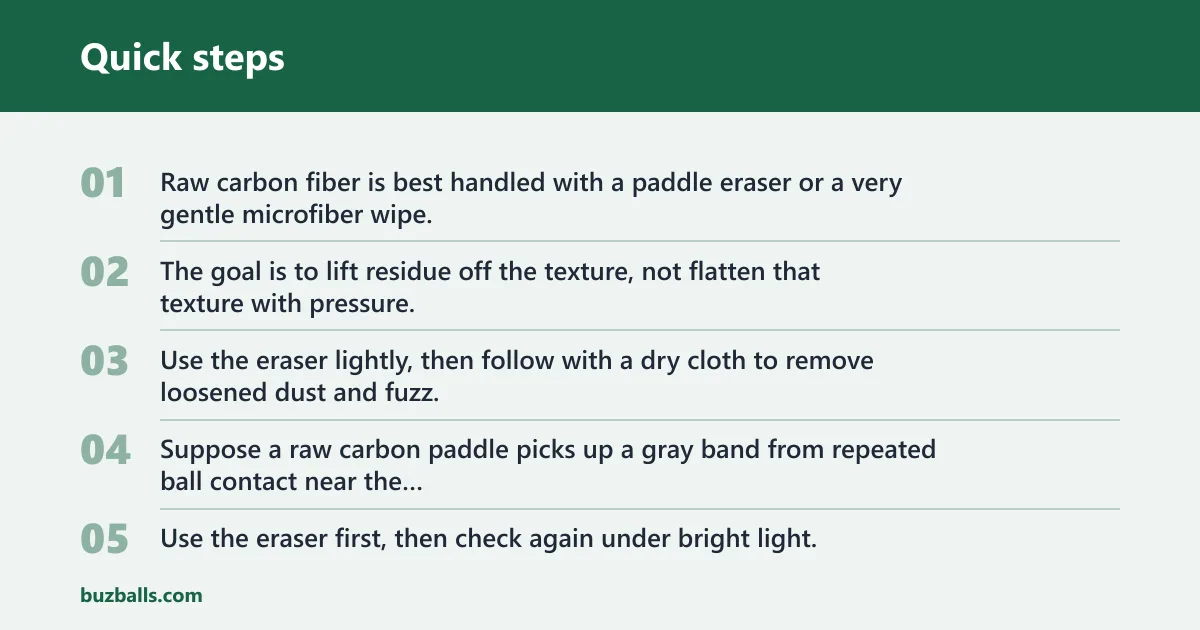
Raw carbon fiber is best handled with a paddle eraser or a very gentle microfiber wipe. The goal is to lift residue off the texture, not flatten that texture with pressure. Use the eraser lightly, then follow with a dry cloth to remove loosened dust and fuzz.
Suppose a raw carbon paddle picks up a gray band from repeated ball contact near the sweet spot. Use the eraser first, then check again under bright light. If the area still looks glazed or shiny after light cleaning, that is a stop point for inspection, not more scrubbing.
Graphite faces
Graphite faces usually need less aggressive cleaning than raw carbon, because the surface is often smoother and can scratch more easily. Dry microfiber is the first choice. If that fails, use warm water on a barely damp cloth and keep the motion straight and light.
Avoid rough pads and abrasive scrubbers. They can leave visible micro-scratches that change how the face looks, even if they do not remove obvious grime.
Fiberglass and composite faces
Fiberglass and composite faces can usually take a damp cloth and a tiny amount of mild dish soap for grime that water alone will not remove. Wipe, then dry immediately. Do not soak the face, because water can work into seams or edge areas and make cleanup less predictable.
If the mark is surface dirt, it should come off with a single pass or two. If it does not, stop before you start wearing down the finish.
How do you clean the grip and edge guard?
Clean the grip and edge guard separately from the face. Sweat, oils, and seam dirt collect there, but both areas should stay only barely damp. The grip can be wiped down, and the edge guard can be brushed gently where dirt builds in seams and creases.
Grip and overgrip
Wipe the grip or overgrip with a barely damp microfiber cloth. That removes sweat and oils without soaking the wrap. If the grip stays slick after drying, replacement is the better fix; tack usually does not return once the wrap is loaded with oil and moisture.
Edge guard seams and creases
Use a soft toothbrush with almost no pressure for the edge guard seams. The brush should loosen dirt, not dig into adhesive lines. Keep water out of damaged edges, because soaked adhesive can fail faster than a dry seam with dust in it.
Picture a paddle with dried court dust packed into the edge guard groove after a windy outdoor session. A light brush and a cloth wipe is enough. If the seam looks lifted, cracked, or soft after cleaning, stop and inspect it instead of adding more water.
Common mistakes to avoid
Most damage comes from overdoing a simple job. The face usually does not need a strong cleaner, and the grip never needs to be drenched. If the paddle starts looking more polished than it did before cleaning, the method is too aggressive.
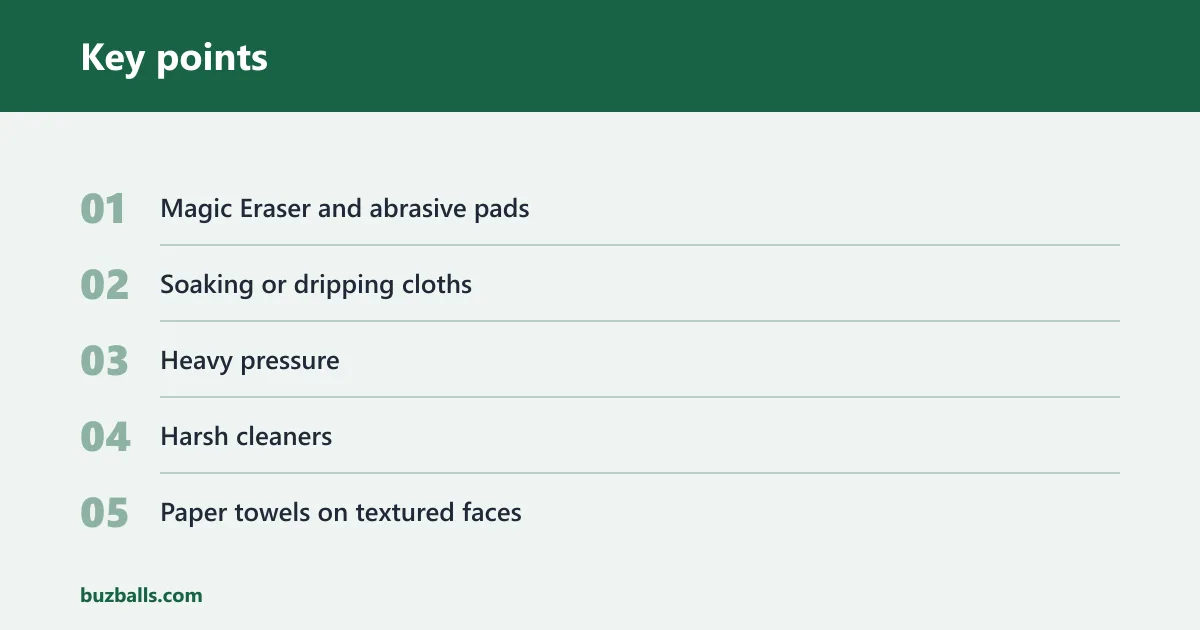
- Magic Eraser and abrasive pads: These can act like fine sandpaper on textured faces and graphite finishes. Use a paddle eraser made for spin surfaces, not a melamine sponge.
- Soaking or dripping cloths: Water should be damp, not wet. A cloth that drips can push liquid into seams and adhesive lines.
- Heavy pressure: Hard scrubbing can flatten grit and dull spin. Light passes are safer and usually work better.
- Harsh cleaners: Avoid bleach, solvents, citrus cleaners, polishing products, and alcohol-heavy cleaners on the face. By contrast, hardware-cleaning advice often uses 70% isopropyl alcohol on a cloth, not sprayed directly, and some sensitive surfaces call for 99% pure isopropyl alcohol; those are not face-cleaning instructions here. (Wikihow)
- Paper towels on textured faces: They can leave lint and drag debris across the finish.
If the mess does not lift with a cloth, stop before you escalate. A second round of light cleaning is fine; stronger chemistry is usually the wrong next move.
How often should you clean your pickleball paddle?
Clean the face after visible dirt, fuzz, sweat, or sunscreen buildup, not on a fixed schedule alone. A quick dry wipe after play is usually enough, and a damp wipe only makes sense when residue remains. Frequent gentle cleaning is safer than occasional aggressive cleaning.
A good rule is to inspect the face, grip, and edge guard every few sessions. If the finish changes faster than the dirt comes off, the paddle needs a wear check instead of more cleaning.
When should you stop cleaning and inspect the paddle?
Stop cleaning if the surface looks shiny where it used to feel gritty, if the coating seems uneven, or if the paddle starts shedding visible finish. Those are signs to inspect for wear, delamination, or finish loss rather than keep rubbing the same spot.
- Set the paddle on a clean, flat surface.
- Check the face under bright light for gloss changes, bubbles, or soft spots.
- Run a fingertip lightly across the edge guard and seams.
- If the texture is visibly flattening, stop cleaning that area.
- Follow the manufacturer’s care instructions before using any stronger product.
A warranty-safe approach stays conservative: cloth first, warm water next, soap only when needed, and no soaking. That keeps normal grime from turning into avoidable surface damage.
Frequently asked questions
How do I clean a pickleball paddle face without damaging the texture?
Use a dry microfiber cloth first, then a barely damp cloth with warm water if dirt remains. If residue still clings, add a tiny amount of mild dish soap to the cloth and wipe once more. Stop if the face looks shinier or smoother than before.
Can I use a Magic Eraser on a pickleball paddle?
No. A melamine sponge can behave like an abrasive pad and may wear down texture or leave a dulled patch. Use a paddle eraser made for textured faces instead, and keep pressure light enough that the surface does not change appearance.
What should I use to clean a raw carbon pickleball paddle?
Start with a dry microfiber cloth, then a paddle eraser for ball fuzz and residue. If needed, use warm water on a wrung-out cloth. Keep the motion gentle and stop as soon as the texture is clean; raw carbon should not be scrubbed hard.
How do I remove ball fuzz from a pickleball paddle face?
Use a paddle eraser or carbon fiber cleaning block with light pressure, then wipe away the loosened fuzz with a microfiber cloth. If the fuzz is stubborn, repeat once rather than pressing harder. Heavy pressure can flatten spin texture and make the face look polished.
Can I wash a pickleball paddle with soap and water?
Yes, but only in a controlled way. Use warm water with a tiny amount of mild dish soap on a cloth, not direct soaking. Wipe the face, then immediately wipe again with clean water on a damp cloth and dry the paddle fully before use.
How do I clean the grip and edge guard without soaking the paddle?
Wipe the grip with a barely damp microfiber cloth, then let it air-dry fully. For the edge guard seams, use a soft toothbrush with almost no pressure. Keep liquid out of damaged seams and replace an overgrip if sweat and oils have made it slick.
What cleaners should I avoid on a pickleball paddle?
Avoid abrasive pads, Magic Erasers, bleach, citrus cleaners, polish products, solvents, and alcohol-heavy cleaners on the face. Do not soak the paddle or spray liquid directly onto it. If the manufacturer gives different care instructions, follow those first.
How often should I clean my pickleball paddle?
Wipe it dry after play when dust or fuzz is visible, and do a damp cleaning only when residue remains. Regular light cleaning is enough for most players. If the surface looks worn, glazed, or uneven after cleaning, stop and inspect for finish loss rather than cleaning more often.