Winter Cricket Bat Care Tips for Cold and Dry Conditions

Keep a cricket bat at room temperature, give it one or two light coats of oil a season, and keep it out of cold cars and damp sheds; before play, let it warm for 20 to 30 minutes. If you skip that, dry willow can crack, dent, or lose face fibres faster. This guide covers winter cricket bat care tips for cold and dry conditions, with a simple before-and-after session checklist and storage mistakes to avoid.
Why winter air is hard on willow bats
Cold air usually holds less moisture, so a bat can lose surface moisture faster in winter than it does in milder weather. On an English willow cricket bat, that drying raises the risk of surface checking, fine face cracks, and toe damage, especially if the bat is moved between a cold pitch and a warm house or car.
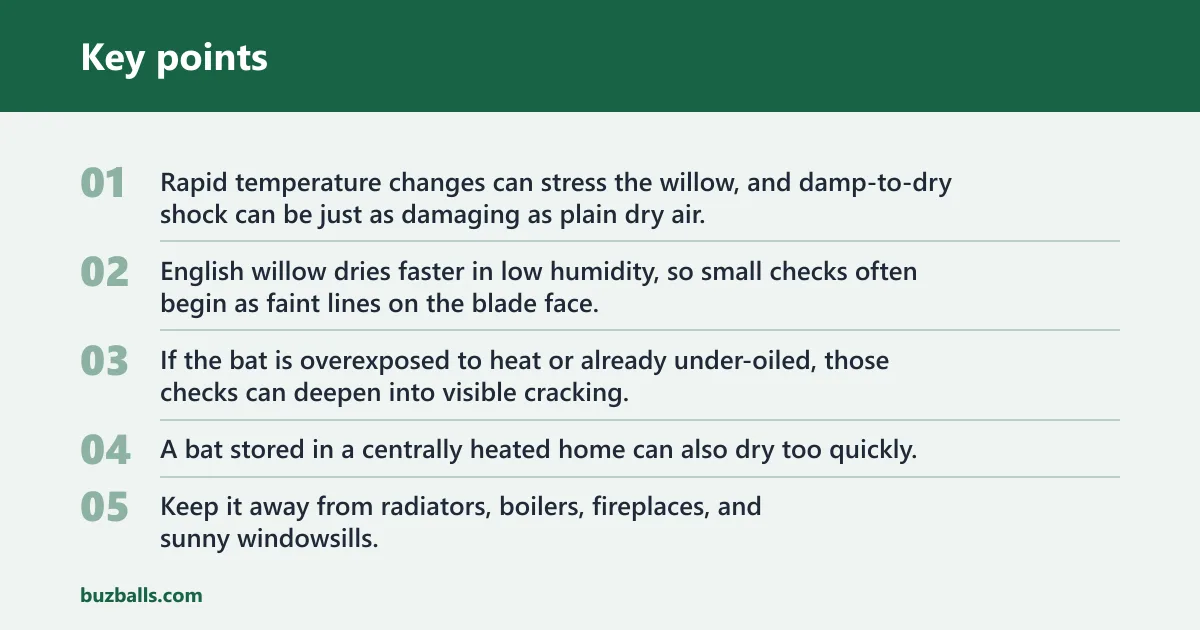
The problem is not only low humidity. Rapid temperature changes can stress the willow, and damp-to-dry shock can be just as damaging as plain dry air. A bat that comes in wet, then sits beside a radiator or in a hot boot, may dry unevenly and start to split at the face, toe, or edges.
Cold air, low humidity, and surface checks
English willow dries faster in low humidity, so small checks often begin as faint lines on the blade face. If the bat is overexposed to heat or already under-oiled, those checks can deepen into visible cracking. That is why winter care is about controlling moisture loss, not simply adding more oil.
A bat stored in a centrally heated home can also dry too quickly. Keep it away from radiators, boilers, fireplaces, and sunny windowsills. A bat bag or case helps with transport, but it should not hold a damp bat for long periods.
Damp-to-dry shock after cold sessions
A cold session followed by a warm indoor environment creates a sharp moisture shift. If the toe picks up wet grass or light surface damp, forcing it to dry near heat can swell, split, or lift the toe area. Dry naturally first, then store it at room temperature.
Suppose a junior bat comes back from an indoor net with a lightly damp toe and a cold blade face. Leaving it in a warm hallway next to a heater can dry the outside faster than the core, which increases checking risk. The safer move is slow, natural drying in open air indoors, away from heat.
Why indoor storage can be a problem
Indoor storage is only safe when the room stays stable. A bat left beside a radiator, in a boiler cupboard, or against a heat duct may dry out faster than one stored in a plain room. That uneven drying is a common cause of face cracking in winter.
A cricket bat storage bag or case is useful for protection from knocks and temperature swings, but the bat should dry naturally after use before it goes back inside the bag. Do not zip up a damp bat and wait for the moisture to disappear on its own.
How should you prep a bat before winter nets?
Before winter nets, a bat should be warm, lightly conditioned, and free of loose damage. For English willow, that means a thin coat of linseed oil when needed, enough knocking-in to keep fibres compressed, and a quick check of the face, toe, edges, and grip before the first ball is faced. Cold mornings make this prep more important, not less.
Junior bats and lighter winter use
Junior bats often see shorter sessions, lighter workloads, and more indoor net time. That does not remove the winter risks. A smaller bat still dries out in cold air, and a younger player is more likely to store it in a car boot, by a heater, or in a chilly garage.
For lighter winter use, inspect the bat before each session and after each one. Short, regular checks catch face checks, toe swelling, and loose grips before they become bigger repairs.
Indoor nets and cold mornings
- Warm the bat slowly. Bring it indoors about 20 to 30 minutes before use so the willow can settle at room temperature. Do not place it near direct heat, because rapid warming can stress the face and toe.
- Check the striking area. Look for fine face lines, lifted tape, toe cracks, and any edge damage from earlier sessions. Catching small faults before winter nets prevents them from spreading under repeated impact.
- Confirm the handle feel. Grip the handle and check for movement, cracking, or a loose grip that hides wear. A harder grip in cold weather can also make small handle issues easier to miss.
Winter bat care checklist
| situation | what to do | what to avoid |
|---|---|---|
| Pre-session | Warm the bat for 20 to 30 minutes at room temperature, check the face, edges, toe, and handle, then confirm the grip is secure. | Do not take it straight from a cold boot or garage to the crease. |
| Pre-session | Use a thin oil coat only if the willow looks dry, and let it settle before play. | Avoid heavy oiling, soaking, or adding oil to damaged areas. |
| Post-session | Wipe off moisture, let the bat dry naturally indoors, and inspect for toe swelling or new face checks. | Do not place it by a radiator, boiler, fire, or in direct sun while it is damp. |
| Post-session | Check face tape, anti-scuff sheet edges, toe guard adhesion, and grip condition before storage. | Do not store a damp bat inside a sealed case for long periods. |
| Storage | Keep the bat in a case or bag in a stable room, away from heat sources and cold concrete floors. | Do not leave it in a car boot, shed, or damp hallway. |
| Damage warning | Watch for fine blade checks, soft toe spots, handle movement, or a cracking sound on impact. | Do not ignore repeated changes in shape, feel, or rebound. |
Should you oil a cricket bat in cold weather?
Yes, but only sparingly. A light coat of linseed oil helps an English willow bat resist drying, yet too much oil can soften the face, make the bat heavy, and encourage surface problems. Winter is about thin application and careful timing, not extra oil for its own sake.
How much oil to apply
Use traditional linseed oil in thin coats only when the bat looks dry. A common rule of thumb is that one or two light coats of linseed oil a season is usually enough for a regularly used bat. One or two light coats a season is usually enough for a bat in regular use, with a little more caution needed in cold, dry storage conditions.
Apply the oil to the face and perhaps the edges only if the bat needs it. Let it settle fully before use, and stop once the willow looks conditioned rather than glossy or wet.
Where not to oil
Do not let linseed oil soak into the toe, edges, or splice. Those areas can take up too much oil, which may weaken the structure or hide moisture damage. Keep oil away from the handle and grip area as well.
A bat that is already soft, darkened, or shiny in patches may be over-oiled. In winter, that can be worse than under-oiling because the face may become too soft while the outside still looks protected.
How to spot over-oiling
Over-oiling often shows up as a greasy surface, darker patches, or a bat that feels heavy for its size. The face may also appear soft or less responsive. If oil pools at the toe or edges, wipe it off and pause further treatment.
Under-oiling looks different. The willow may appear pale, dry, and more likely to show fine checks after short winter use. In that case, one light coat is better than repeated heavy treatment.
How do you protect the face, toe, and handle?
Face tape, anti-scuff sheets, and toe guards can help in winter, but none of them replaces proper drying, storage, and inspection. They add protection against abrasion and damp ground, yet poor application or trapped moisture can create new problems. Use them as support, not as a reason to skip care.
Face tape and anti-scuff sheets
An anti-scuff sheet can reduce abrasion on the face and may slow moisture loss from the surface, which helps in dry conditions. It should sit cleanly and flat. If it lifts at the edge or traps dampness underneath, it can hide damage instead of preventing it.
Face tape helps with small surface wear, especially in indoor nets or on abrasive winter surfaces. It is not enough on its own for a bat that is dry, cracked, or poorly stored.
Toe guards and damp ground damage
A toe guard is useful when outfields are wet, cold, or muddy, because the toe is vulnerable to impact and moisture. Check it after each session for lifting, cracking, or water getting underneath. If the guard loosens, moisture can work into the toe and cause swelling or splitting.
Grip hardening and handle checks
Cold weather can harden grips, reduce comfort, and make handle issues easier to miss. Check for movement in the handle, cracking near the splice, and a grip that has become loose or brittle. A loose grip can hide early handle wear.
- Inspect the grip first. Twist the grip gently and look for slips, hard spots, or splits. If it moves, replace it before the next session so the handle can be checked properly.
- Check the toe and guard. Run a finger along the toe guard and bottom edge for lifting or cracks. Winter damp can enter through a weak guard and travel into the toe.
- Confirm face protection. Make sure tape or an anti-scuff sheet lies flat with no bubbles or raised corners. Poor application can trap moisture and hide early checking.
How should you store and dry the bat after use?
After a winter session, let the bat dry naturally at room temperature before storing it in a case or bag. Store it in a cricket bat bag or case only once the surface is dry, and keep it away from radiators, car boots, and other direct heat sources. The goal is even drying, not fast drying.
Avoid radiators, car boots, and direct heat
Direct heat can pull moisture out too quickly and stress the willow. A car boot is also risky because it swings from cold to warm and back again. That repeated change can encourage checking, especially on a bat that already looks dry.
A common first-timer mistake is to bring a damp bat home, leave it beside a radiator, and then notice fine face lines a few sessions later. The better approach is simple: wipe it down, leave it in a dry room, and let it settle before storage.
Let the willow dry naturally
- Wipe off surface damp. Use a dry cloth to remove moisture from the face, edges, and toe as soon as the session ends. This limits surface water before it soaks into the willow.
- Stand it in open air. Leave the bat upright or flat in a room at normal temperature until it is dry to the touch. Do not push it toward heat to speed up the process.
- Return it to storage. Once dry, place it in a bat bag or case and keep it away from hot pipes, heaters, and boot spaces. Stable storage protects the bat from winter temperature swings.
Storage in a bat bag or case
A bat bag or case is best for transport and protection from knocks. It should allow the bat to dry naturally after use rather than trapping dampness. If the bat feels cool and damp, leave it out first.
Store it in a room with steady temperature and avoid cold concrete floors, which can draw heat from the willow. A consistent environment matters more in winter than in summer.
What signs mean the bat is too dry or damaged?
Look for fine face checks, edge damage, toe swelling, handle movement, and grip changes. In winter, those signs can appear sooner and spread faster than in milder weather. A bat that feels dead, sounds dull, or shows repeated cracking needs closer attention before the next session.
Fine face checks and blade cracking
Small surface checks often start on the face and edges. They may look harmless at first, but repeated dry-air exposure and hard impacts can widen them into visible cracking. If the face begins to look pale, dry, and lined, the bat needs attention quickly.
Over-oiling can also make this worse by softening the surface while offering poor long-term protection. If the face shows both softness and cracking, stop using the bat and assess repair options.
Toe swelling, soft spots, and lifting guards
Toe swelling usually points to moisture damage. If the toe looks raised, darkened, or soft, dry the bat naturally and inspect the toe guard. Lifting guards and soft spots are warning signs that water has entered the lower blade and may be weakening the wood.
Handle movement and loose grips
Handle movement, cracking near the splice, or a grip that suddenly feels loose can signal deeper wear. Because cold weather hardens grips, a loose one can hide damage until it becomes obvious. If the handle feels unstable, stop using the bat until it is checked.
If the bat has repeated face cracking, a soft toe, or handle movement after careful winter care, repair is the better call. Retirement is the safer option when the blade is splitting through the face, the toe is separating, or the handle shows structural movement.
Frequently asked questions
How do you care for a cricket bat in winter?
Keep it at room temperature, inspect it before and after each session, and dry it naturally after any damp use. Use a light coat of linseed oil only when the willow looks dry, and keep it away from radiators, car boots, and other direct heat sources that can stress the wood.
How often should I knock in a bat during winter?
Knocking-in matters before winter match use and again after periods of light storage or reduced play. Use a mallet gradually, with controlled strikes, especially on the face, edges, and toe. If the bat has been off-season or has only seen indoor nets, give it a careful refresh before serious use.
Can I use a cricket bat on cold or frozen pitches?
Cold pitches are tougher on the bat, and frozen or very hard surfaces increase impact stress. If the pitch feels frozen or the ball rebounds sharply, the risk of edge damage, toe shock, and face checking can rise. It is safer to avoid use until the surface is playable and not frozen.
How do I stop a cricket bat from drying out and cracking?
Control temperature swings, use a light oil coat when needed, and store the bat away from heat sources. Dry it naturally after damp sessions, and inspect the face, toe, and edges regularly. Dry air in winter is the main enemy, so stable storage matters as much as surface protection.
Is face tape or anti-scuff sheet enough in winter?
No. Face tape and anti-scuff sheets help with abrasion and can slow surface wear, but they do not replace drying, oiling, inspection, or proper storage. Poorly applied sheets can trap dampness or hide early damage, so they should be checked regularly and kept flat on the blade.