How to Clean Tennis Racket Grip Without Damaging It

Wipe a tennis grip with a barely damp microfiber cloth and mild soap only if the grip is removable leather, synthetic leather, or a replacement overgrip; otherwise use dry brushing and replace a worn grip instead of scrubbing it. Clean the wrong way and you can harden the surface, loosen adhesive, trap sweat, and shorten grip life. This guide explains safe cleaning by grip type, when to skip cleaners, and how to tell cleaning from replacement.
What you’ll need
- Microfiber cloth, soft, lint-free, and only lightly damp
- Warm water
- Mild soap, used in just a few drops
- Soft-bristled toothbrush for seams and textured wraps
- Dry towel
- Open air-dry space away from heat
- Replacement overgrip, if the current one is too dirty or slick
📊 wikiHow lists 6 popular tennis racket grips. Source: Wikihow.
Start by checking what you are cleaning: a replacement overgrip can usually take a little more handling than the factory base grip, while a leather grip needs the lightest touch. Use dry wiping first, then a barely damp cloth only on surface grime. If the grip is slick, hardened, or peeling, replacement is safer than cleaning.
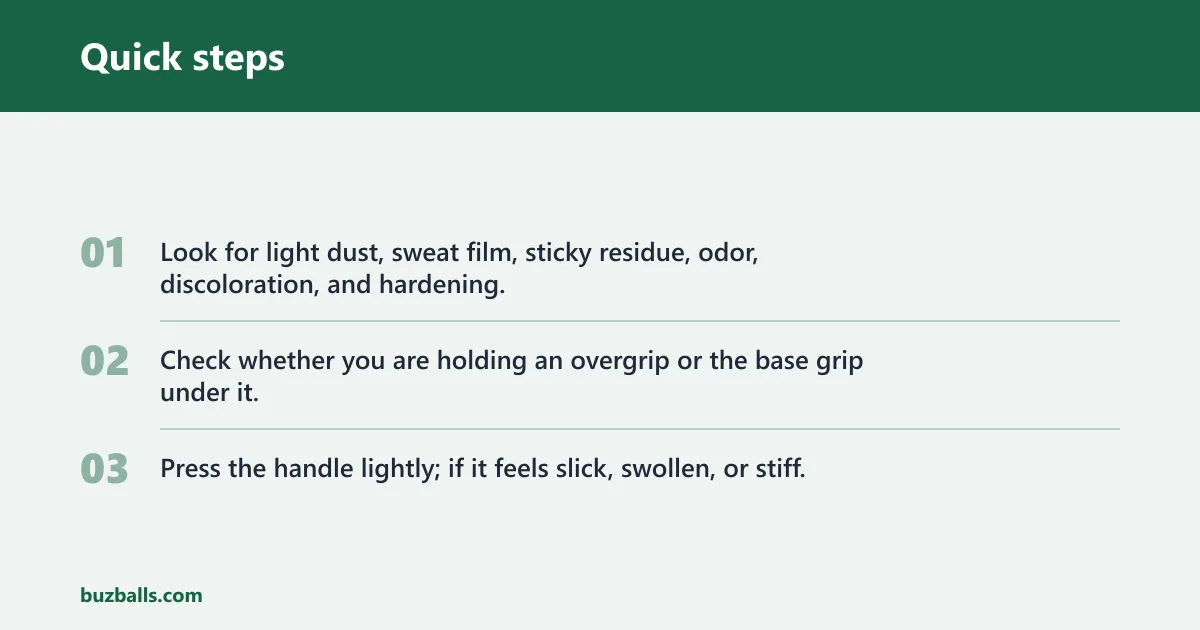
What matters is where the dirt sits. Light dust and sweat film stay on the surface. Sticky residue, odor, discoloration, and hardening usually mean the grip has absorbed sweat or aged past what cleaning can fix. A tennis grip is the position of your hand around the racket handle, and the handle has eight bevels used to describe hand position, so the grip should stay clean enough to preserve feel without changing shape.
Inspect the grip before you touch cleaner
- Look for light dust, sweat film, sticky residue, odor, discoloration, and hardening.
- Check whether you are holding an overgrip or the base grip under it.
- Press the handle lightly; if it feels slick, swollen, or stiff, plan on replacement instead of more cleaning.
Say your overgrip has white sweat marks after a doubles session and still feels tacky. A dry wipe or light damp wipe is usually enough. Suppose the base grip has dark stains, a sour smell, and a firm, cardboard-like feel. That is a replacement case, not a cleaning case.
What to use for the handle
Use a microfiber cloth first. It is soft, non-abrasive, and works for dry wiping and light damp cleaning without scouring the wrap. A soft-bristled toothbrush is for seams, edge lines, and textured wraps only. Keep the pressure gentle. The brush should lift dirt, not grind it deeper into the fibers.
Mild soap solution belongs in the middle, not as the first move. Mix about a few drops of soap into warm water, dampen the cloth, wipe the grip, then wipe again with a clean damp cloth to remove residue. Do not soak the handle. The TT racket cleaning guide lists soft cloth, water, mild soap, and rubber cleaner as essential supplies, and it also says to avoid soaking and let the grip air dry fully.
Should you remove the overgrip first?
Remove the overgrip if it is saturated, torn, slick, or holding odor after cleaning. Keep it on if buildup is light and the wrap still has structure. A dirty overgrip is often faster and safer to replace than to try cleaning it with more water.
The overgrip is easier to replace than the base grip, and its wrap direction matters when you install a new one. If you clean with the overgrip in place, keep moisture light and away from the handle core. The base grip under it is harder to replace, so it should be protected from excess moisture.
- Unwind the overgrip from the butt end toward the throat.
- Inspect the base grip for slickness, tearing, and dark staining.
- If the base grip is sound, wipe it dry before installing a new overgrip.
Grip cleaning decision table
| Grip condition | Safest method | Remove overgrip? | What not to use | Replace instead of clean when |
|---|---|---|---|---|
| Light dust | Dry microfiber cloth | No, unless it is already worn out | Abrasive pads, harsh scrubbing | Fibers are frayed or the wrap is lifting |
| Sweat film | Lightly damp microfiber cloth | Only if the overgrip is saturated | Soaking, bleach, alcohol-heavy cleaners | The grip stays slick after drying |
| Sticky residue | Few drops of mild soap in warm water, wiped off at once | Often yes, for a deep clean | Strong degreasers, rough brushing | Adhesive feel is uneven or tack is gone |
| Odor | Dry the wrap fully; clean only the surface if needed | Yes, if the smell is trapped in the overgrip | Heavy perfume sprays, bleach, soaking | Odor returns after full air drying |
| Discoloration | Gentle wipe, then stop if color transfers | Maybe, if only the top layer is stained | Abrasive soap, scouring pads, aggressive brushing | Stain reaches the base grip or feel changes |
| Hardening | No cleaning fix; assess for replacement | No | Water, heat, scrubbing | The grip feels rigid or cracks under finger pressure |
Can you use soap and water on a tennis grip?
Yes, but only sparingly. Use soap and water on removable leather, synthetic leather, or an overgrip when surface grime stays after dry wiping. Keep the cloth barely damp, wipe the grip, then wipe off any soap film. Do not pour water onto the handle or let moisture run into the throat or butt end.
- Wipe the grip with a dry microfiber cloth first.
- Mix warm water with a few drops of mild soap.
- Dampen the cloth, not the grip.
- Wipe the dirty section once, then rewipe with clean damp cloth to remove soap.
- Blot dry with a towel and leave it to air dry fully.
A common first-timer mistake is adding more soap when the grip still feels sticky. That usually leaves residue behind. Add no more than a few drops to the water, then recheck after each wipe. If tack loss remains after the grip dries, that is a sign to replace the overgrip or rewrap the base grip.
When should you replace it instead of cleaning it?
Replace the overgrip when it is torn, thin, slick, or permanently stained. Replace the base grip when it is hardened, swollen from moisture, or too slick to hold safely after drying. Cleaning helps surface dirt. It does not restore lost texture, failed adhesive, or a grip that has already changed shape.
The base grip under an overgrip is harder to replace, so it deserves the strictest moisture control. If cleaning leaves a damp smell, a slippery patch, or color transfer on the towel, stop. Drying failure means the handle still holds too much moisture.
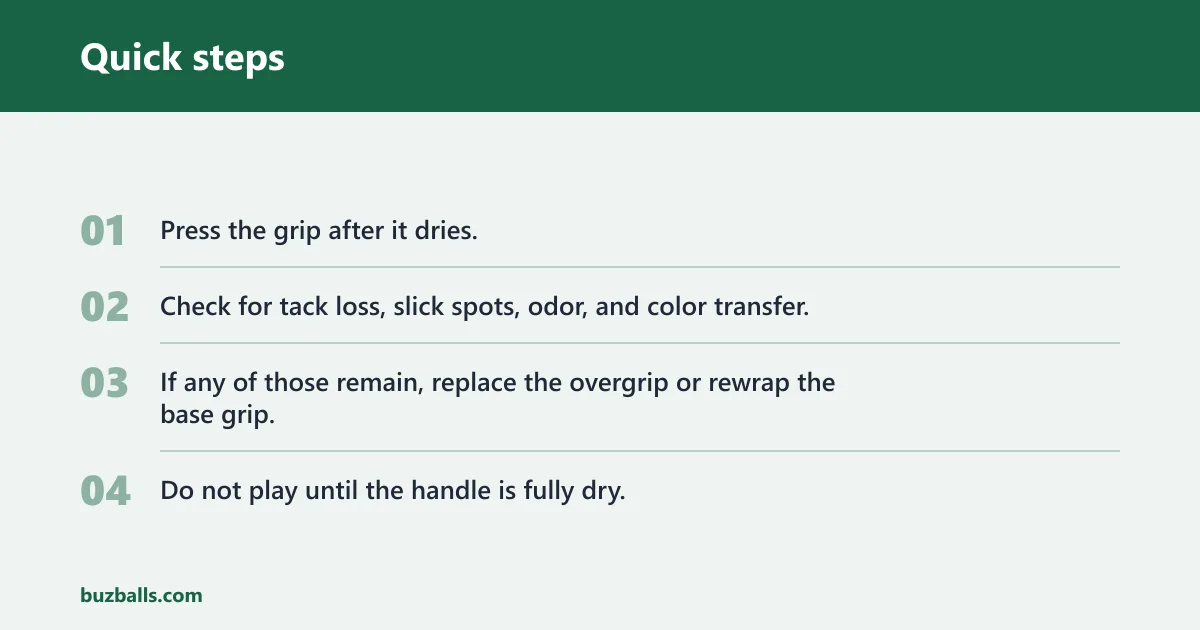
- Press the grip after it dries.
- Check for tack loss, slick spots, odor, and color transfer.
- If any of those remain, replace the overgrip or rewrap the base grip.
- Do not play until the handle is fully dry.
Suppose the overgrip feels clean after wiping, but the same area stays slick the next morning. That points to wear, not dirt. A replacement overgrip is the safer fix. For a leather base grip that has gone stiff after repeated wet cleaning, rewrapping is the practical answer.
What should you avoid when cleaning a tennis racket grip?
Avoid excess water, harsh scrubbing, bleach, alcohol-heavy cleaners, abrasive pads, and heat. Those can dry out leather, break down adhesive, rough up textured wraps, and push moisture into the handle. Keep the cleaning light. Gentle cleaning protects performance, but only when the grip material can tolerate it.
- Do not soak the grip or run water into the handle.
- Do not use bleach or alcohol-heavy sprays.
- Do not scrub with scouring sponges or stiff brushes.
- Do not use a hair dryer, radiator, or direct sun to speed drying.
- Do not keep cleaning a grip that has already hardened or lost tack.
How to grip tennis racket matters here too. The little finger should sit just above the butt-cap flare, and controlled grip pressure should stay secure without maximum tension. If the wrap is dirty or slick, hand position and traction become harder to maintain. A worn grip changes feel before it looks destroyed.
How do you keep grips cleaner for longer?
Wipe the grip with a dry microfiber cloth after play, and let it air dry before it goes back in the bag. Store the racket where air can move around the handle. Replace an overgrip before it becomes damp all the way through. Hand hygiene and a towel between points reduce sweat buildup at the source.
For a fresh base grip or a new overgrip, keep the wrap direction consistent when you install it. For hold and stroke intent, the grip choice also matters: Continental grip is the standard starting point for serves, volleys, overheads and slices; Eastern forehand suits direct forehand drives and all-court play; Semi-Western forehand suits topspin forehands and medium-to-high contact; Western forehand is best for heavy topspin and high contact. Clean grip feel supports that control.
Frequently asked questions
How do I clean a tennis racket grip without ruining it?
Use a dry microfiber cloth first, then a barely damp cloth with a few drops of mild soap only if the grip material can handle moisture. Wipe once, remove residue, and air dry fully. If the grip is hardened, slick, or peeling, replace it instead of scrubbing more.
Can I use soap and water on a tennis racket grip?
Yes, on an overgrip or a removable leather or synthetic leather grip, and only with a lightly damp cloth. Use warm water with a few drops of mild soap, then wipe the soap off. Do not soak the handle or leave the grip wet before play.
How do I clean a tennis racket grip after sweat build-up?
Wipe it dry first, then clean the surface with a microfiber cloth slightly dampened with warm water and mild soap if needed. If sweat has soaked through the overgrip, remove it and inspect the base grip. A sweaty grip that stays slick after drying should be replaced.
Should I remove the overgrip before cleaning the handle?
Remove it when it is saturated, torn, or holding odor. Keep it on when buildup is light and the wrap still has shape. If you remove it, check the base grip before reinstalling a new one, because that layer is harder to replace and must stay dry.
How often should I clean or replace a tennis racket grip?
Clean after visible sweat, dust, or residue appears. Replace an overgrip when it feels slick, stained, or thin enough that the texture no longer helps. Replace the base grip less often, but sooner if it hardens, swells, or stays slippery after a full air dry.
How do I clean a tennis racket handle without damaging the wood?
If the handle has a wood or leather base layer, keep moisture to a bare minimum. Use a dry microfiber cloth first, then a lightly damp cloth with mild soap only on surface grime. Wipe it dry at once and let it air dry completely before rewrapping.