Common Cricket Bat Care Mistakes That Shorten Bat Life

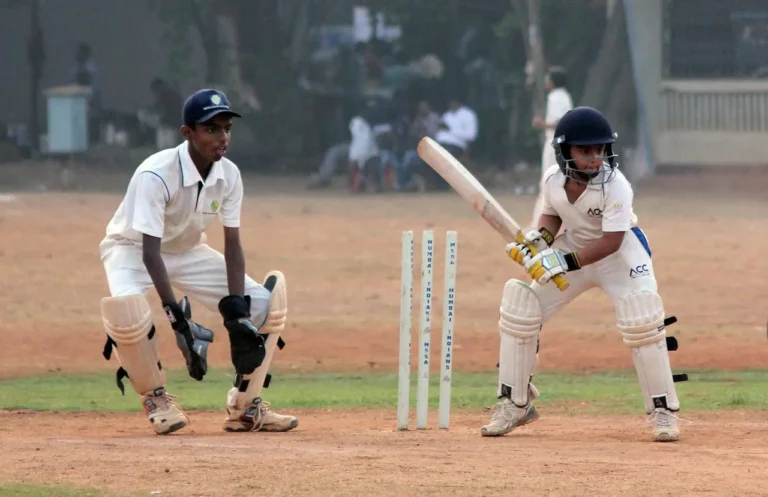
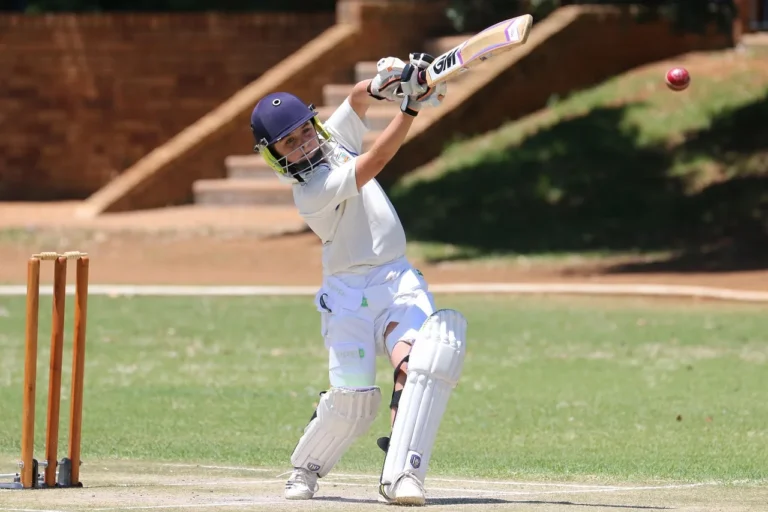
Common cricket bat care mistakes that can shorten bat life include leaving moisture in the blade, over-oiling, poor knocking-in, and storing the bat in heat or a damp bag. Stop them early. Ignore them and the bat can swell, crack, dent, or split at the edges and toe. This guide maps each mistake to the exact damage it causes, so you can cut the habit before it cuts bat life.
Bat care mistakes matrix
| Mistake | Visible warning sign | Likely damage type | Urgency | Best fix |
|---|---|---|---|---|
| Over-oiling | Dark, greasy patches; soft face; heavy feel | Weakened willow, dead hitting areas | High | Wipe excess oil, stop oiling, let the bat dry fully before use |
| Skipping knocking-in | Fresh dents, seam marks, edge bruising after early hits | Surface cracks, edge splits | High | Knock in before match use with a mallet or old ball |
| Wet storage | Swelling, soft toe, musty smell, raised grain | Toe damage, swelling, split risk | High | Dry slowly at room temperature, then store in an indoor cupboard away from damp walls and kit |
| Direct heat | Warping, brittle surface, opened grain | Drying damage, cracking, handle stress | High | Move it away from heaters, radiators, sun, and hot car boots |
| No toe protection | Toe bruising, chipped bottom edge, moisture mark | Toe damage, swelling, bottom-edge cracks | Medium to high | Fit a toe guard; keep the toe dry after play |
| Harsh cleaning | Lifted grain, rough face, dull finish | Surface wear, faster moisture entry | Medium | Use a dry or barely damp cloth only; avoid soaking and scrubbing |
| Playing on an unprepared bat | Immediate seam marks, edge bruising, vibration in the hands | Dead hitting areas, cracks, edge splitting | High | Finish knocking-in and add face protection before match use |
A cricket bat can lose a lot of performance within one season without proper care. The fastest failures usually start with one small habit: moisture left in the willow, too much oil, or match use before the face and edges are ready.
Which mistakes damage a cricket bat fastest?
The fastest damage usually comes from over-oiling, skipping knocking-in, and storing the bat wet or hot. Those mistakes attack the willow from different angles: excess oil softens it, unprepared grain cracks under impact, and heat or moisture changes the shape and feel of the blade.
Over-oiling and softening the willow
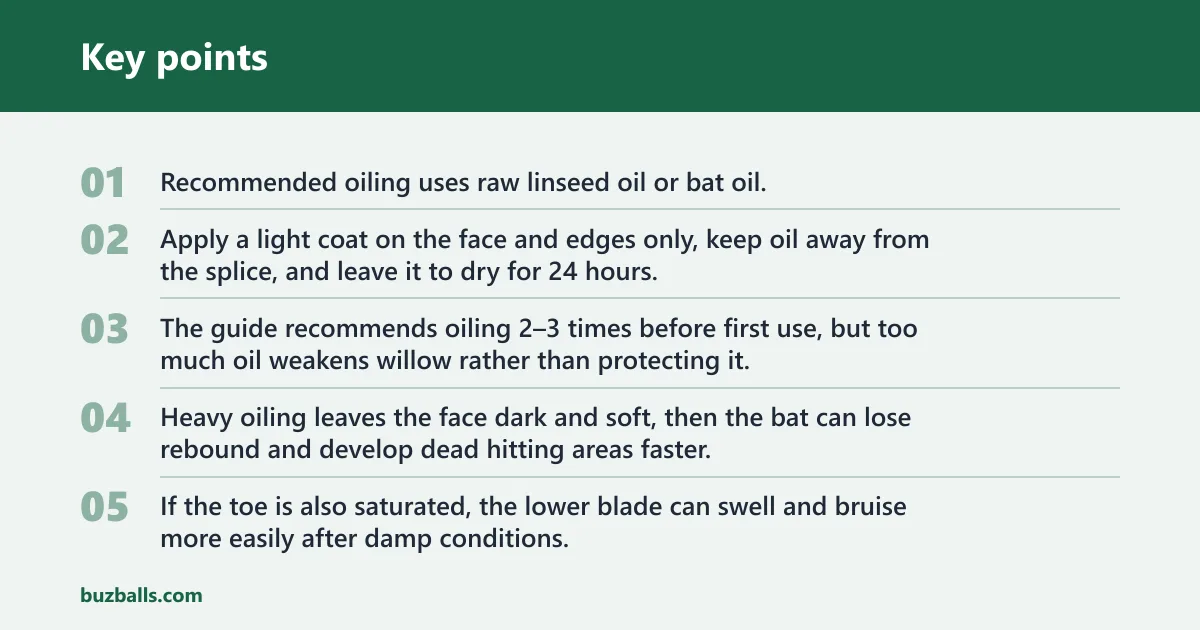
Recommended oiling uses raw linseed oil or bat oil. Apply a light coat on the face and edges only, keep oil away from the splice, and leave it to dry for 24 hours. The guide recommends oiling 2–3 times before first use, but too much oil weakens willow rather than protecting it.
The result is easy to spot. Heavy oiling leaves the face dark and soft, then the bat can lose rebound and develop dead hitting areas faster. If the toe is also saturated, the lower blade can swell and bruise more easily after damp conditions.
Skipping knocking-in before match use
Knocking-in should generally happen before match use. Use a bat mallet or an old ball, focus on the face and edges, and spend at least 4–6 hours on the process. That preparation compresses the surface grain before hard impacts arrive from fast bowling and seams.
Say your new bat goes straight into a match. The first hard edge contact can leave a visible seam mark, then a shallow crack grows along the grain. The problem is not one shot; it is the lack of surface preparation that makes the shot more damaging.
Heat, moisture, and poor storage
Store the bat in an indoor cupboard or gear room that stays dry and ventilated. Keep it away from sunlight, heat, and moisture, and use a bat cover or case rather than leaving it loose in a bag. Hot car boots and wet rooms are among the quickest ways to shorten bat life.
Moisture swells the toe and softens the blade. Heat dries the willow too fast and can make it brittle. Put those together and the bat becomes more likely to split at the edge or open up along an existing crack.
Can you over-oil a cricket bat?
Yes. Over-oiling is one of the clearest ways to shorten bat life because the willow absorbs more oil than it needs, which can leave the blade heavy, soft, and less responsive. A light coat is the goal; soaking the bat is the mistake.
What a safe oil coat looks like
Use raw linseed oil or bat oil in a light coat on the face, edges, and toe. Keep the splice dry. After application, let the bat dry for 24 hours before any further handling, and repeat only as needed before first use rather than adding oil whenever the surface looks dry.
-
Apply a thin coat.
Put oil on the face, edges, and toe only. Use enough to leave a slight sheen, not a wet film. -
Avoid the splice.
Do not coat the join between blade and handle. Oil near the splice can affect the handle area and create unnecessary weakness. -
Let it dry fully.
Leave the bat for 24 hours before checking it again. If the surface still feels tacky, do not add more oil.
What over-oiling does to willow
Too much oil weakens willow by saturating the fibres. That can make the face feel dead sooner, and in heavier cases it can increase the risk of bruising, edge splitting, and a bat that no longer responds cleanly off the blade.
Picture a bat that has been re-oiled every few weeks because it looked dry. The face may start feeling soft and the drive area can lose its crisp rebound. That is not extra protection; it is the start of fatigue in the wood.
Where oil should never go
Do not flood the splice or let oil pool near the handle join. Also avoid rubbing oil into cracks and splits as if that repairs them. It does not repair structural damage, and it can hide the real condition until the bat fails under load.
Do you need to knock in a new bat before use?
Yes. A new bat should be knocked in before match use because unprepared willow dents and cracks much more easily. The face and edges need controlled compression first, or the first hard strike can turn a surface bruise into a split.
Why unprepared willow cracks
Fresh willow has open grain. When a hard ball or a seam strikes it before preparation, the wood can crush at the surface and then split deeper along the grain. That is how a small mark becomes a crack on the edge or a dead patch in the middle of the face.
How face and edge preparation differ
Knocking-in should focus on the edges and face, because those areas take the first impact. Use a bat mallet or an old ball and work the blade evenly. Edges need special attention because they split faster than the central hitting area.
-
Start with the face.
Tap the full face lightly and evenly, then increase pressure gradually. The goal is to compress the surface grain without leaving dents. -
Work the edges.
Spend extra time on the outer edges and the toe area. These sections are where cracks often begin. -
Check for readiness.
Look for only slight marks from firm pressing, not sharp impressions. If the bat still dents easily, it is not ready for match use.
Signs the bat still is not ready
If the bat shows sharp seam marks after light strikes, or if the edges bruise after only a few hits, it needs more preparation. A dead or hollow sound in a specific area can also mean the surface has not been properly compacted yet.
Storage mistakes that shorten bat life
Storage errors shorten bat life faster than many players expect because the damage happens slowly. Heat, damp air, wet kit bags, and sun exposure can all change the blade before a ball is even struck.
Direct sunlight and hot car boots
Do not leave a cricket bat in direct sunlight or a car boot. Heat dries the willow too fast, can warp the blade, and can worsen existing cracks. A bat cover or case helps during transport, but it does not make a hot boot safe for long storage.
Damp rooms, wet bags, and rain exposure
Wet storage is a major cause of toe swelling and softening. A bat left in a damp bag after play can absorb moisture from the air and from wet pads or gloves nearby. That moisture can creep into the toe and edges first.
Suppose a bat goes back into a kit bag after a rainy session and stays there overnight. The next day, the toe may feel heavier and look slightly raised. That is the beginning of swelling, not a cosmetic issue to ignore.
Why a bat cover or case matters
A bat cover or case reduces exposure to knocks, moisture, and dirty kit. It is not a cure-all, but it keeps the blade from taking avoidable contact in transport and helps separate the bat from damp gear.
How do you protect the toe and edges?
Use a toe guard, edge tape, and an anti-scuff sheet as layered protection, especially if the bat sees hard pitches or frequent use. These tools reduce risk; they do not prevent every crack or bruise.
Toe guards for moisture and impact
A toe guard is recommended to protect from moisture and toe damage. It is especially useful on dry, hard pitches where the bottom edge gets repeated impact and scuffing. It also helps slow water entry after wet outfields or damp ground.
Fit the guard before the toe starts swelling or fraying. Once the bottom edge has already opened, the guard can help reduce further wear, but it will not reverse existing damage.
Edge tape with face protection
Edge tape helps prevent cracks, especially when used with face protection. It adds a sacrificial layer to the most exposed part of the bat. An anti-scuff sheet is recommended on the bat face because it protects the surface, reduces seam marks, and adds protection from hard balls.
Use both together when possible. The sheet takes surface scuffs on the face, while the tape gives the edges a little extra protection from impact and abrasion.
When anti-scuff sheets help most
Anti-scuff sheets are most useful on bats that face regular match use, hard bowling, or abrasive surfaces. They do not stop deep cracks, but they do slow the constant scratching and seam marking that can weaken the outer layer over time.
How should you clean and inspect a bat?
Clean the bat lightly after use and inspect it regularly for cracks, splits, swelling, and grip wear. The aim is to catch damage while it is still surface-level, before it reaches the handle or opens at the edge.
Safe cleaning after use
-
Wipe off dirt.
Use a dry or barely damp cloth to remove mud and grass. Do not soak the blade or scrub hard. -
Dry the surface.
Leave the bat in open air on an indoor shelf or rack, away from heaters and sun. Remove any remaining moisture before putting it back in a bag. -
Check the toe and edges.
Look for bruising, raised grain, and soft spots. Those signs often appear before a crack becomes obvious.
What to check during inspection
Inspect for surface cracks, edge splits, and toe damage. Surface cracks often start as fine lines in the hitting area. Edge splits show as longer openings along the side grain. Toe damage usually appears as swelling, chipping, or softness after moisture exposure.
Deep cracks are the point where repair or replacement becomes likely. If the crack reaches far into the blade, if the edge opens under light pressure, or if the bat vibrates sharply on contact, the damage is no longer minor.
Grip wear and other maintenance items
The cricket bat grip is part of regular maintenance and should be replaced when worn. A slick or split grip changes control and can make a bat feel worse in the hands, even when the blade is still usable. Worn grips do not ruin the bat by themselves, but they are a sign the whole setup needs attention.
Frequently asked questions
What are the most common cricket bat care mistakes?
The most common mistakes are over-oiling, skipping knocking-in, leaving the bat wet, storing it in heat or damp conditions, and using it before the face and edges are ready. Those habits lead to swelling, edge splitting, toe damage, and dead hitting areas much faster than normal wear.
Do you need to knock in a new cricket bat before use?
Yes. Knocking-in should happen before match use because fresh willow is more likely to dent and split on first impact. Use a bat mallet or old ball, focus on the face and edges, and allow at least 4–6 hours for the preparation process.
Should you leave a cricket bat in direct sunlight or a car boot?
No. Direct sunlight and hot car boots dry the willow too fast and can warp or weaken it. Heat also worsens existing cracks. Store the bat in an indoor cupboard or gear room that stays dry and ventilated, and keep it inside a bat cover or case during transport.
How do you protect a cricket bat toe from damage?
Fit a toe guard and keep the toe dry after use. A toe guard helps protect from moisture and reduces bottom-edge damage, especially on dry, hard pitches. After play, wipe the toe clean, dry it in open air, and avoid storing it in a damp bag.
What should you do if a cricket bat gets wet?
Wipe off surface moisture at once, then leave the bat to dry slowly in a room that stays dry and has moving air. Do not put it beside a heater or in direct sun. The first roughly 10–30 minutes can matter most, because heat may force the moisture deeper or dry the willow too fast.
When is a cricket bat too damaged to keep using?
If the bat has deep cracks, split edges, a loose handle, or heavy vibration on contact, it may be past simple repair. Surface cracks and small toe marks can often be managed early, but structural damage that opens under light pressure usually means repair or replacement is the safer call.